
Livraison le jour même ou le lendemain

Qualité garantie

Débloquez vos offres de bienvenue: Livraison GRATUITE | Jusqu'à -80 % | 30 jours d'essai gratuits à JoyPlus
Téléchargez l'application
Swapping out old, yellowish halogen bulbs for bright, white LED lighting is a tempting way to modernise your car and, more importantly, dramatically improve night-time visibility. The problem is, the market is flooded with options, and it's easy to make a poor choice. An astronomical lumen count doesn't guarantee good lighting, and the "plug-and-play" promise often hides nasty surprises.
To ensure you don't regret your purchase, let's review the common mistakes and the real criteria that matter when choosing a car LED bulb that meets your standards for safety and performance.
The promise of better lighting can sometimes make you overlook the essentials. Here are the three most common purchasing mistakes.
To make a truly enlightened choice, three technical points are non-negotiable.
Step one: identify the base type of your original bulbs. The most common are the H7 LED bulb (low beams), the H4 LED bulb (dual high/low beam function), and the 9005 HB3 and 9006 HB4 bulbs for high beams or LED fog lights.
But the base type isn't everything. Verify that the dimensions of the LED bulb, including its heat sink or fan, are compatible with the (often limited) space available in your headlight housing. Finally, for any vehicle made after 2005, an LED conversion kit labelled "CAN bus Ready" or "Error-Free" is almost mandatory to prevent your dashboard from lighting up like a Christmas tree.
Heat management is the critical factor for a high-power LED bulb. There are two main technologies:
A good LED headlight doesn't just shine bright; it shines right. It is imperative that it replicates the beam pattern of the original halogen bulb to illuminate the road effectively without glaring oncoming drivers. To achieve this, choose models where the LED chips are positioned to mimic the filament of a traditional bulb.
In terms of colour, the de facto standard is the 6000K LED bulb. This temperature provides a pure white light, close to daylight, which is ideal for improving contrast perception and reducing eye strain on long night drives.
To help you see more clearly, we've matched user profiles with products that meet the objective selection criteria mentioned above.
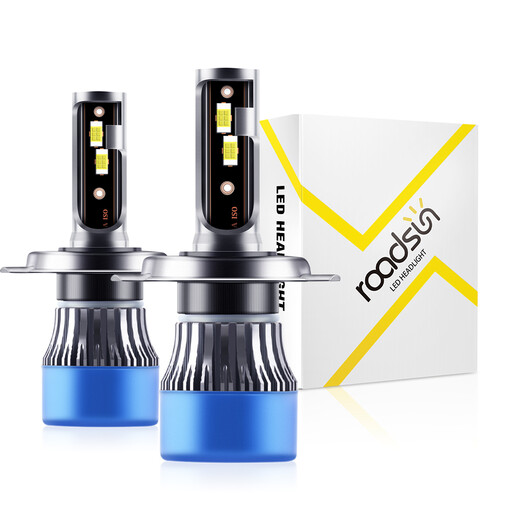
The straightforward choice: Ideal for a first upgrade that's quick and requires no complex modifications. The H4 format is a timeless classic, compatible with a vast number of vehicles.
Its compact design is engineered for a true plug-and-play installation in minutes, minimising the risk of surprises during fitting.
It integrates a dual high/low beam function and a cooling fan for stable performance, all in an easy-to-install package.
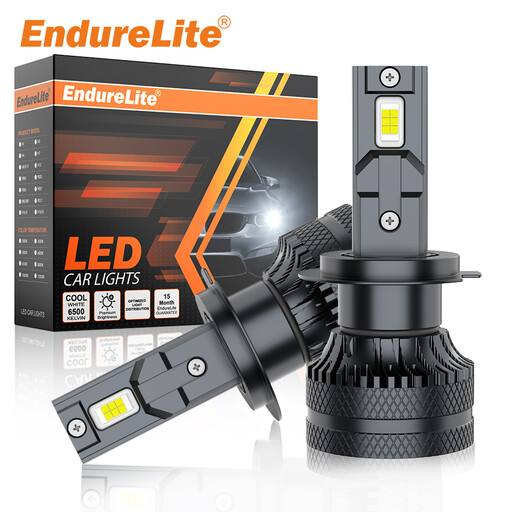
The performance choice: For those who clock up serious mileage and for whom maximum visibility is non-negotiable, whether on motorways or poorly lit country roads.
Its powerful active fan cooling system prevents overheating, the main cause of brightness loss and premature failure.
The manufacturer claims a very high light intensity and CAN bus compatibility with 99% of vehicles, minimising the risk of dashboard errors.
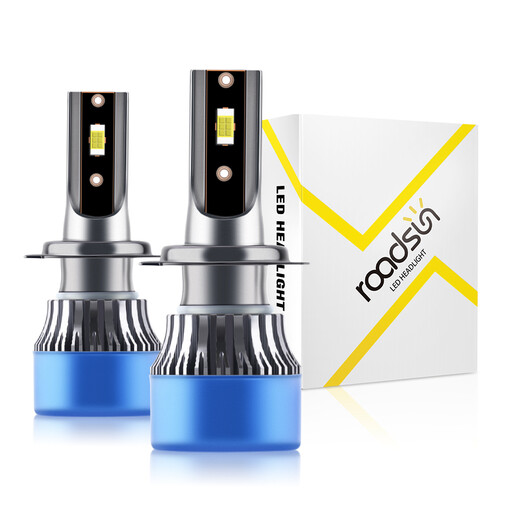
The rugged choice: Perfect for ATVs, UTVs, and other 4x4s that face extreme conditions (mud, water, dust) and require fail-proof lighting.
Its reinforced, waterproof design ensures exemplary durability where standard bulbs would quickly succumb to vibrations and moisture.
Specially designed for powersports, it delivers intense brightness to cut through fog and dust, with controlled power consumption that protects the vehicle's electrical system.
Discover our full selection of products that meet our quality and performance criteria for your vehicle's lighting.
For most conversion kits, the installation is very simple: unplug the old halogen bulb and plug in the new one. Just remember to work with the engine off and wear gloves. The only real point to watch for is ensuring you have enough space behind the headlight housing to accommodate the LED bulb's cooling system.
This is the most sensitive issue. Regulations on "retrofitting" (replacing halogens with LEDs) are very strict. To be street legal on public roads, a replacement LED bulb must have a specific ECE approval for your vehicle model in many regions, such as France. Be aware: the majority of kits sold online are intended for off-road or track use only. It is the buyer's responsibility to ensure their installation is compliant before driving on public roads.
This is a classic issue on modern cars equipped with a CAN bus diagnostic system. This system constantly monitors the power consumption of the bulbs. Since an LED consumes far less power than a halogen, the onboard computer thinks the bulb is burnt out and triggers an alert. The solution? Choose "CAN bus Ready" (or "Error-Free") bulbs that integrate a resistor to trick the system, or install an external error-cancelling module.