
Livraison le jour même ou le lendemain

Qualité garantie

Débloquez vos offres de bienvenue: Livraison GRATUITE | Jusqu'à -80 % | 30 jours d'essai gratuits à JoyPlus
Téléchargez l'application
Upgrading to LEDs has become a go-to move for many drivers looking to improve night-time visibility and give their car a modern look. The problem: the market is flooded with marketing promises that make choosing the right bulb an overwhelming task. Between unrealistic brightness figures and compatibility nightmares, it's all too easy to make the wrong purchase.
Our mission: to help you cut through the noise in this crowded market. This guide focuses on the technical criteria that truly matter, helping you choose a high-performance, durable, and perfectly compatible car LED bulb without falling for the common pitfalls.
It pays to be prepared: here are the three most common disappointments.
You don't need to be an engineer to make the right choice. Simply focus on a few key technical points that determine the quality and compatibility of your future LED headlight.
The essential starting point: check the bulb type of your original headlights. The most common are H7 (typically for low beams), H4 LED (which handle both high and low beams), and H11 (often used for LED fog lights). You can find this information in your vehicle's manual or with a quick online search.
Opt for models described as '1:1' or mini-sized. These bulbs are designed to match the exact dimensions of a standard halogen bulb. This is your guarantee of a truly plug-and-play installation, with no need to modify the headlight housing or protective cover.
A powerful car light inevitably generates heat. How that heat is dissipated is crucial for the bulb's lifespan. There are two main technologies:
Modern cars, especially European models, are equipped with a multiplexing system (CAN bus) that constantly checks if electrical components are functioning correctly. Since an LED bulb consumes far less power than a halogen, the on-board computer (OBC) can interpret this as a fault and display an error message.
To prevent this issue, it's essential to choose an LED conversion kit with a built-in error-free Canbus system. Most quality products ensure compatibility with 98% to 99% of cars on the road, but for a few particularly sensitive models, an external decoder may still be necessary.
Rather than an endless list, we've selected a few models that meet specific needs, based on the criteria we've just covered.
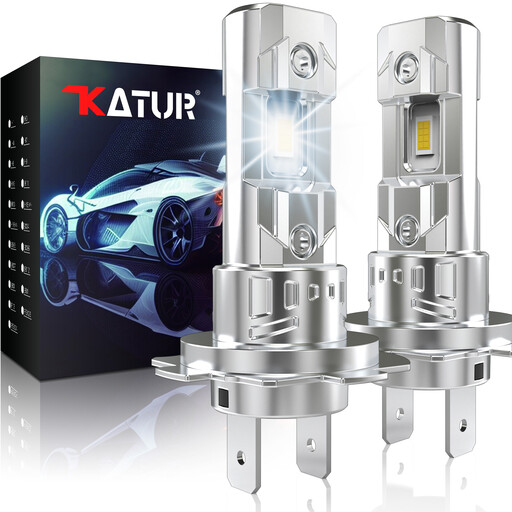
Editor's Take : For those who want a noticeable, simple, and reliable upgrade without the hassle. The fanless design eliminates any risk of mechanical failure and noise, making it an ideal, worry-free solution for daily commutes.
Its 1:1 design and lack of an external driver sidestep the complex installation trap. The passive cooling is the perfect countermeasure to the risk of fan failure.
Reliability and total silence thanks to the fanless design. Effortless 'plug-and-play' installation due to its compact size.
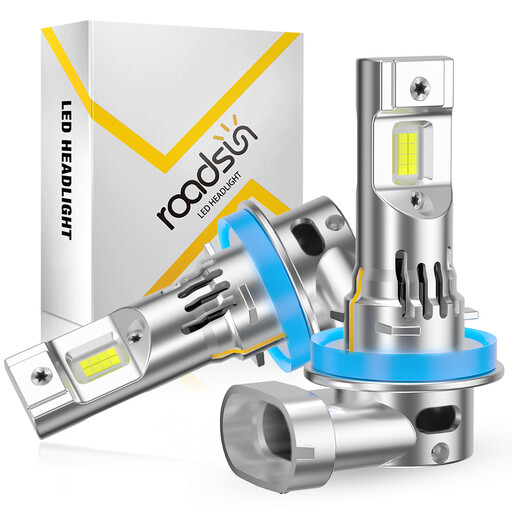
Editor's Take : Perfect for the DIYer looking for immediate, hassle-free results. The promise of a 3-minute installation, combined with a non-polar design (no need to find the positive and negative terminals), radically simplifies the setup.
The 1:1 size and 'plug-and-play' feature are designed to avoid the frustration of a bulb that won't fit. The 16,000 RPM fan directly tackles the risk of overheating.
Express, error-free installation thanks to the non-polar design. Active cooling ensures light performance that won't fade.
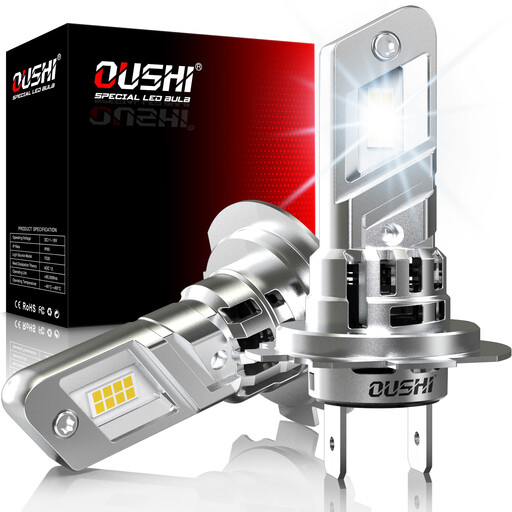
Editor's Take : For high-mileage drivers, those who clock up miles at night or in difficult weather, and who demand perfect visibility. The extremely high light output, coupled with high-performance active cooling, ensures maximum, consistent illumination.
This model sidesteps the 'marketing lumens' trap by pairing its high power with a turbo fan, which guarantees that brightness won't drop due to heat. Its advanced Canbus system is specifically designed for the most sensitive European vehicles.
Maximum brightness (6500K cool white colour temperature) and high-performance cooling for perfect, long-lasting visibility.
We've put together a complete, up-to-date selection of products that meet our selection criteria and current regulations.
No, compatibility depends on two key factors: the bulb type (H1, H4, H7, etc.), which must match your headlight, and the vehicle's electronic system. The majority of LED kits include an error-free Canbus module, but some vehicles (especially newer or high-end models) may require an additional decoder to prevent a dashboard warning light.
Yes, by a significant margin, but on one condition: heat management must be flawless. A quality LED bulb with a good cooling system (passive or active) can last between 25,000 and 50,000 hours, compared to just 1,000 hours for a halogen. This is THE number one criterion for guaranteeing its longevity.
For most cars, the installation is a breeze. If you choose a plug-and-play model with a 1:1 design, the process is as simple as unplugging the old bulb and clipping in the new one. No wiring modifications are needed. The whole job rarely takes more than 15 minutes.