
Livraison le jour même ou le lendemain

Qualité garantie

Débloquez vos offres de bienvenue: Livraison GRATUITE | Jusqu'à -80 % | 30 jours d'essai gratuits à JoyPlus
Téléchargez l'application
A dead battery is every driver's nightmare. On a freezing winter morning, in a crowded supermarket car park… getting stranded behind the wheel is always a source of stress and frustration. The car jump starter has become the go-to emergency solution, but the market is flooded with models making often-exaggerated claims.
As the Head of Testing and Recommendations at Joybuy, my role is to decode the technical specs for you. Let's cut through the marketing jargon and get straight to the point. Here are the 3 most common pitfalls that could lead to buyer's remorse.
To choose the right portable car starter, focus on objective data. Here are the non-negotiable points to check before any purchase.
The only question that matters is: will the jump starter be powerful enough for MY engine?
A good emergency starter must be safe and practical above all.
Rather than an endless list, we've matched specific models to clear user profiles, based on the objective criteria defined above.
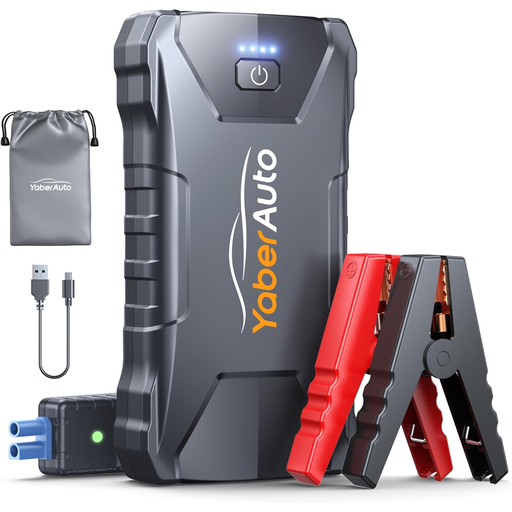
Why we chose it: Perfect for drivers of gas city cars or small diesels who want a compact, "ready-to-go" solution that's easy to store in the glove box. It gets straight to the point, with no frills.
It doesn't try to impress with oversized peak amp ratings. Its strength? A clearly stated engine compatibility (up to 7.0L Gas / 5.5L Diesel), a far more reliable indicator than marketing numbers.
Its ultra-compact size (340g) and power bank function make it a 3-in-1 ally for everyday unexpected events. Its 10 built-in safety protections make it simple and risk-free to use.
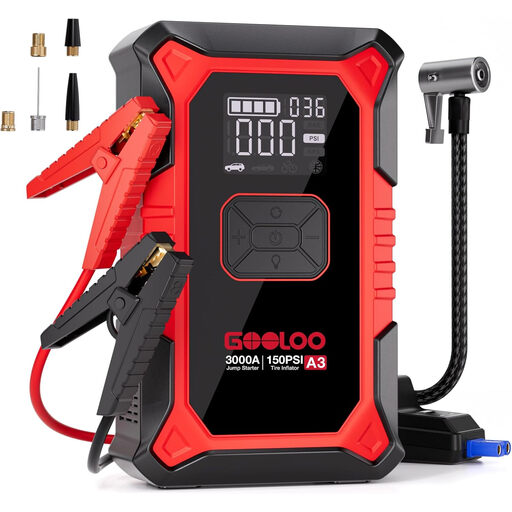
Why we chose it: For owners of SUVs, vans, or camping enthusiasts. This device combines a muscular starter with a real air compressor, for complete peace of mind on the road and in the great outdoors.
It avoids the trap of false versatility. No gimmicky features, just a genuine 150 PSI compressor with auto-stop—a truly useful function that justifies its larger size.
Its power is tailored for large engines (up to 9.0L Gas / 6.5L Diesel). The compressor, with its 5 inflation modes and digital display, makes it a true driver's Swiss Army knife.

Why we chose it: For owners of large diesel engines, residents of cold regions, or anyone looking for a "zero-maintenance," always-ready device. It's an investment in long-term reliability and peace of mind.
It bypasses the main flaw of conventional jump starters: the battery. Its sodium-ion technology is unfazed by heat or cold (-40°C to 80°C) and its self-discharge is virtually nil. No more having to recharge it every 3 months!
Safety and longevity. The sodium-ion battery poses no risk of thermal runaway and promises up to 6,000 charge cycles (compared to 400-800 for lithium). It can be left in the car all year round, unattended.
We have selected other models that meet our criteria for performance and safety.
It all depends on its battery technology. A classic lithium-ion jump starter loses 5% to 10% of its charge per month; it's therefore recommended to recharge it every 2 to 3 months to ensure it's ready when you need it most. Sodium-ion models, on the other hand, have almost no self-discharge (less than 1% per month), allowing them to remain reliable for years on a single charge.
This is a crucial question of safety and performance. Lithium batteries do not handle extreme temperatures well. Leaving them in a hot car in the summer increases risks, while deep cold can cripple their performance just when you need them most. Opt for models designed for a wide temperature range (e.g., -20°C to +60°C). Sodium-ion batteries, due to their chemistry, offer enhanced stability and safety over an even wider range (-40°C to +80°C).
No, a quality jump starter used correctly is safe for your vehicle. Modern models are equipped with multiple electronic protections (against reverse polarity, short circuits, overvoltage, etc.). These safety features prevent any damage to the battery or the car's onboard electronics in case of incorrect use. The key is to choose a certified device and to follow the user manual carefully.