
Livraison le jour même ou le lendemain

Qualité garantie

Débloquez vos offres de bienvenue: Livraison GRATUITE | Jusqu'à -80 % | 30 jours d'essai gratuits à JoyPlus
Téléchargez l'application
By Joybuy, your product recommendation expertPublished: August 27, 2026
That dreaded click. Then silence, instead of the familiar roar of the engine. A dead battery is a universal frustration for any driver. While traditional jumper cables require a second vehicle, a modern jump starter gives you complete independence. The problem is, the market is flooded with models making tempting promises, and it's easy to make the wrong choice.
Before you buy, watch out for the common pitfalls that can turn a purchase meant to provide peace of mind into a useless gadget:
This guide is here to help you decode the spec sheets and choose the portable car starter that truly fits your needs.
To make the right choice, you need to focus on a few key technical specifications that determine the performance and safety of your jump starter.
Peak Amps (Peak Amps or A) is the most heavily advertised feature. This power must be appropriate for your engine's displacement and type.
Ignoring this ratio is the surest way to buy a device incapable of starting your car in real-world conditions, especially in cold weather.
The internal battery's capacity, measured in milliampere-hours (mAh), determines not only how many jumps are possible on a single charge but also its lifespan as a power bank. A good jump starter power bank should offer:
A jump starter handles extremely high currents. Therefore, the quality and intelligence of the clamps are non-negotiable criteria. Prioritise models equipped with multiple protections to prevent any accidents. Essential safety features include:
Sturdy, all-metal, and well-insulated clamps are the guarantee of good conductivity and rock-solid durability.
Rather than an endless list, here is our selection of models that cater to specific user profiles, always keeping performance and safety criteria in mind.
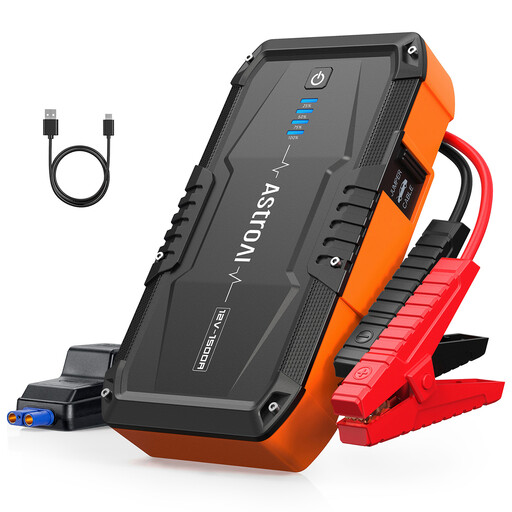
Why it stands out: Ideal for drivers of compact cars, gas sedans, or small diesels (up to 6.0L gas / 3.0L diesel) looking for a compact and reliable backup solution to keep in the glove box. Its ease of use makes it an excellent choice for a first-time buyer.
Its quality metal clamps and 8 built-in protections limit the risk of overheating or short-circuiting, a typical flaw of entry-level models with flimsy clamps.
Compact and easy to use, it includes a "BOOST" mode for deeply discharged batteries, a safety function often missing from devices in this range.
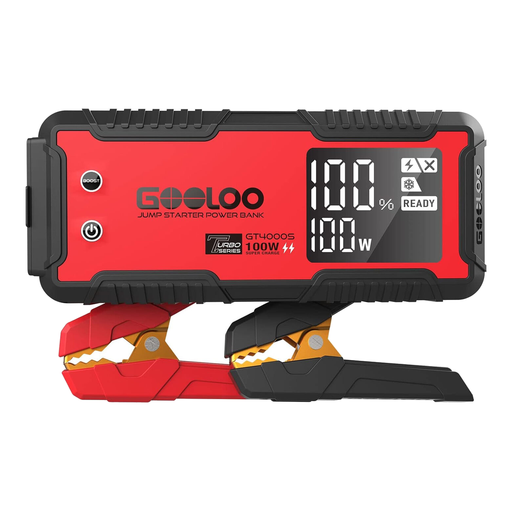
Why it stands out: Built for owners of SUVs, vans, RVs, or boats with large engines (up to 10.0L diesel). Its high power and fast charging make it a reliable tool for frequent travellers and professionals alike.
Unlike devices with inflated marketing numbers, its 4000A power is real and designed to start large engines. Its 100W fast charging saves you from an endless wait before you can get back on the road.
Its ultra-fast two-way charging (1.2 hours for a full recharge) and its ability to power a laptop make it incredibly versatile on the go.
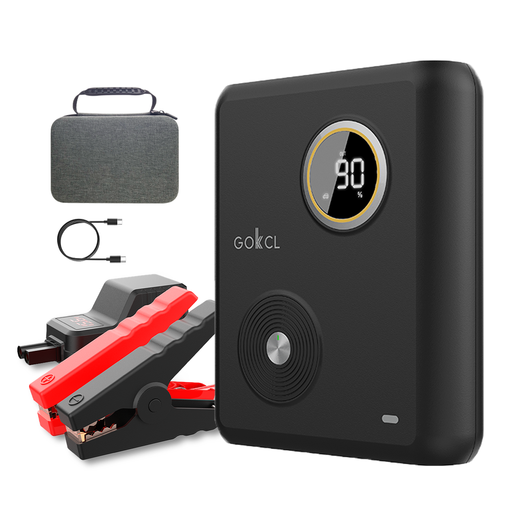
Why it stands out: For those who live in regions with extreme climates or who are looking for absolute peace of mind. Its sodium-ion technology makes it more stable and durable than classic lithium models.
It tackles the problem of rapid self-discharge. With a standby time of up to 5 years, it remains operational even if you forget it at the bottom of the trunk, unlike lithium batteries that require recharging every three months.
Its stable and safe sodium-ion technology works from -40°C to +80°C (-40°F to 176°F). It can therefore stay in the vehicle all year round without fear of damage from heat or frost.
We have curated a complete and up-to-date selection of products that meet these strict selection criteria and current safety standards.
The required power depends on your vehicle. For a standard gasoline car (up to 6.0L), a 1500A booster is a good starting point. For a diesel engine, SUV, or van, it's recommended to aim for a model with at least 2000A to 3000A to ensure an effective start, especially in cold weather when batteries lose performance.
Most manufacturers of lithium-based boosters recommend recharging every 2 to 3 months to compensate for natural self-discharge and ensure it's ready in an emergency. Newer models, particularly those using sodium-ion technology, have a much lower self-discharge rate and can hold a charge for over a year. In any case, always check the manufacturer's recommendations.
Yes, but with a few precautions. It is essential to choose a model designed to withstand wide temperature ranges. Its operating range is a crucial piece of data: a good device should be able to operate between -20°C and +60°C (-4°F to 140°F). Avoid leaving it in direct sunlight behind the windshield in summer, as extreme heat can damage its internal battery and reduce its lifespan. Models with advanced thermal protections or a more stable battery chemistry (like sodium-ion) are best suited for being permanently stored in a vehicle.