
Livraison le jour même ou le lendemain

Qualité garantie

Débloquez vos offres de bienvenue: Livraison GRATUITE | Jusqu'à -80 % | 30 jours d'essai gratuits à JoyPlus
Téléchargez l'application
It's a cold winter morning. You turn the key in the ignition and... nothing. Just that dreaded little "?click?" that signals a dead battery. It's the nightmare scenario every driver fears, leading to delays, stress, and depending on a tow truck or a helpful neighbour. Fortunately, there's a simple solution to take back control?: the car jump starter.
Compact and increasingly powerful, this device lets you restart your vehicle in minutes, without needing another car or a roadside assistance service. But with an overwhelming number of options on the market, how do you navigate the choices and pick the right model??
As a product expert for the Joybuy editorial team, I'm here to guide you with clear, practical advice. This guide breaks down the essential criteria you need to know and presents our selection of the best models to help you make the right choice.
Before you buy, let's review the key technical specs that make all the difference in finding the perfect portable battery starter for your needs.
Power is the number-one criterion. It's expressed in amps (A) and comes in two forms?:
Our advice?: For a small gasoline city car, a 400 to 600?A jump starter will do the job. However, for an SUV, a diesel engine, or a utility vehicle, aim for models with 1500?A or more to ensure a reliable start, even in the dead of winter.
Ensure the jump starter is compatible with your vehicle's 12V system (the standard for nearly all cars, motorcycles, and recreational boats). Modern models include a suite of essential safety features: reverse polarity, short-circuit, overload, and overheat protection. Check for "smart" clamps?: their indicator lights confirm the connection is correct and prevent any risk of sparks or damage to your car's electronics.
A modern jump starter is much more than just an emergency start kit. Most models also double as a power bank thanks to their USB ports, perfect for recharging a smartphone or tablet that's running low. Other useful features include?:
We've scoured the market to bring you models that stand out for their specs, versatility, and value. Here is our selection, designed for different types of users.

Why it stands out With 3000?A of peak power, this GOOLOO model is built for the most demanding situations. It can start gasoline engines up to 9.0L and diesel engines up to 7.0L. Its "BOOST" function is especially useful for deeply discharged or even completely dead batteries, delivering a forced starting pulse.
Pros
Who is it for? Owners of large-engine vehicles (4x4s, utility vehicles, boats) looking for a powerful and reliable solution to handle any situation, including extreme cold.
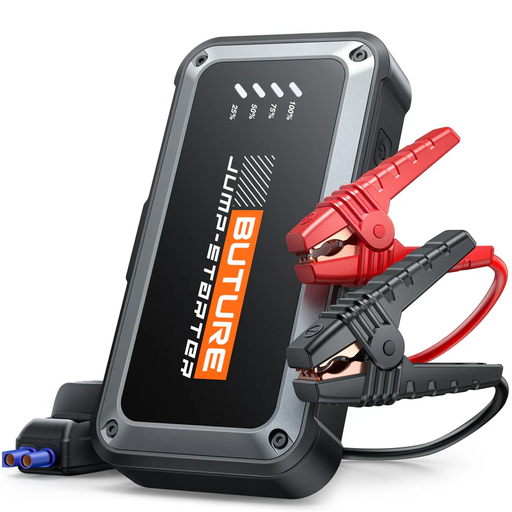
Why it stands out The BUTURE Beta08 combines 3000?A of power with an ultra-compact and lightweight design (only 370g). It stands out with its 4-mode wide-angle LED light, which includes an orange strobe for optimal signalling during a roadside emergency. Its rugged casing is designed to be water, dust, and shock-resistant.
Pros
Who is it for? Drivers and outdoor enthusiasts looking for a multifunctional, lightweight, and durable tool that's as useful for roadside emergencies as it is for camping or travel.
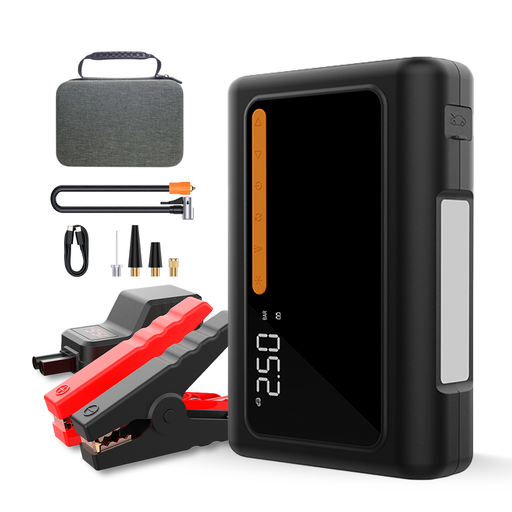
Why it stands out This model radically sets itself apart with its sodium-ion battery technology. According to the manufacturer, it outperforms traditional lithium on several crucial points: an extreme operating temperature range (-40?°C to 80?°C), a record-breaking lifespan (over 6000 cycles), and unbeatable safety (no risk of fire, even if punctured). The icing on the cake is its integrated 150?PSI air compressor.
Pros
Who is it for? Those who prioritize safety, durability, and peace of mind. It's the ideal choice for people in regions with extreme climates and for anyone who wants an all-in-one device that's always ready to go, without a second thought.
Our selection highlights a few gems, but the world of car accessories is vast. To discover a wider range of solutions and electronic equipment for your vehicle, feel free to explore our dedicated category.
Explore our Car Electronics category
With their higher compression ratio, diesel engines are more demanding to start. For this type of engine, it's essential to choose a jump starter with substantial starting amperage. Aim for a minimum of 1500?A of peak current, and don't hesitate to go for a more powerful model if you own a large vehicle or live in a cold region.
It all depends on its battery technology. Traditional lithium jump starters have a limited operating temperature range (often between -20°C and 60°C). Leaving them in a car in direct sunlight or extreme cold can damage their battery and reduce their effectiveness. Models like the GOKKCL GK01, based on sodium-ion battery technology, are specifically designed to withstand extreme temperatures (-40°C to 80°C), making them safer to be stored permanently in a vehicle.
No, a jump starter is a sprinter, not a marathon runner. It's designed to deliver a very intense, brief burst of current to start the engine, but it does not recharge the battery. Once the engine is running, the alternator takes over to recharge the battery. Remember to drive for at least 20 to 30 minutes after a jump-start so your battery can regain a proper charge.