
Livraison le jour même ou le lendemain

Qualité garantie

Débloquez vos offres de bienvenue: Livraison GRATUITE | Jusqu'à -80 % | 30 jours d'essai gratuits à JoyPlus
Téléchargez l'application
A car jack might seem easy to choose: a capacity in tonnes, a lifting height and a price. Yet several details determine whether it is compatible with your saloon, SUV, MPV, van or sports car. An ill-suited model may be impossible to store in the boot, fail to fit under the chassis or lack stability during a wheel change.
Before you place your order, here are the most common pitfalls and the criteria you need to examine.
A "2 tonne" or "3 tonne" rating may sound reassuring, but it does not mean the jack should lift the entire vehicle in every situation. The load typically rests on a single lifting point. Nevertheless, you should keep a safety margin and take into account the vehicle's weight, its weight distribution and the lifting point recommended by the manufacturer.
Take the time to read the full technical specification too. On some models, the commercial title and the description do not show the same capacity. If there is a contradiction, go with the more cautious value and ask the seller for confirmation before any use.
An ultra-low-profile jack is not just a marketing gimmick for sports cars. A lowered saloon, a performance car or a vehicle parked on uneven ground can have a very low ground clearance. If the jack's minimum height is greater than that of the lifting point, the tool simply cannot be positioned correctly.
Measure the distance between the ground and the lifting point specified by the manufacturer, then compare it with the advertised minimum height. An entry height of around 85 to 90 mm can suit low vehicles. For an SUV or an MPV, a model offering a greater maximum height will generally be more practical.
A jack is used to lift a vehicle, not to hold it alone during an extended repair. To work underneath the car, use suitable axle stands placed on stable ground and in line with the manufacturer's recommendations. For a simple wheel change, apply the handbrake, engage a gear or select "P", and add wheel chocks if necessary.
For a passenger car, compare the following points:
A 3-tonne trolley jack is generally suitable for a garage or workshop that works on cars, SUVs and MPVs. However, its weight and size make it less suited to carrying in the boot.
A folding scissor jack is often preferred for roadside repairs and storage in the spare wheel compartment. It takes up little space and does not require a hydraulic pump. On the downside, it is slower to use and its stability depends heavily on the quality of the ground and its positioning.
A hydraulic jack usually lifts the vehicle more quickly and with less effort. A trolley jack is easy to manoeuvre in a garage thanks to its castors, but it requires a flat surface and enough space around the vehicle.
The CE marking indicates that the manufacturer declares the product complies with the applicable European requirements. On its own, it is not a guarantee of overall performance or an "approval" in the usual sense. The EN 1494 standard covers mobile or movable lifting equipment and provides a technical framework to check in the model's documentation.
Before ordering, consult the product sheet and the instruction manual. Check the capacity, the lifting range and any usage restrictions. This information is far more useful than a general advertising promise.
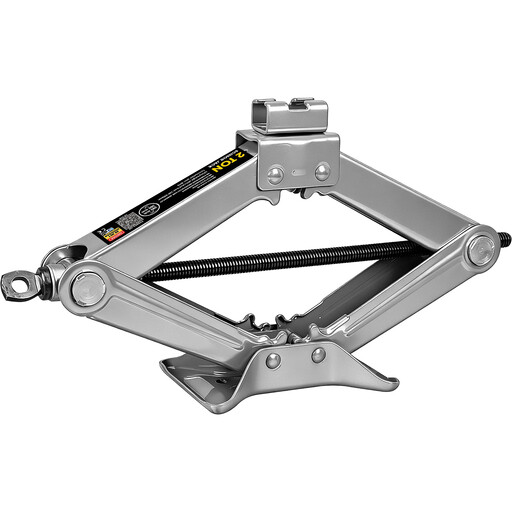
Why this choice suits this profile: Its foldable design and compact size make it ideal for drivers who want to keep a spare jack in the boot for dealing with a puncture.
At 88 mm when folded, it stores away easily. Its low entry height also meets the constraints of many low vehicles. However, check the exact technical capacity stated on the product sheet before purchase.
Forged alloy steel construction, wide non-slip base and an advertised lifting range of 88 to 380 mm.
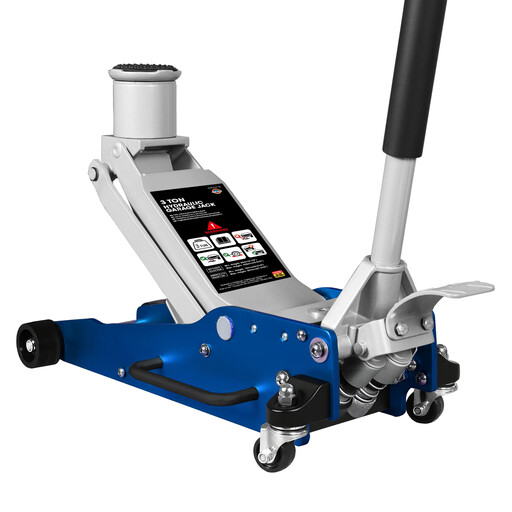
Why this choice suits this profile: This model is aimed at those who want fast hydraulic lifting, a low entry height and a versatile solution for multiple vehicles.
Its advertised minimum height of 85 mm reduces the risk of incompatibility with a low car, while the extension device allows it to adapt to taller vehicles.
Aluminium body, dual pump, advertised capacity of 3 tonnes and stated compliance with EN 1494 and CE standards.
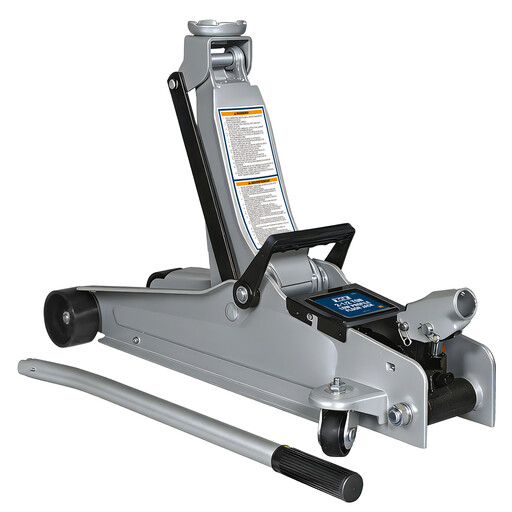
Why this choice suits this profile: Its lifting range and low profile meet the needs of sports car owners, lowered vehicles and saloons that require precise positioning.
Its advertised entry height of 85 mm prevents you from choosing a jack that is too tall for a low chassis. The documentation also mentions EN 1494 and CE standards, which you should verify before use.
Advertised capacity of 2.5 tonnes, steel construction and a lifting range of 85 to 380 mm.
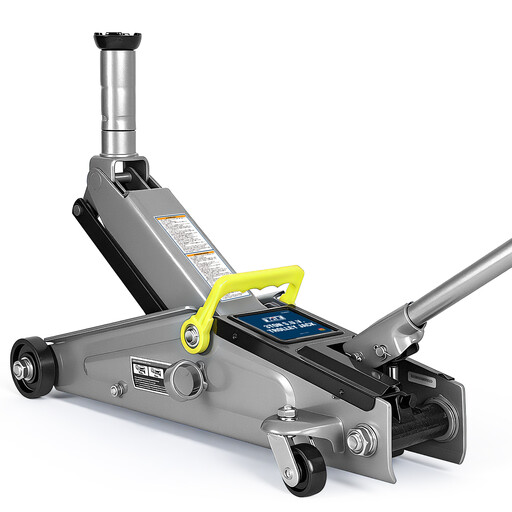
Why this choice suits this profile: Its maximum height of 530 mm and steel construction make it a garage jack suitable for cars, SUVs and MPVs.
The overload safety valve and the advertised capacity of 3 tonnes meet the demands of regular use, provided you follow the instruction manual.
Lifting range of 150 to 530 mm, steel construction and stated CE compliance.
We have selected a comprehensive and regularly updated range of products that meet these demanding criteria as well as European safety requirements.
Start by checking the total weight of the vehicle in its documentation, then choose a capacity that is compatible with the lifting point and the intended use. A 2.5 or 3 tonne model can suit many cars, SUVs or MPVs. However, the maximum capacity does not remove the need for a safety margin or correct installation.
If you have a puncture, carry out the wheel change in the safest possible area, away from traffic, with your hazard warning lights and the appropriate legal equipment. Avoid soft, sloping or unstable ground. For a repair that takes longer, it is better to call a garage.
The service life depends on how often you use it, storage conditions and maintenance. Wipe the tool down after each use, protect it from moisture and regularly check the castors, pump, welds and for any leaks. Any deformation or leak means you must stop using the product immediately.