
Livraison le jour même ou le lendemain

Qualité garantie

Débloquez vos offres de bienvenue: Livraison GRATUITE | Jusqu'à -80 % | 30 jours d'essai gratuits à JoyPlus
Téléchargez l'application
Changing a wheel, inspecting the underside, or carrying out maintenance at home isn’t just about grabbing any old car jack. Your vehicle’s weight, its ground clearance, and the type of job you’re doing all determine which equipment is genuinely right for the task.
Some disappointing purchases come down to easily avoidable mistakes:
The jack’s capacity must be compared to your vehicle’s gross vehicle weight, which is shown on the V5C logbook. When changing a wheel, the jack typically only lifts part of the car. However, it’s always wise to keep a safety margin and account for accessories, load, and weight distribution.
A 1.8-tonne trolley jack will suit many saloons and family cars. For an SUV, 4x4, or light commercial vehicle, a 3-tonne model offers a more comfortable working range. A jack for SUVs and 4x4s also needs a stable base and sufficient lifting height.
The different types of jacks aren’t interchangeable. A bottle jack often offers high capacity in a compact format, but its minimum height can be too great for some vehicles. The foldable scissor jack is handy for roadside emergencies, though its capacity and lifting speed are generally more limited.
Measure the distance between the ground and the manufacturer’s recommended lifting point, then compare it with the jack’s minimum height.
Some useful benchmarks:
The maximum height must allow you to lift the wheel clear without placing the jack in an unstable position. Always check your vehicle’s handbook to identify the authorised lifting points.
A wide base, suitable wheels, and a protected saddle all help with stable positioning. Swivel castors make it easier to move a trolley jack around the garage, while a foldable model slips more easily into the spare wheel compartment.
To support the vehicle safely, choose 2-tonne, 3-tonne, or 6-tonne axle stands depending on your vehicle and its load rating. They should be used in pairs on a flat, hard, level surface. Some products mention compliance with EN 1494 or carry a safety mark – always check this information on the product page and on the equipment itself.
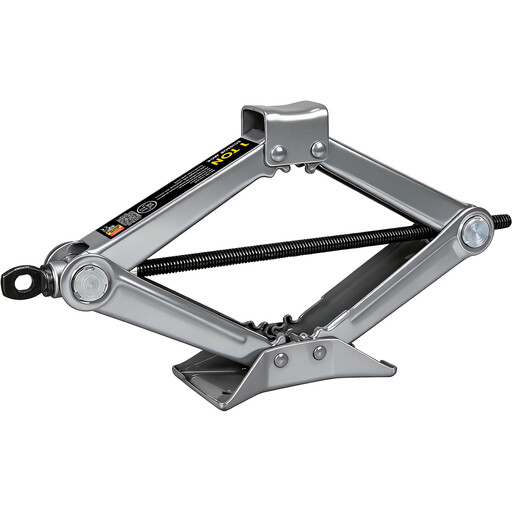
Why this suits this profile: This foldable scissor jack is ideal for occasional wheel changes on a saloon, city car, and some SUVs. Its compact size makes it easy to store in the boot.
Its stated minimum height of 88 mm reduces the risk of incompatibility with low-ground-clearance vehicles. The stated capacity should still be compared with your vehicle’s weight.
Forged steel construction, widened anti-slip base, lifting range from 88 to 380 mm, and foldable for storage.
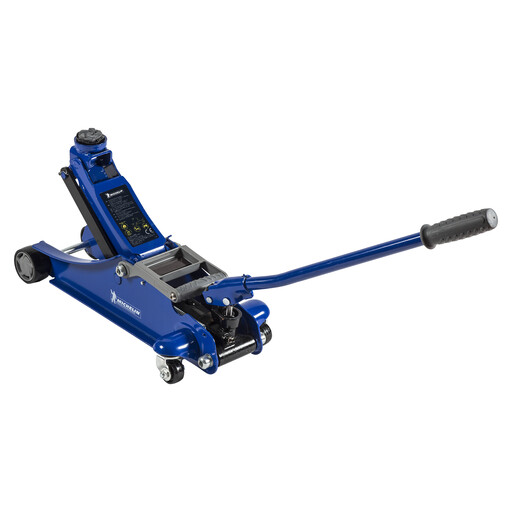
Why this suits this profile: This hydraulic car jack is aimed at motorists who regularly change a wheel or carry out maintenance in their garage.
Its range of 105 to 350 mm is clearly stated, making it easy to check compatibility before purchase.
Stated capacity of 1,800 kg, swivel castors, 360-degree rotating handle, rubber saddle, and magnetic tray for small parts.
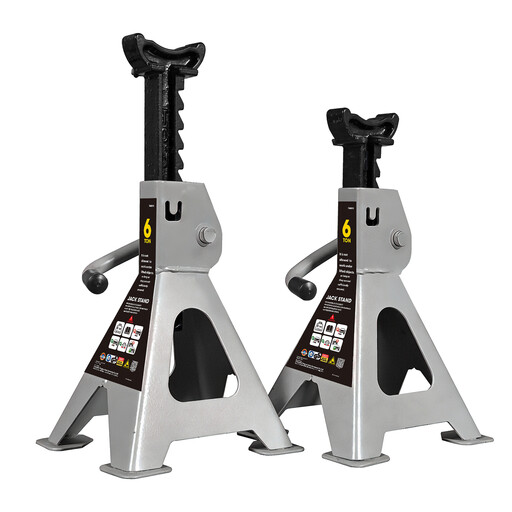
Why this suits this profile: These 6-tonne axle stands are designed for large SUVs, 4x4s, motorhomes, and light commercial vehicles used regularly in a workshop or for extended jobs.
The adjustment range of 388 to 580 mm is clearly stated, as is the welded steel and cast iron construction. Still, check your vehicle’s load rating.
Pair of axle stands, adjustable height from 388 to 580 mm, rubber saddle, and EN 1494 certification stated in the product description.
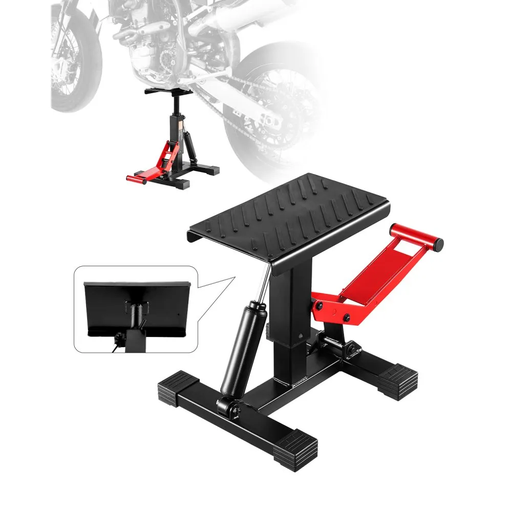
Why this suits this profile: This motorcycle jack is for owners of bikes and quads who want a dedicated lifting platform rather than equipment designed for cars.
Its stated capacity of 544 kg should be compared with the weight of your motorcycle or quad. The compatibility of the support points must be checked before each use.
Hydraulic lifting range stated as 250 to 465 mm and a design dedicated to motorcycles and quad bikes.
We’ve put together a comprehensive, real-time selection of products that meet these demanding criteria and European safety regulations.
For a saloon or city car, a foldable scissor jack can work for occasional use, provided its capacity and height are compatible. For regular use, a hydraulic jack or trolley jack will generally be more pleasant to operate. In any case, use axle stands if the job will take a while or if you need to work underneath the vehicle.
Its lifespan depends on how often it’s used, storage conditions, and the condition of its components. Store it away from moisture, and regularly inspect the welds, wheels, saddle, and hydraulic system. If you notice any leaks, deformation, or sticking, replace the equipment. The manufacturing date, instruction manual, and manufacturer’s recommendations are the best references to follow.
Choose a capacity that suits your vehicle and the intended use. 2-tonne axle stands will be fine for many family cars, while 3-tonne axle stands offer more margin for some SUVs and light commercial vehicles. For a large 4x4 or motorhome, a pair of 6-tonne stands can be considered if the vehicle’s specifications and support points allow it.