
Livraison le jour même ou le lendemain

Qualité garantie

Débloquez vos offres de bienvenue: Livraison GRATUITE | Jusqu'à -80 % | 30 jours d'essai gratuits à JoyPlus
Téléchargez l'application
Lifting a car safely requires equipment tailored to its specific chassis clearance, curb weight and the maintenance task at hand. While standard emergency jacks supplied with vehicles get you out of trouble during an unexpected puncture, regular servicing and seasonal tyre swaps demand far sturdier, more efficient lifting mechanisms. Choosing the wrong style can result in damaged side sills, unstable lifting geometry, or equipment that simply cannot slide beneath low bodywork.
Car jacks fall into three main mechanical families: mechanical scissor jacks, hydraulic trolley jacks and pneumatic air jacks. Each design balances portability, lifting height and operating speed differently. Understanding these mechanical principles ensures you invest in a lifting setup that fits your vehicle correctly and lets you work safely in your garage or on the driveway.
A frequent error is assuming a jack must match the total gross vehicle weight (GVW) shown on your registration document. In practice, a jack raises only one corner or one axle at a time, supporting roughly half the vehicle weight. However, underestimating working margins or buying an under-rated jack causes premature hydraulic seal failure and dangerous instability.
Many workshop jacks boast substantial lifting heights but feature high starting saddles that cannot clear the sill on modern saloons or sports models. Trying to force a tall jack under a lowered pinch weld damages plastic skirts and floor pans. Always measure the clearance from tarmac to jacking point when the tyre is fully deflated before purchasing.
Hydraulic systems rely on fluid pressure and internal rubber seals that can slowly bleed down or fail abruptly without warning. Relying on any jack mechanism alone to hold a car while carrying out mechanical repairs underneath is hazardous. A jack is solely a lifting tool, never a sustained load-bearing support.
The jack must easily slip under your designated jacking points and provide sufficient extension to lift tyres completely off the ground.
Select a safe working load that easily handles your vehicle axle weight with a comfortable safety factor.
The mechanical drive determines how fast, mobile and convenient the lifting process is in your typical working area.
These selected lifting tools cover portable roadside emergency kits, home garage servicing setups and high-speed workshop operations.
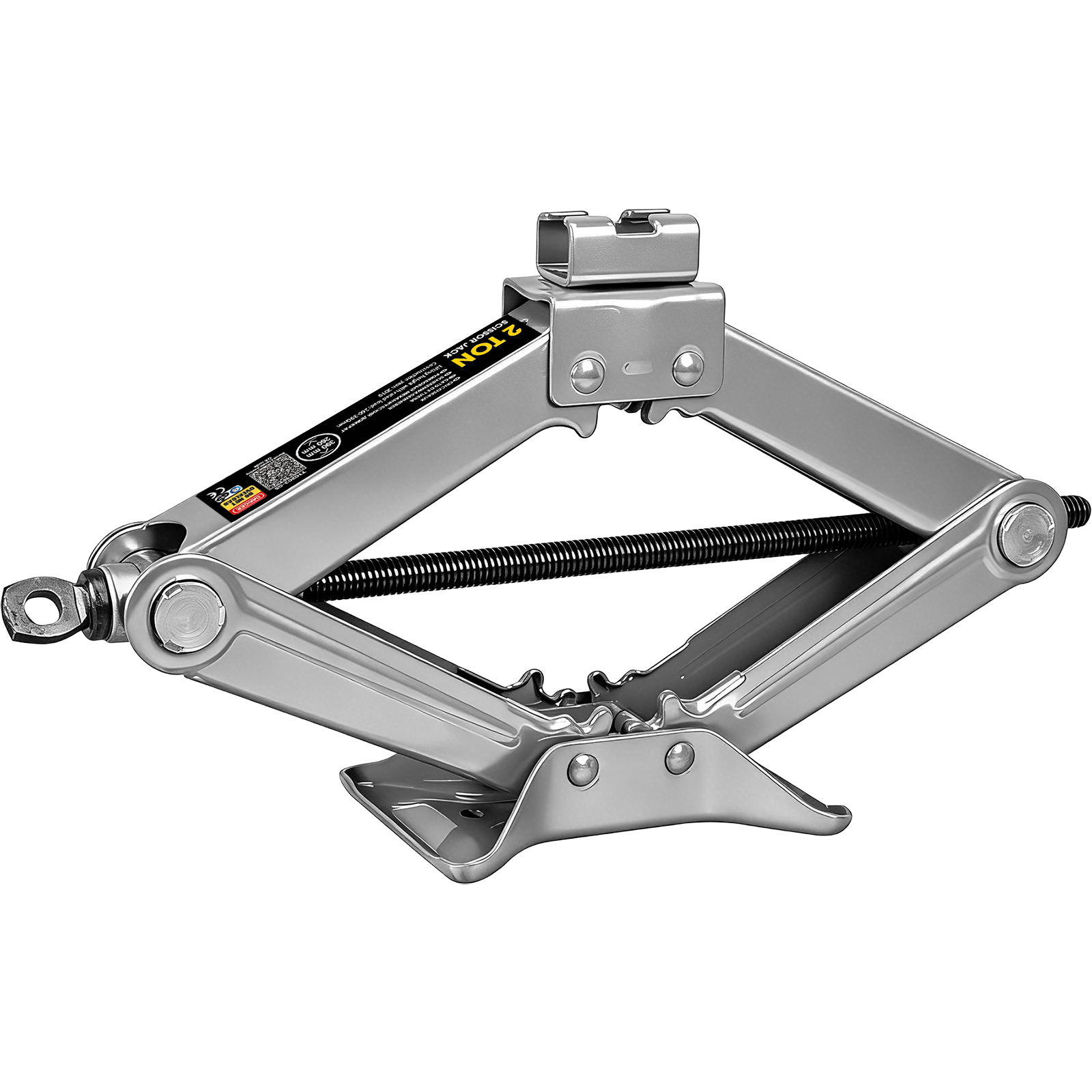
Why This Fits Their Persona: This mechanical scissor jack delivers a 2-tonne working capacity with an operating range from 120 to 395 mm, making it well matched to family saloons and urban crossovers. Its folding design compresses down to 88 mm in height, allowing it to stow neatly alongside your spare wheel without eating into boot space.
It bypasses the risk of hydraulic fluid leaks during prolonged storage in cold car boots, using a robust screw drive that remains functional regardless of posture or temperature.
The non-slip base plate provides dependable contact on tarmac edges, giving you a steady foundation when changing a punctured tyre away from home.
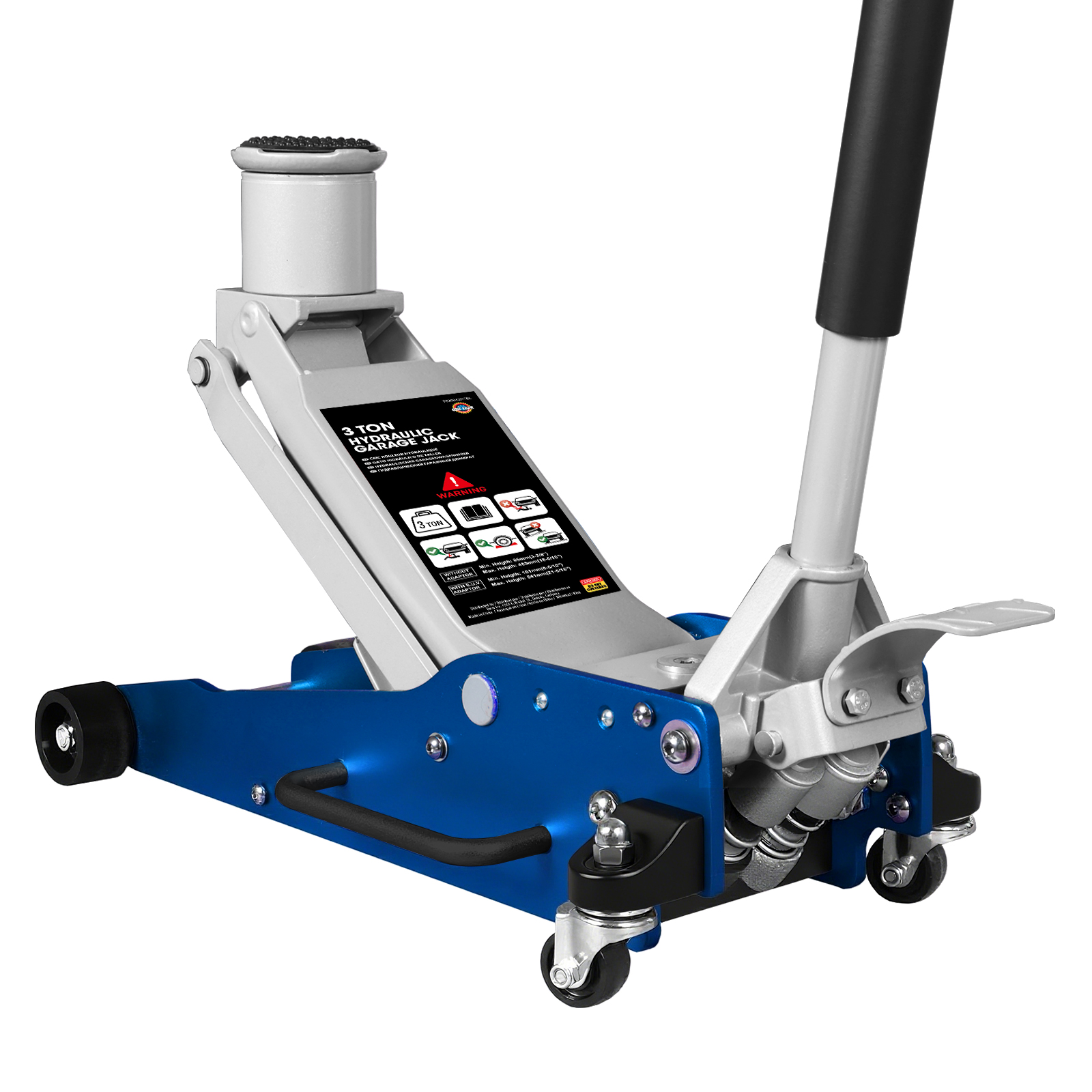
Why This Fits Their Persona: Constructed from lightweight aluminium alloy with a low-profile 85 mm minimum saddle height, this 3-tonne hydraulic trolley jack glides under low-slung saloons and sports bodywork. Its dual-pump mechanism rapidly raises the arm to the contact point, extending to 465 mm or up to 541 mm using the included height extension adapter.
It prevents underside sill damage on lowered cars thanks to its ultra-low clearance entry, while avoiding the excessive deadweight of traditional cast-iron workshop jacks.
Certified to EN 1494 and CE standards, it pairs high-grade workshop stability with effortless positioning beneath diverse vehicle types from MPVs to vans.
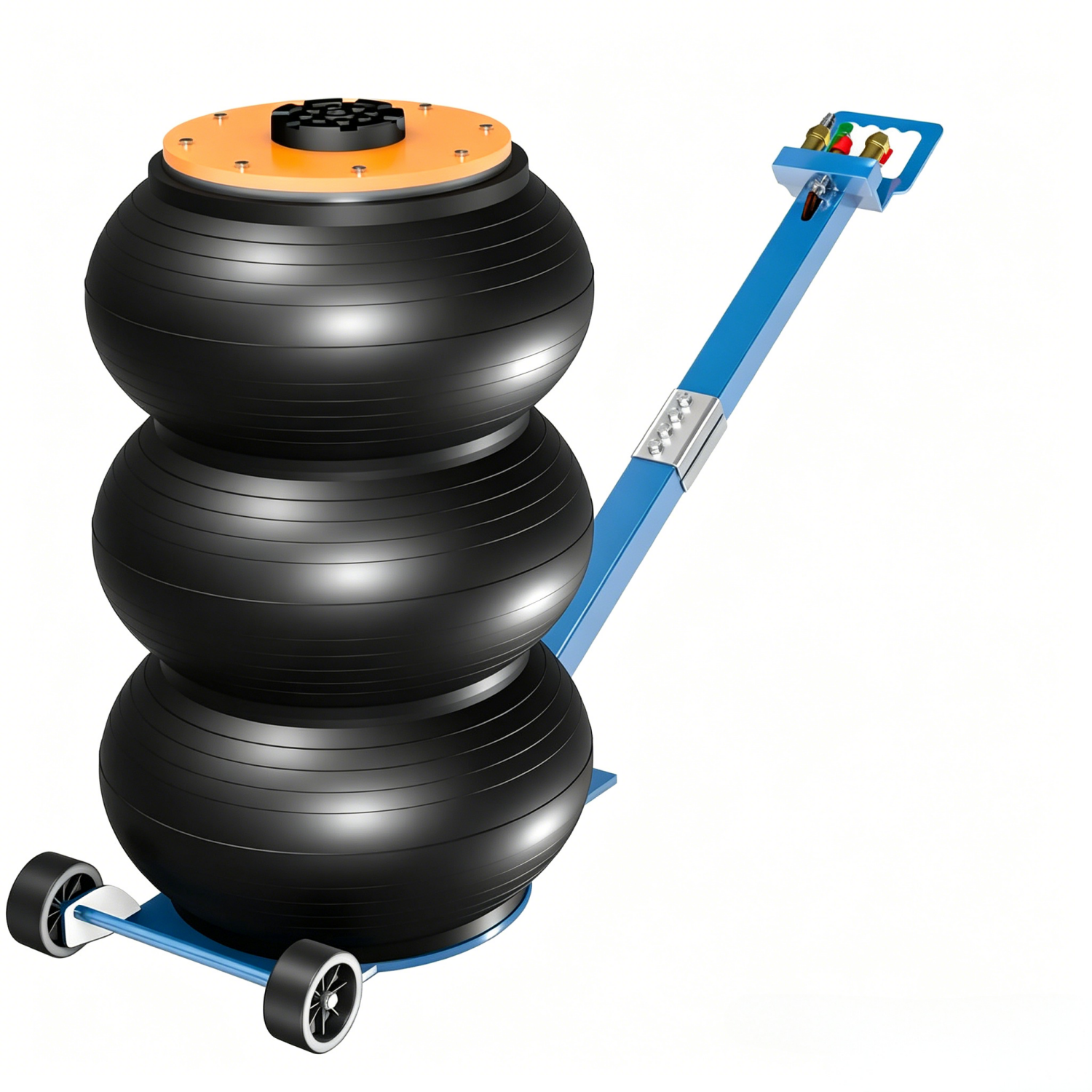
Why This Fits Their Persona: This triple-bag pneumatic jack utilises standard workshop compressed air to elevate loads up to 5 tonnes in approximately 3 seconds. Offering a working height range from 5.9 to 15.75 inches, it is an efficient solution for fast wheel swaps, suspension inspections and busy driveway maintenance.
It eliminates the physical fatigue of repeated manual pumping on heavy vehicles, utilising compressed air regulation to lift substantial loads without strain.
Equipped with an automatic air shut-off valve and a three-level adjustable handle, it provides quick manoeuvring and reliable operational control around garage bays.
A scissor jack relies on a threaded mechanical screw, making it compact, lightweight and ideal for stowing in a vehicle for emergency tyre changes. A hydraulic trolley jack features wheels, a broader footprint and a fluid-driven pump, offering far greater stability, faster lifting and higher capacities for regular vehicle maintenance on flat, solid floors.
Measure the vertical gap between the ground and the reinforced jacking point on your vehicle sill, bearing in mind that a flat tyre lowers this clearance further. Choose an ultra-low-profile jack with an entry height of 85 mm or less, and confirm the saddle features a rubber pad to protect anti-corrosion paint on the pinch weld.
No, you should never place any part of your body beneath a vehicle supported purely by a hydraulic, mechanical or pneumatic jack. Jacks are designed strictly to lift the vehicle; you must immediately lower the car onto correctly rated axle stands positioned on stable ground before carrying out any work underneath.