A seasonal tyre change, an oil change, or a minor repair?? For anyone who enjoys DIY car maintenance, a reliable car jack is an indispensable tool. But with the maze of available models, how do you find your way?? Choosing the wrong tool isn't just inefficient; it's a real danger to your safety and your vehicle.
This guide is here to help you see clearly and make the right choice. We've selected models that stand out from the crowd, catering to a range of needs from the passionate enthusiast to the demanding professional.
How to Choose the Right Jack for Your Car
Before you start, there are three criteria to scrutinise: lifting capacity, jack type, and lifting height.
1. Lifting Capacity: A Matter of Safety
The capacity, expressed in tonnes (T), indicates the maximum weight the jack can lift. This isn't about lifting the entire vehicle, but just one side or corner. As a rule of thumb, to work safely, choose a jack with a capacity equal to or greater than 75?% of your vehicle's Gross Vehicle Weight Rating (GVWR).
- For city cars and compacts: A 1.5 to 2-tonne model is more than enough.
- For saloons and SUVs: A 3-tonne jack is ideal. It provides a good safety margin and is suitable for a wide range of vehicles. It's the sensible choice for an SUV jack.
- For commercial vehicles and large 4x4s: Aim for 5 tonnes or more, especially for the heaviest models.
2. Jack Type: Hydraulic Trolley or Pneumatic?
The mechanism directly impacts the ease of use, lifting speed, and the operational scope of your jack.
- The hydraulic trolley jack: This is a classic staple in garages and workshops. Mounted on wheels, it slides and positions effortlessly under the car. You raise it by pumping a lever, which requires minimal effort. It is the quintessential versatile workshop jack.
- The pneumatic jack: Powered by an air compressor, it lifts the car in the blink of an eye and without any effort. It's a favourite among professionals for its speed and power, making it ideal for heavy loads.
3. Lifting Height and Jack Profile
The lifting range, meaning its minimum and maximum height, is a crucial criterion.
- A low-profile jack is a must-have for sports cars or lowered vehicles with very low ground clearance. It's imperative to check that its minimum height in the lowered position fits under your chassis.
- Conversely, for an SUV or a utility vehicle, a high maximum lifting height is needed to ensure the wheel can lift clear of the ground.
Our Recommended Car Jack Picks
Our editorial team has scoured the market to select models that stand out, each meeting a specific need.
LARBANKE 5T Fast-Lift Pneumatic Jack
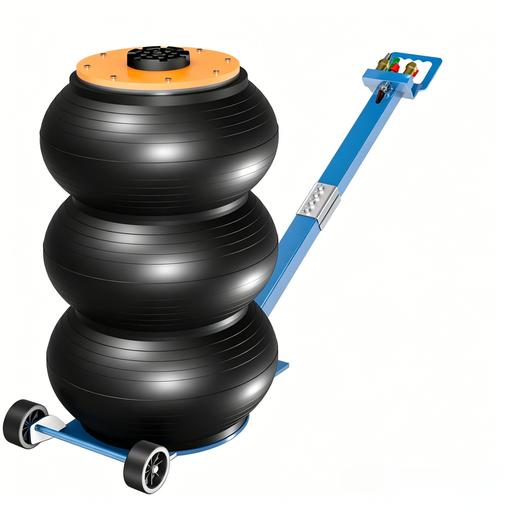
Why it stands out: With its 5-tonne lifting capacity and lightning-fast speed, this is the tool for pros and demanding situations. Its pneumatic mechanism handles the lift in just a few seconds.
Advantages:
- High Capacity: Supports up to 5 tonnes (11,000 lbs), suitable for cars, SUVs, and even light commercial vehicles.
- Rapid Lifting: The triple bag air system lifts the vehicle in 3 to 5 seconds flat.
- Wide Operating Range: Adjustable lifting height from 15 cm to 40 cm.
- Practicality: Its long handle is adjustable and detachable for easy positioning and storage.
Who is it for? Ideal for workshops, owners of heavy vehicles (large SUVs, utility vehicles), or enthusiasts who want to equip their garage with professional-grade gear.
LARBANKE 3T Hydraulic Trolley Jack
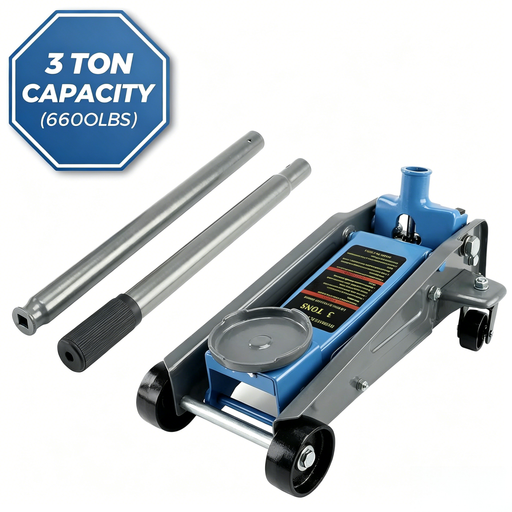
Why it stands out: This hydraulic jack strikes the perfect balance between robustness, versatility, and simplicity. With its 3-tonne capacity, it covers the vast majority of motorists' needs.
Advantages:
- Highly Versatile: Its lifting range of 135 mm to 460 mm is suitable for both saloons and SUVs.
- Manoeuvrability: Its 2 fixed wheels and 2 360° swivel castors allow for effortless, pinpoint positioning.
- Robust Construction: Its steel frame is a guarantee of reliability for regular use.
- Comfortable Use: Its long lever provides an excellent grip for effortless pumping.
Who is it for? The smart choice for the individual who maintains their own car or SUV. A reliable and versatile trolley jack, essential for any well-equipped garage.
TCE 1.5T Low-Profile Aluminium Hydraulic Jack
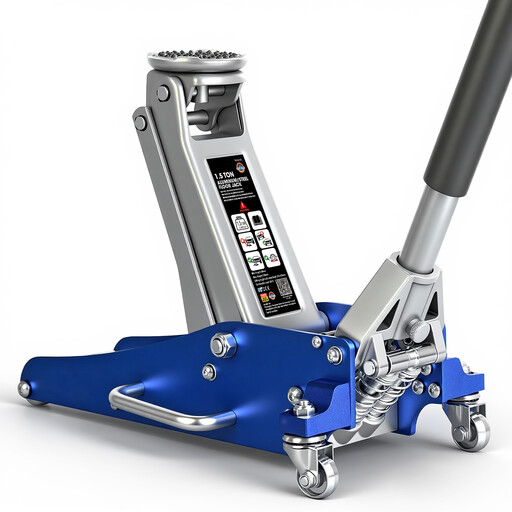
Why it stands out: Its secret? An aluminium alloy design that makes it feather-light (just 14.3 kg) and an ultra-low profile to slip under the trickiest of chassis.
Advantages:
- Ultra-Low Profile: With an entry height of just 90 mm, this low-profile jack is perfect for sports cars and lowered vehicles.
- Lightweight and Portable: Its aluminium frame makes it easy to transport, whether for a roadside tyre change or a track day.
- Rapid Lifting: Its dual-piston system allows it to reach maximum height much faster.
- Compliance: Certified according to European standards EN 1494 and CE.
Who is it for? For sports car owners, track day enthusiasts, and anyone looking for a jack that is both high-performance and easy to carry.
Can't Find the Right Model for You?
Our selection covers the most common uses, but every car (and every mechanic!) is unique. Are you looking for a different capacity, a specific mechanism, or accessories?? Other solutions are available.
Feel free to explore a wider range of garage equipment to find the hidden gem that matches your projects.
Frequently Asked Questions About Car Jacks
What Jack Capacity for an SUV?
For most compact and family SUVs, a 3-tonne jack is the peace-of-mind choice. It ensures you have a comfortable safety margin. For very large models or imposing 4x4s, you should check the GVWR (Gross Vehicle Weight Rating) on your vehicle's registration document; a 4 or 5-tonne jack would be a more prudent choice.
How to Use a Car Jack Safely?
Safety first! Here are the golden rules to always follow:
- Park on a perfectly flat, hard, and stable surface.
- Engage the handbrake and put the car in gear (or in "P" for an automatic transmission).
- Chock the wheels that remain on the ground to prevent any movement.
- Place the jack only on the reinforced lifting points specified by the manufacturer (refer to your car's manual).
- Once the car is lifted, immediately place axle stands for safety. Never get under a vehicle that is supported only by a jack: it's a matter of life and death.
Hydraulic Jack or Pneumatic Jack: Which to Choose?
It all depends on your use case and your equipment.
- The hydraulic jack is ideal for domestic use, even intensive. It's self-contained, versatile, and offers excellent control over the lifting process.
- The pneumatic jack is clearly aimed at professionals and workshops. It requires an air compressor, but its speed and power are unparalleled. It's a significant time and energy saver for intensive use.


