
Livraison le jour même ou le lendemain

Qualité garantie

Débloquez vos offres de bienvenue: Livraison GRATUITE | Jusqu'à -80 % | 30 jours d'essai gratuits à JoyPlus
Téléchargez l'application
Lifting a car is a serious task. Whether for a simple wheel change or more complex work under the chassis, there is no room for error when it comes to safety. A car jack is designed to lift, but only jack stands can guarantee stable and secure support for the duration of the work.
With an overwhelming number of options on the market, telling quality equipment from a subpar one can quickly become a headache. This guide gives you the keys to choosing reliable, durable, and, most importantly, compliant equipment that meets the strictest European safety standards.
Before diving into our selection, here are three essential points to check to make an informed choice that is perfectly suited to your vehicle and your needs.
The load capacity, expressed in tonnes, is the first criterion to validate. You don't need to choose a capacity equal to your vehicle's total weight: a jack typically lifts only one side, which is about half of its mass. However, always allow for a comfortable safety margin.
The absolute golden rule: a jack is for lifting, never for holding. Once the vehicle is at the desired height, it is imperative to secure it immediately with jack stands, positioned on the reinforced points specified by the manufacturer. Working under a car that is only supported by a hydraulic jack is exposing yourself to a potentially fatal accident. The combined use is the only safe working method.
Do not overlook certifications: they are your life insurance. The European standard EN 1494 is the benchmark for mobile or movable jacks. A product certified EN 1494 has undergone rigorous design, strength, and reliability tests. Other labels, such as the German GS (Geprüfte Sicherheit) certification, also attest to quality control by an independent body. Always insist on equipment that clearly displays these precious seals of approval.
Here is a selection of products that meet specific needs, whether you are a demanding professional or a car enthusiast concerned about safety.
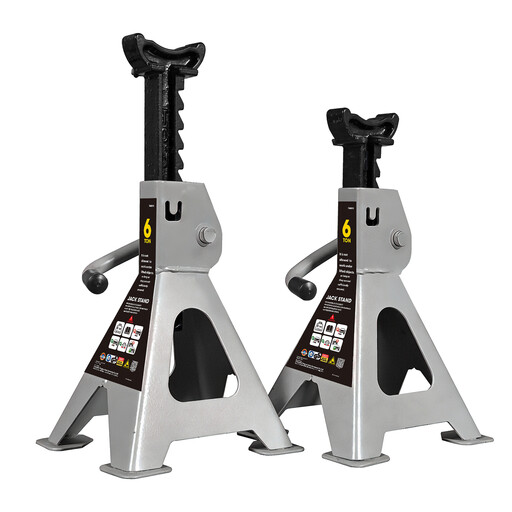
Key Features These jack stands are built for heavy loads and intensive use. With a true load capacity of 6 tonnes per pair and a wide height adjustment range (388-580?mm), they are ideal for high-clearance vehicles.
Benefits
Who is it for? Repair shops and owners of large vehicles looking for ultra-reliable support equipment for regular maintenance.
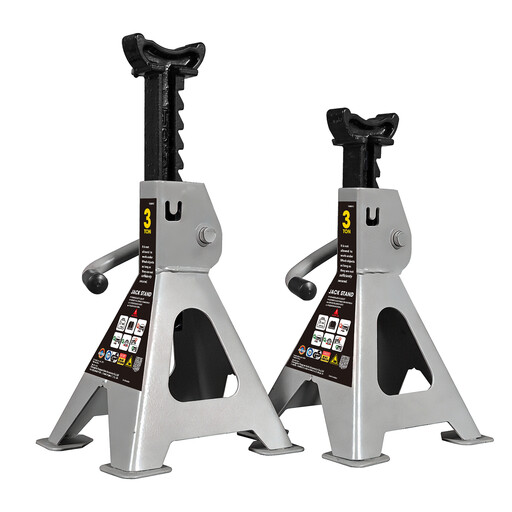
Key Features This set of 3-tonne jack stands offers the perfect balance of versatility and safety. Its adjustment range (276-420?mm) allows it to adapt to both low-profile sports cars and compact SUVs.
Benefits
Who is it for? Discerning car enthusiasts and garages working on a variety of light vehicles who prioritise certified safety.
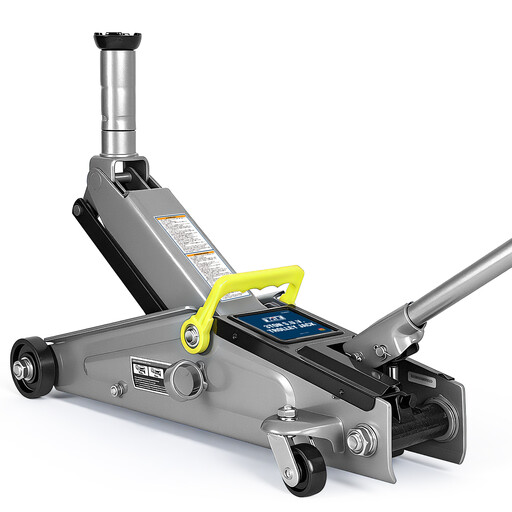
Key Features This 3-tonne hydraulic jack combines power and versatility with its wide lifting range (150-530?mm), making it compatible with most cars, SUVs, and MPVs. Its robust design makes it a reliable essential tool for any workshop.
Benefits
Who is it for? The indispensable all-purpose tool for tyre changes and routine maintenance on the majority of vehicles.
This selection highlights products that meet strict safety and performance criteria. If your needs are different or if you simply want to compare other models, a wider range of equipment awaits you.
Discover Our Full Range of Safety Tools
1. Can I use a car jack without jack stands? Absolutely not! A jack, whether hydraulic or mechanical, is a lifting device, not a support device. There is always a risk of failure or slippage. For your safety, you must always secure the vehicle with appropriately rated jack stands before getting underneath it.
2. What is the difference between a hydraulic floor jack and a bottle jack? The floor jack (or trolley jack) sits on a long, wheeled chassis, which ensures excellent stability and easy positioning under the vehicle. The bottle jack, on the other hand, is more compact and vertical, but its narrower base makes it less stable. For car maintenance, the floor jack is by far the safer and more practical option.
3. How do I know if a jack is compatible with my SUV? There are three things to check: your SUV's kerb weight (listed on the vehicle registration), its ground clearance, and the jack's maximum lifting height. Ensure the jack's capacity is well over half the vehicle's weight. Then, verify that its minimum height allows it to slide under the chassis and that its maximum height is sufficient to lift the wheels off the ground.