
Same-day & Next-day Delivery

Quality Guaranteed

Unlock Your Welcome Offers: FREE Delivery | Up to 80% OFF | Free 30-day JoyPlus trial
Download the APP
A car hydraulic jack can make changing a wheel or carrying out a minor repair much easier — provided it is genuinely suitable for your vehicle. The stated capacity is not the only consideration: minimum height, stability, lifting points and how much space it takes up in the boot are just as important.
Some products display ‘2 tonnes’ in their name, even though their technical specifications state a different rated capacity. This is particularly the case with the TCE T10102, presented as a 2-tonne jack in its title but described as a 1,000 kg model in its specifications.
Before using it, always check the manual, the label attached to the product and the actual load it is designed to support. If there is any discrepancy, the official technical specifications and the manufacturer’s guidance should take precedence over the marketing title.
A conventional hydraulic trolley jack will not necessarily fit beneath a sports car or lowered saloon. Conversely, a very low-profile model may not have enough lifting range for an SUV or van.
The correct measurement is the distance between the ground and the lifting point when the vehicle is parked on a flat surface. Compare this with the jack’s minimum height before placing your order.
A jack is designed to lift a vehicle, not to keep it raised for a long period. To inspect the chassis, change the oil or carry out a repair, you must install suitable car axle stands at the points specified by the manufacturer.
The handbrake, wheel chocks and a completely stable surface are also essential.
The vehicle’s total mass is generally shown on the registration certificate or in the manufacturer’s documentation. The jack’s capacity must be compatible with the weight actually supported by the lifting point. Do not rely solely on the figure highlighted in the product description.
For a saloon or small SUV, a 3-tonne car jack provides a common capacity, but the model’s manual should always be treated as the definitive source.
For a heavy goods vehicle, coach or professional equipment, a 6- or 10-tonne hydraulic bottle jack may be suitable, provided its base and height match the vehicle. These models are compact, but considerably more difficult to move than a trolley jack.
The maximum height must allow you to reach the lifting point without placing the jack in an unstable position. An extension or adjustment screw may add to the lifting range, but it can never replace a correctly sized model.
A wide base, non-slip saddle and steel construction help limit movement during lifting. Aluminium generally reduces weight and makes transport easier, while steel focuses more on strength and resistance to repeated use.
The EN 1494 marking should be checked in the documentation for the model concerned. It cannot be inferred from a simple marketing claim or automatically applied to an entire brand range.
For axle stands, also check the load supported per pair, the adjustment range, the locking system and, where stated, the relevant marking.
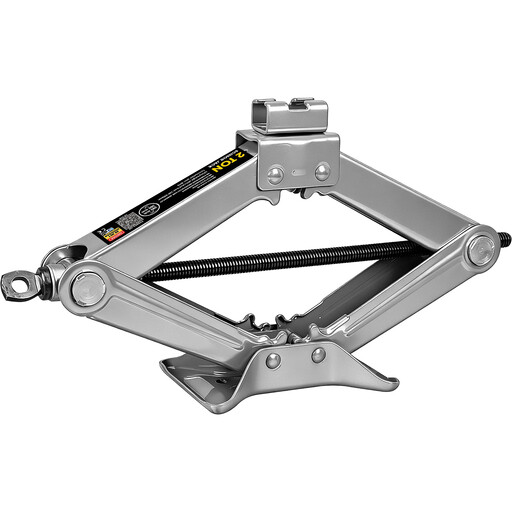
Why this choice suits this profile : Its foldable design is ideal for motorists who want to keep a tool in the boot for the occasional wheel change.
Its stated height of 88 to 380 mm must nevertheless be compared with the vehicle’s actual weight, as the title and description do not state the same capacity.
Forged steel construction, widened non-slip base and compact storage in the spare-wheel compartment.
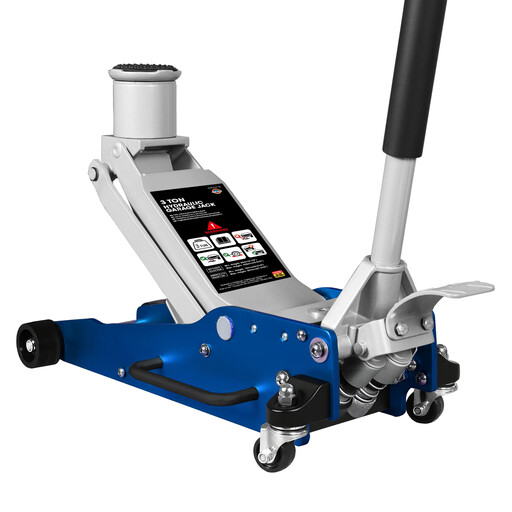
Why this choice suits this profile : This model is aimed at owners of sports cars, SUVs, MPVs or vans who need a low access height and a wide lifting range.
With a stated minimum height of 85 mm, it reduces the risk of incompatibility with a low chassis. The height-extension device increases the lifting range to 541 mm.
Stated capacity of 3 tonnes, dual pump, aluminium-alloy body, plus EN 1494 and CE markings shown in the specifications.
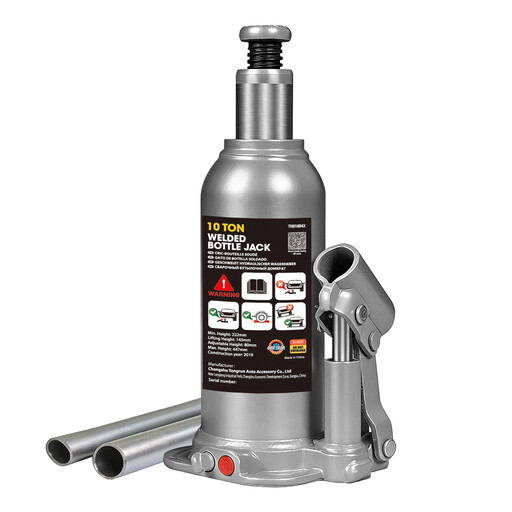
Why this choice suits this profile : Its stated capacity makes it suitable for heavy goods vehicles, buses, construction vehicles and industrial equipment used in garages or workshops.
Its 222 to 448 mm range and adjustment screw make it easier to set the correct height. However, the permitted load and lifting points must be confirmed in the vehicle documentation.
Forged steel base, chrome-plated piston, non-slip saddle and overload safety valve, according to the product specifications.
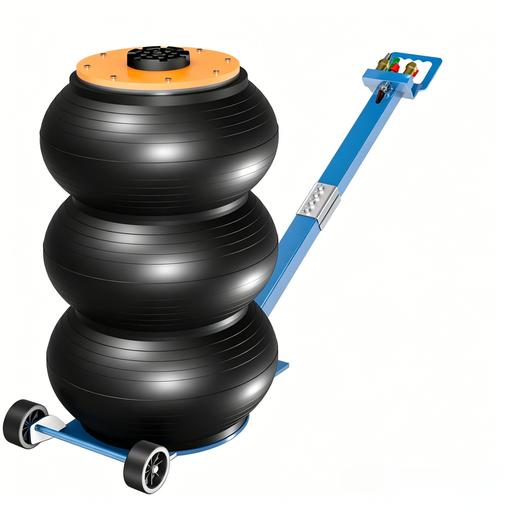
Why this choice suits this profile : Its pneumatic operation is suitable for workshops with an air supply that regularly work on cars or lorries.
Do not choose it unless you have a compatible compressor: its usefulness depends directly on the available installation and compliance with the pressure instructions.
Stated capacity of 5 tonnes, lifting in approximately 3 to 5 seconds according to the specifications, removable handle and positioning castors.
We have brought together a complete, real-time-updated selection of products that meet these demanding criteria and European safety requirements.
An oil leak, uneven lowering or deformation of the structure must result in the device being taken out of use immediately. Its service life depends on how often it is used, the load supported, storage conditions and compliance with the manufacturer’s instructions.
A 2- to 3-tonne hydraulic trolley jack is generally suitable for a saloon or compact SUV, provided you check the vehicle’s weight and the height of its lifting points. For roadside use in the boot, a scissor jack is more compact, but offers less comfort and mobility.
No. The jack should only be used to lift the vehicle. To support the load during a repair, use at least two axle stands — or more if specified by the manufacturer’s procedure — on a stable surface and at the recommended points.
Clean the moving parts, check for leaks, lubricate the joints in accordance with the manual and never exceed the stated capacity. Where specified in the manual, store the hydraulic jack in an upright position, particularly in the case of some bottle-jack models.