
Livraison le jour même ou le lendemain

Qualité garantie

Débloquez vos offres de bienvenue: Livraison GRATUITE | Jusqu'à -80 % | 30 jours d'essai gratuits à JoyPlus
Téléchargez l'application
A flat battery in a car park, an under-inflated tyre on the motorway or a puncture in the middle of the night can quickly turn an ordinary journey into a genuinely stressful experience. A car emergency kit cannot replace professional assistance, but it can help you wait safely, remain more visible and carry out a few simple roadside repairs.
The risk is not just forgetting an accessory. You also need to avoid buying equipment that is complicated to use, incompatible with your vehicle or poorly suited to the situations you are likely to encounter on British roads.
When choosing a car battery booster, the peak current in amps is not enough. You should also check the voltage, engine type, supported engine capacity, the device’s charge level and the quality of the clamps.
A portable jump starter designed for 12 V vehicles is not automatically suitable for every van or diesel engine. Consult your vehicle’s manual and check the product’s detailed specifications before placing your order.
A car air compressor capable of reaching a high pressure is not necessarily fast. The hose length, battery capacity, airflow, automatic shut-off and cooling time also play an important role.
For a family car, choose a model that lets you check the pressure in bar or PSI and switches off automatically when it reaches the selected value. For an SUV, van or motorbike, also check the cable length and the supplied nozzles.
A car jack must match the vehicle’s minimum chassis height and weight. A model that is too tall will not fit under a lowered car, while an undersized device can become dangerous when changing a wheel.
A jack is designed solely to lift a vehicle temporarily. Never get underneath a car supported only by the jack : use suitable safety equipment, work on a stable surface and follow the manufacturer’s instructions.
For a booster, check in particular :
A display showing the charge level is particularly useful. A device left in the boot for several months needs to be recharged regularly. Some models recommend recharging every two or three months.
For a jack, compare the minimum height, maximum height and rated capacity with your vehicle’s specifications. A wide, non-slip base can improve stability on a suitable surface, but it never replaces following the safety instructions.
Jump leads also deserve careful attention: cable cross-section, length, clamp insulation and the presence of a storage case are all points to check. The XLPT model features a 25 mm² cross-section, a 3.50 m length and fully insulated clamps. The connection must always follow the polarity indicated in the instructions.
Useful emergency equipment should remain easy to reach. A torch with several modes, a high-visibility vest, gloves and a signalling device can make a night-time intervention easier. The glass breaker hammer and seatbelt cutter should be stored in the passenger compartment, not at the bottom of the boot.
The smosun models shown below are designed for toughened side windows. The description states that they are not suitable for windscreens or laminated windows. This is an important distinction to bear in mind when buying, as well as when storing the device in your car.
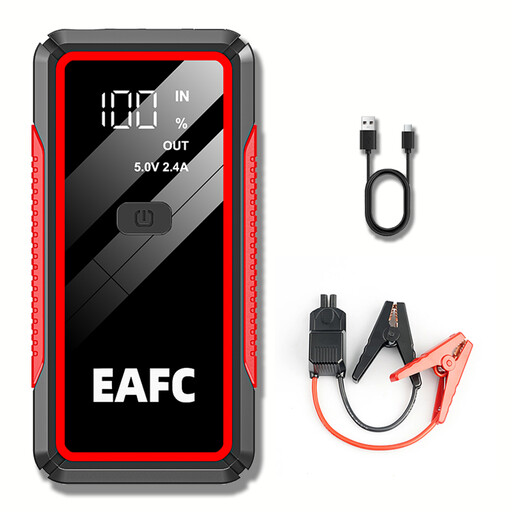
Why it suits this profile : Its compact design is ideal for motorists looking for a simple solution for a 12 V car, SUV or motorbike. It combines jump-starting, a torch and USB charging.
The product details clearly state compatibility with petrol engines up to 6.0 L and diesel engines up to 4.0 L. The battery level remains visible on the built-in display.
2,000 A peak current, a 10,000 mAh battery and three-mode lighting.
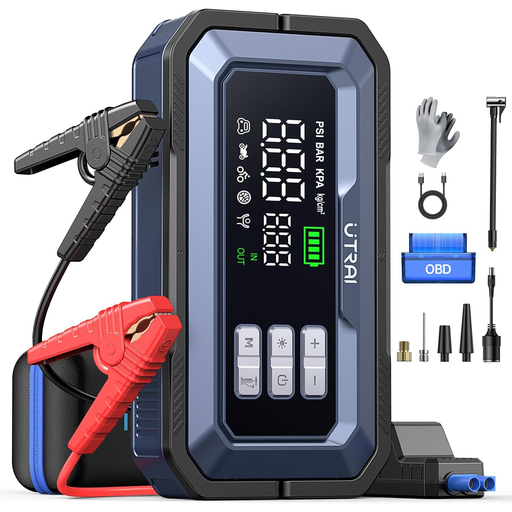
Why it suits this profile : This multifunctional model is aimed at SUV, van and large-capacity diesel vehicle drivers who want to combine several emergency accessories in a single device.
The functions are listed separately: 12 V jump-starting, inflation up to 150 PSI, 12 V output, lighting and an OBD2 adapter. However, the stated engine compatibility must be checked against your vehicle’s manual.
A stated peak current of 7,000 A, a compressor with automatic shut-off and protection against several electrical errors.
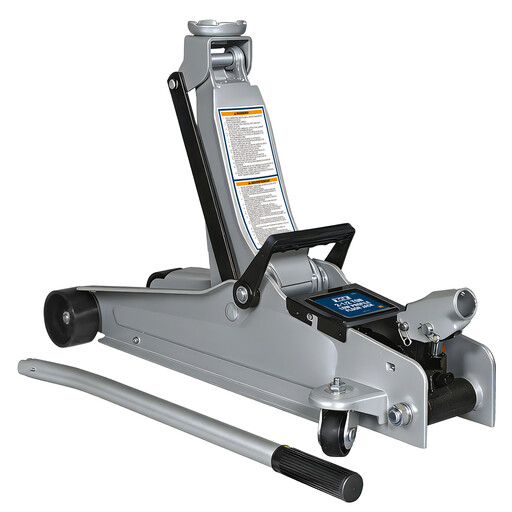
Why it suits this profile : With an access height of 85 mm, it is intended for low vehicles, sports saloons and certain SUVs. It is aimed at motorists who carefully check ground clearance before buying.
The stated lifting range is 85 to 380 mm, with a rated capacity of 2.5 t. The product details also mention EN 1494 and CE references: always check the documents supplied.
Steel construction, hydraulic lifting and a 2.5 t capacity for wheel changes compatible with the vehicle.
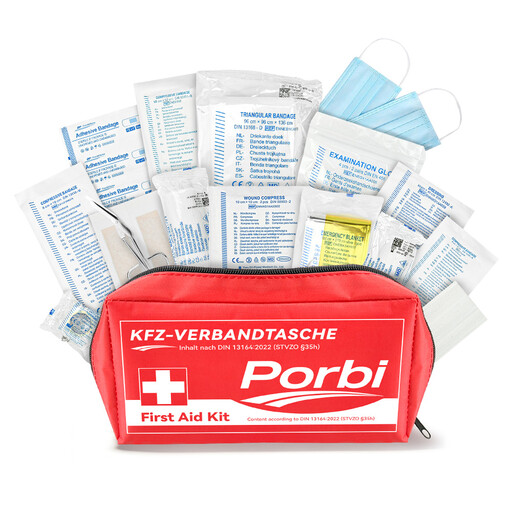
Why it suits this profile : This car first aid kit contains plasters, dressings, bandages, gloves, an emergency blanket, scissors and a mask. It fits easily into a family vehicle.
The product details state DIN 13164 compliance and specify the kit’s contents. Check the condition of the packaging and the expiry dates of the relevant items regularly.
Detailed contents, a 160 × 210 cm emergency blanket and four pairs of disposable gloves.
We have brought together a complete, real-time updated selection of products that meet these demanding selection criteria and European safety standards.
Store accessories according to how often you use them. The booster, jump leads, gloves and torch should remain easy to reach. The jack and wheel-changing tools can be kept in the compartment provided by the manufacturer. The glass breaker hammer and seatbelt cutter should remain in the passenger compartment, within easy reach of everyone inside.
Before a long journey, check the portable jump starter’s charge, the pressure of the spare wheel, whether the locking wheel-nut adapter is present and the condition of the cables. A first aid kit does not replace the emergency services : in the event of an accident or danger, make the area safe and call the emergency services.
It all depends on what it contains. A basic kit may be limited to a first aid kit, jump leads and a torch. A more versatile set will add a booster, compressor and jack. Before looking at the number of advertised functions, compare compatibility, dimensions, warranty and supplied accessories above all.
Its service life depends on the battery, storage conditions and maintenance. Recharge the device according to the instructions, generally every two or three months when it is not being used. Avoid leaving it in a boot exposed to high temperatures or moisture, and check its charge level before every long journey.
Yes, provided that the voltage and stated limits match the vehicle. Some models are compatible with motorbikes, SUVs, boats or large-capacity diesel engines. Check the manual, the maximum supported engine capacity and the connection procedure before use.