
Livraison le jour même ou le lendemain

Qualité garantie

Débloquez vos offres de bienvenue: Livraison GRATUITE | Jusqu'à -80 % | 30 jours d'essai gratuits à JoyPlus
Téléchargez l'application
The check engine light comes on your dashboard. A cold sweat, closely followed by the dread of a hefty garage bill. Getting a car diagnostic tool seems like the perfect solution to regain control and make significant savings. But here's the problem: the market is flooded with models whose tempting promises often lead to costly disappointment. To avoid getting ripped off, it's essential to know the most common scams.
As the editorial team's product expert, I'm here to break it down for you. Here are the main pitfalls to avoid:
To make a smart choice, you need to focus on the features that truly make a difference.
Deciphering a product sheet can quickly become a headache. To see clearly, focus on these three pillars to judge the relevance of a multi-brand diagnostic tool.
A simple fault code reader only reads and turns off the check engine light. A true "all-system" car diagnostic tool goes much further. It must be able to communicate with your vehicle's main electronic control units (ECUs):
Also, check for the essential service (or reset) functions needed for routine maintenance. The most important are:
This is what separates the simple gadgets from semi-professional tools.
Automotive electronics are evolving at breakneck speed. To ensure long-term compatibility, especially if you have a recent car, two protocols are worth watching:
Finally, a Bluetooth diagnostic scanner is a game-changer in the garage: no more messy cables, you can work with complete freedom.
Rather than an endless list, here are our targeted recommendations for different user profiles.
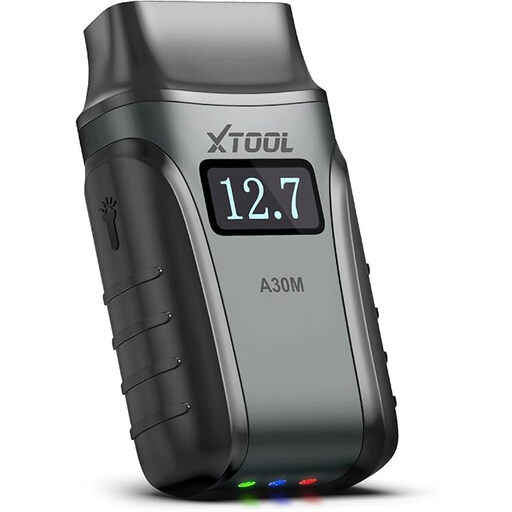
Why we love it: Ideal for starting out with a powerful tool without breaking the bank. Its Bluetooth connection and lifetime updates make it a future-proof investment for maintaining the family car or tackling more serious repairs.
Unlike entry-level gadgets limited to the engine, the A30M offers all-system diagnostics and true bidirectional control, all without a hidden annual subscription.
Bidirectional control and over 26 reset services with free lifetime updates. An almost unbeatable price-to-feature ratio.
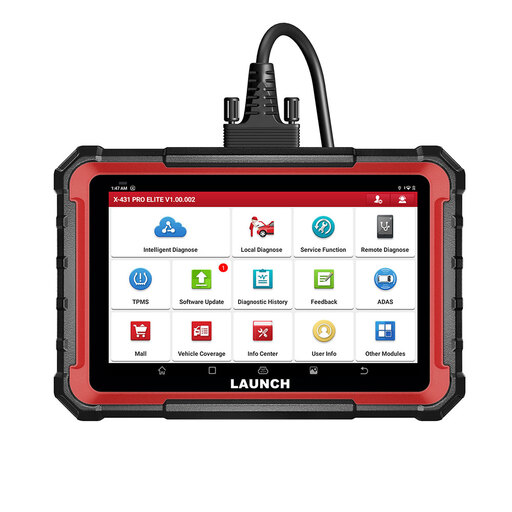
Why we love it: It's the perfect tool for juggling multiple cars or tackling complex faults. Its responsive tablet, advanced coding, and wide coverage make it a pro-level device, without the professional price tag.
It offers diagnostic depth (CAN FD/DOIP) and ECU coding that go far beyond marketing fluff. The 2 years of included updates allow you to work on very recent models without immediate extra costs.
Advanced ECU coding, comprehensive active tests, and compatibility with expansion modules (endoscope, battery tester) for surgical diagnostics.
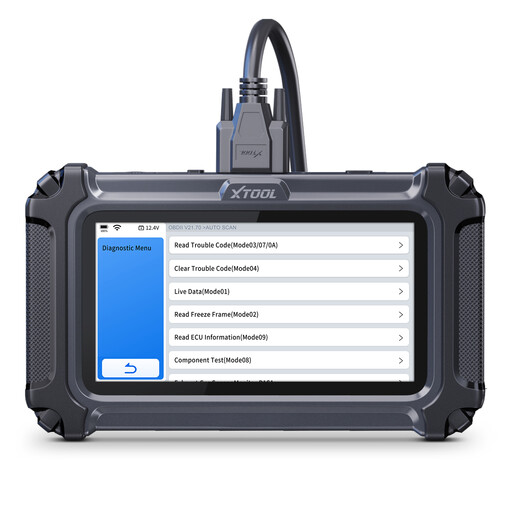
Why we love it: Designed for families whose garage houses modern cars (post-2020). Its native CAN FD and FCA AutoAuth compatibility, coupled with lifetime updates, provides peace of mind against future breakdowns and hidden fees.
It solves the compatibility headache with recent vehicles (GM, Fiat, Chrysler) without expensive adapters or being blocked by security gateways. The lifetime updates are a decisive advantage over subscription-based models.
All-system diagnostics with free lifetime updates, and most importantly, native support for recent protocols like CAN FD and FCA AutoAuth.
We have curated a complete range of products that meet our demanding selection criteria.
Absolutely not, and this is the number one trap. Compatibility depends on your vehicle's make, model, and year. While most tools are OBD2 compliant (mandatory on petrol vehicles since 2001 and diesel since 2004 in Europe) for engine diagnostics, access to other systems (ABS, SRS, etc.) and advanced functions varies enormously. The first thing you should do before any purchase: contact the seller with your vehicle's VIN to get written confirmation.
It depends on the model. Some tools, often the smartest choice for individuals, come with free lifetime updates. Others, aimed at a more professional audience, include a period of free updates (1, 2, or 3 years), after which a paid subscription is required to continue receiving software developments. Without a subscription, the tool remains functional for the vehicles it already supports, but it will quickly become obsolete and unable to diagnose newer models.
Yes, if used blindly. ECU coding deeply modifies the software configuration of control units. An incorrect operation can lead to serious malfunctions. Our advice: only attempt coding if you know exactly what you are doing, by following reliable tutorials and ensuring the vehicle's battery is perfectly stable (ideally connected to a battery maintainer) during the process. For simply reading codes or performing an oil reset, the risk is non-existent.