
Livraison le jour même ou le lendemain

Qualité garantie

Débloquez vos offres de bienvenue: Livraison GRATUITE | Jusqu'à -80 % | 30 jours d'essai gratuits à JoyPlus
Téléchargez l'application
By Joybuy, our product expert | Published August 27, 2026
The check engine light comes on, and with it, a cold sweat at the thought of a hefty garage bill. A car diagnostic tool then seems like the miracle solution to regain control and make significant savings. However, the market is a veritable minefield, saturated with promises that often lead to disappointment. To avoid getting ripped off, here are the pitfalls to watch out for before pulling out your credit card.
Too many car owners end up with a device that doesn't live up to its promises. Here are the mistakes you absolutely must not make.
To make the right choice, there's one golden rule: focus on these three essential technical criteria.
A simple fault code reader is limited to reading and clearing errors from the engine control module (ECM). For proper maintenance, aim for a tool capable of all-system diagnostics: ABS, Airbag (SRS), transmission, air conditioning, etc.
Also, take a close look at the list of service functions (or "resets"). The most useful for daily tasks are:
A bidirectional diagnostic tool is a game-changer: it doesn't just read data. It can send commands to ECUs to initiate "active tests." For example, you can command the activation of the radiator fan, open an EGR valve, or operate the windshield wipers directly from the tool. This function is incredibly effective for isolating a fault in record time by checking whether the problem lies with the component itself or its command circuit. For more advanced users, ECU coding opens the door to configuring new modules or even activating hidden vehicle features.
Think about the total cost of ownership. A device with free lifetime updates is tempting, but only if this offer truly covers all brand-specific diagnostics, not just the basic functions. For professionals, a subscription often guarantees priority access to the very latest updates.
Finally, the ultimate weapon against obsolescence: CAN FD and DoIP compatibility. This is your assurance that you can communicate with the newest vehicles on the market, both today and in the future.
Instead of an endless list, here is our curated selection, with a tool for every profile.
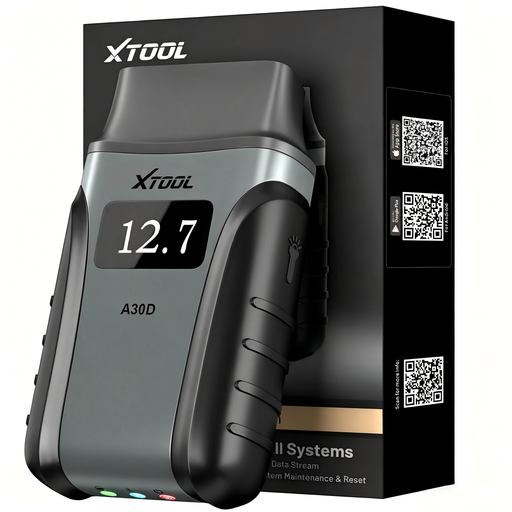
Why it's right for this profile: Perfect for the car owner who wants to handle routine maintenance and diagnostics on the family's cars. It turns any smartphone (iOS/Android) into a powerful wireless diagnostic tool that slips easily into the glove box.
Its business model is crystal clear: updates for all service functions are included for life, with no hidden subscriptions. It's also CAN FD compatible, ensuring excellent longevity.
It offers full bidirectional control and all-system diagnostics, features usually found only on much more expensive scanners. An unbeatable features-to-price ratio.
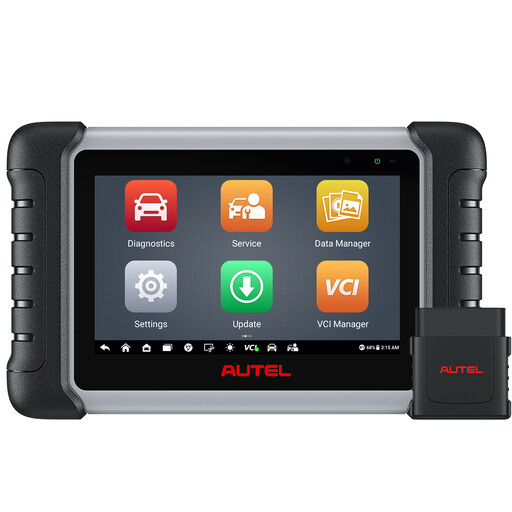
Why it's right for this profile: The tool of choice for the knowledgeable home mechanic or the small workshop in search of versatility and robustness. Its dedicated tablet and Bluetooth connection offer unparalleled ease of use and coverage for over 150 brands.
With over 38 service functions and OE-level diagnostics, it eliminates the risk of limited compatibility. The first year of updates is free, giving you time to evaluate it thoroughly before deciding whether to renew the subscription.
Its bidirectional control is particularly powerful for performing advanced active tests. Its stable wireless connection, up to 10 meters, offers complete freedom of movement around the vehicle.
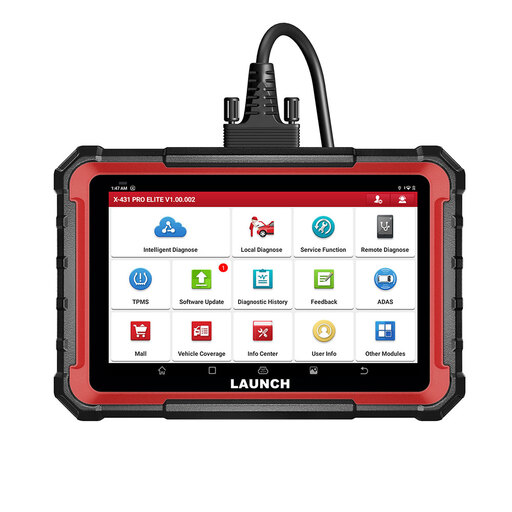
Why it's right for this profile: Built for pros and semi-pros who make no compromises on features. It masters not only full diagnostics and active tests but also advanced ECU coding, which is essential for complex repairs and module replacements.
It natively integrates CAN FD and DoIP protocols, a true shield against obsolescence. The 2 years of free included updates provide excellent visibility into its running costs, while knowing it remains fully functional afterwards.
The advanced ECU coding and guided functions for VAG group (VW/Audi) truly make the difference. Its compatibility with expansion modules (endoscope, battery tester, etc.) makes it a scalable and future-proof diagnostic platform.
We have curated a full range of tools that meet our demanding selection criteria.
Not always. The rule of thumb: verify what "free" actually covers. If it's limited to basic OBD2 functions, the tool will quickly lose its value. For heavy use, a subscription-based model will often provide more comprehensive and regular updates, especially for new vehicles. The key is to choose a transparent business model that suits your frequency of use.
If you own or plan to work on vehicles made after 2020, the answer is a resounding yes. Brands like General Motors, Ford, BMW, Volvo, and Jaguar Land Rover rely on these protocols for faster and more secure communication between the various ECUs. Investing in a CAN FD/DoIP compatible tool today is the guarantee that it won't be headed for the scrap heap tomorrow.
A code reader is a passive tool: it simply reads the information and error codes that the vehicle transmits. A bidirectional scanner, in contrast, is active: it can send commands to the vehicle to test a component (for example, forcing a headlight to turn on or activating a pump). This "active test" capability is crucial for pinpointing the source of a fault with certainty and avoiding the unnecessary replacement of parts.