
Livraison le jour même ou le lendemain

Qualité garantie

Débloquez vos offres de bienvenue: Livraison GRATUITE | Jusqu'à -80 % | 30 jours d'essai gratuits à JoyPlus
Téléchargez l'application
The check engine light illuminates on your dashboard, and a wave of anxiety washes over you, often accompanied by the fear of a hefty garage bill. The idea of buying a car diagnostic tool to identify the problem yourself is tempting. However, the market is saturated with devices making tempting promises that can quickly turn into costly disappointments.
As the Head of Product Recommendations at Joybuy, my role is to help you navigate this jungle. Let's cut through the marketing jargon and focus on the facts. Here are the most common pitfalls to avoid and the essential criteria for making an informed choice.
Dependence on Smartphones and Apps: Many modern scanners are simple Bluetooth adapters that rely entirely on a mobile app. These apps can be poorly translated, require constant updates, or even hide paid subscriptions to unlock basic functions. For a quick and hassle-free diagnosis, this dependency often proves to be a major drawback.
Promises of "Universal" Compatibility: A device may be advertised as a multi-brand diagnostic tool, but the reality is often quite different. Some models struggle to communicate with older vehicles (pre-2005) or specific brands, leaving you with a tool that can't read a single error code from your car.
Unnecessary Complexity: Some devices offer dozens of advanced functions (injector coding, DPF regeneration, etc.) that, while useful for a professional mechanic, are superfluous and confusing for a car owner who simply wants to know why their check engine light is on. You end up paying for features you will never use.
To avoid making a mistake, focus on a few fundamental technical parameters. This is the real key to a successful purchase.
The term you absolutely must look for is OBD2 (On-Board Diagnostics II). This is a universal communication protocol. In Europe, it has been mandatory on:
A good OBD2 code reader or OBD2 scanner must be explicitly compatible with this standard. This guarantees it can connect to your vehicle's diagnostic port (usually located under the steering wheel) and communicate with the on-board computer.
The key question is: does the device work independently, or does it depend on other equipment?
A good car diagnostic tool for personal use must master three essential actions:
A very useful bonus feature is the emissions inspection preparation (I/M Readiness test). It checks if your vehicle's emissions-related systems are working correctly, which can help you avoid a failed inspection.
Rather than an impersonal list, here are targeted recommendations based on your actual needs, from simple diagnostics to more advanced maintenance.
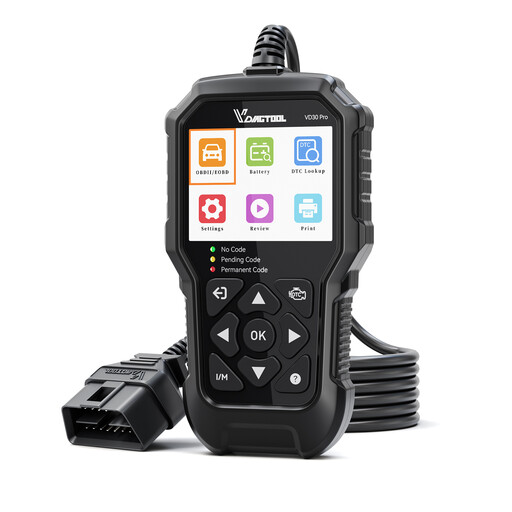
Why we chose it: Perfect for getting started. It's designed for those who want an immediate answer to the question, "Why is this light on?". No phone, no app, no setup. Just plug it in, read the code, and understand the issue.
It completely bypasses the smartphone-dependency trap. This is a 100% standalone device that eliminates all software complexity and the risk of hidden subscriptions.
Its "Plug and Play" simplicity and one-touch I/M readiness key to prepare for emissions testing.
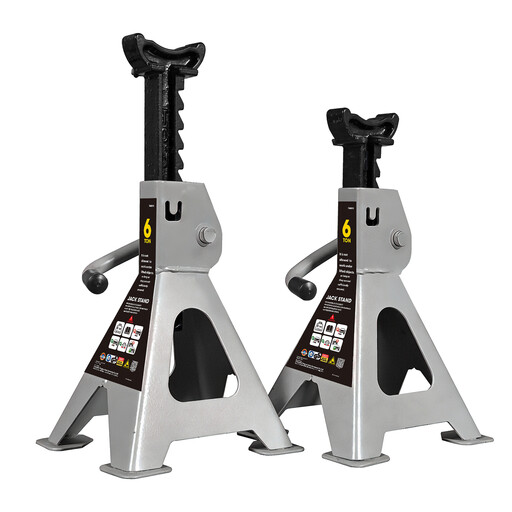
Why we chose it: The diagnosis revealed a part needs replacing under the car? Safety is non-negotiable. This user needs reliable equipment to lift their vehicle and work with peace of mind. These jack stands are built for heavy loads.
It avoids the trap of cheap, uncertified lifting equipment. Investing in robust, EN 1494 certified jack stands prevents serious accidents that can occur with inadequate gear.
The welded steel frame and cast iron ratchet bar ensure stability and a true 6-ton load capacity, providing maximum safety for working on SUVs, 4x4s, and light commercial vehicles.
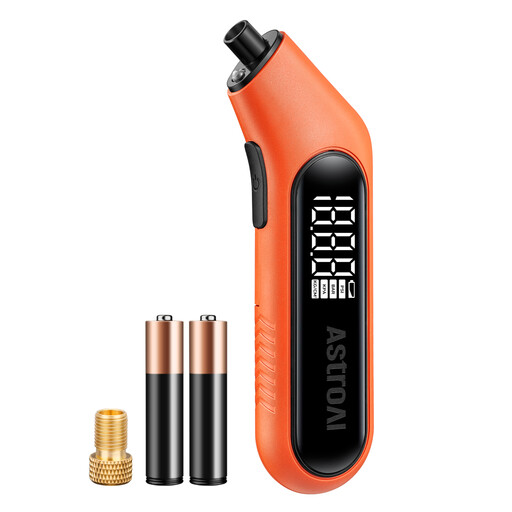
Why we chose it: This user knows that preventative maintenance is the best way to avoid breakdowns. Correct tyre pressure is essential for safety, fuel economy, and tyre longevity. A diagnostic tool won't warn you about an under-inflated tyre.
It avoids relying on the often inaccurate and poorly maintained gauges at petrol stations. Owning your own quality measurement tool ensures reliable readings at any time.
Its measurement accuracy (compliant with the ANSI B40.7 Grade 2A standard) and backlit digital display allow for a clear, instant reading, even in a dark garage or at night.
We've compiled a comprehensive, up-to-date list of products that meet these demanding selection criteria and safety standards.
No, not always. Compatibility mainly depends on the OBD2 standard. If your petrol car is newer than 2001 or your diesel is newer than 2004, a standard OBD2 scanner should work. However, for brand-specific functions, more advanced tools may be required. Always check the manufacturer's stated compatibility before purchasing.
A consumer-grade car diagnostic tool can read and erase the vast majority of engine-related fault codes (those that trigger the check engine light). However, it generally cannot access or erase codes related to other systems like ABS (braking), SRS (airbags), or TPMS (tyre pressure), which require more professional equipment. And remember: if the underlying fault is not repaired, the light will come back on.
It depends on the model. Standalone scanners like the VDIAGTOOL VD30 Pro work without any subscription. Software updates, if needed, are usually free. Be wary of Bluetooth adapters that work with an app: some may offer basic functions for free but require a payment or subscription for more detailed diagnostics or to erase codes. Read the product description and user reviews carefully.