
Livraison le jour même ou le lendemain

Qualité garantie

Débloquez vos offres de bienvenue: Livraison GRATUITE | Jusqu'à -80 % | 30 jours d'essai gratuits à JoyPlus
Téléchargez l'application
As a product expert at Joybuy, I have a front-row seat: more and more of you want to take back control of your car's maintenance. Getting a car diagnostic tool is often the first step toward reducing mechanic bills and finally understanding what's happening under the hood. The problem is, the market is a jungle of marketing promises, where a good deal can quickly turn into a useless gadget.
But before you take the plunge, beware of the most common pitfalls. Too many car owners end up with a disappointing tool, falling victim to well-rehearsed but misleading sales pitches.
To make the right choice, you need to read between the marketing lines and focus on what truly matters: the technical specifications.
To ensure your car diagnostic tool will be a reliable ally for years to come, three technical criteria must be scrutinized.
The OBD2 standard, mandatory in Europe for petrol cars since 2001 and diesel cars since 2004, guarantees minimal access to the engine control unit. However, modern vehicles speak much faster and more complex languages.
Verifying support for these protocols is your guarantee of a future-proof investment.
Not all scanners are created equal. They can be broadly classified into three categories:
The question to ask yourself is simple: do you just want to turn off an occasional warning light, or do you want to take full control of your car's maintenance?
The phrase "free lifetime updates" should raise a red flag. While some manufacturers play fair and apply it to the entire software (brands, service functions), many others slyly restrict it to basic OBD2 functions only. Once the free period expires (often 1 or 2 years), you have to pay up with a sometimes hefty annual subscription to continue covering new vehicles and features. A tool with true comprehensive, free lifetime updates is a much better long-term investment.
To help you sort through the options, here is our selection of tools suited for different needs, all scrutinized against our criteria.
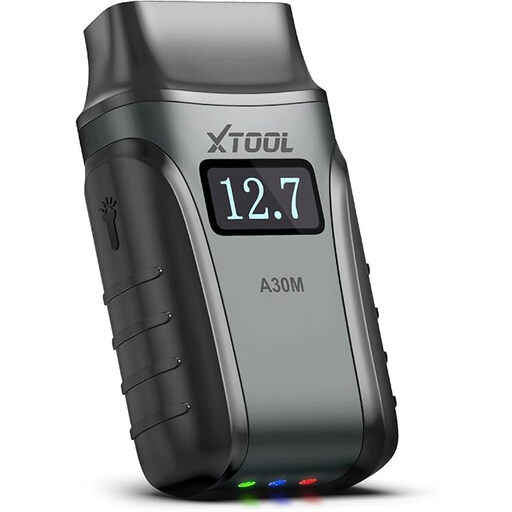
Why we recommend it: This is the perfect tool for the DIYer who wants to go beyond a simple code reader. This Bluetooth dongle, controlled via a smartphone (iOS/Android), packs a full all-system diagnosis, over 26 maintenance services, and even bidirectional control. A true powerhouse in a pocket-sized format.
Here, the promise is kept: the free lifetime updates genuinely cover *all* functions (full diagnostics, services, new brands), with no disguised subscriptions.
Offering bidirectional control at this price point is a real feat. It allows you to actively test components (like a fan or a valve) without having to dismantle anything.
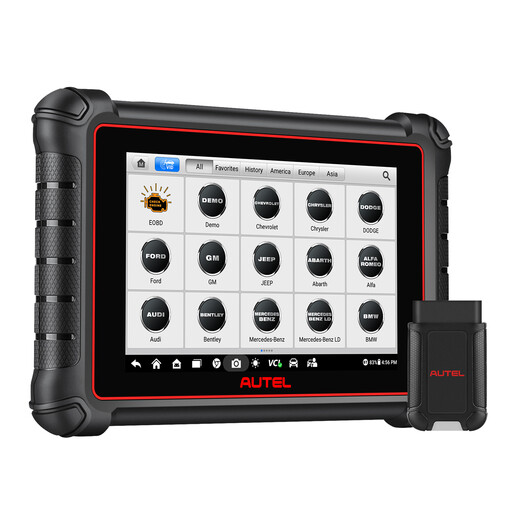
Why we recommend it: We're clearly moving upmarket. For the demanding enthusiast or small garage, this 8-inch Android 11 tablet is a near-professional solution. It provides OE-level diagnostics on all systems, over 40 services, full bidirectional control, and native DoIP and CAN FD compatibility. A tool built for intensive use.
It doesn't oversell its 'pro' features. It simply delivers them, with impressive vehicle coverage and diagnostic capabilities that rival much more expensive equipment.
The winning trio: responsive hardware (Android 11), a stable wireless connection, and a formidably rich software suite.
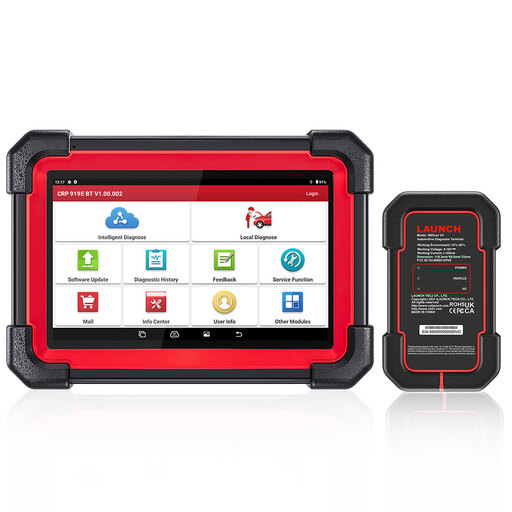
Why we recommend it: A decidedly forward-looking tool. For anyone who owns a new car or manages a modern fleet, native compatibility with CAN FD and DoIP protocols isn't an option, it's a necessity. This device ensures a perfect connection with the latest electronic architectures, without needing any adapters.
It sidesteps the 'universal compatibility' trap by natively integrating the protocols that low-end tools ignore. The result: no risk of ending up with a high-tech paperweight when you buy your next car.
Its native CAN FD and DoIP compatibility, combined with over 31 maintenance services and ECU coding, makes it a future-proof and ultra-versatile investment.
Discover our full selection of tools that meet our demanding specifications and current standards.
No, and this is a crucial point. While most tools will connect to OBD2-compliant vehicles (petrol after 2001, diesel after 2004) for basic engine diagnostics, compatibility for advanced functions (resets, coding, all-system access) and for very recent vehicles (requiring CAN FD or DoIP protocols) is far more hit-or-miss. Our advice: before any purchase, always verify the compatibility of a specific function with your vehicle's VIN directly with the manufacturer.
It all depends on the manufacturer's business model. Some, like the XTOOL A30M, play it straight with true free lifetime updates. Others, often the more professional models, operate on a subscription basis: you get 1 to 2 years of included updates, after which you must subscribe annually to continue receiving them. Good to know: without a subscription, the tool doesn't lock up. It continues to work with the last installed version, but it will no longer be updated to cover future car models.
A code reader (or entry-level OBD2 scanner) only communicates with the engine control unit. Its sole mission is to read and clear the codes that trigger the check engine light. A full diagnostic scanner is on another level. It communicates with all of the vehicle's control units (ABS, airbag, transmission, climate control…), displays real-time sensor data, performs complex maintenance functions (like an oil reset or ABS bleeding), and, for the most advanced models, even allows for bidirectional tests and ECU coding.