
Livraison le jour même ou le lendemain

Qualité garantie

Débloquez vos offres de bienvenue: Livraison GRATUITE | Jusqu'à -80 % | 30 jours d'essai gratuits à JoyPlus
Téléchargez l'application
The check engine light on your dashboard? It's a sign of immediate worry and, often, an unexpected bill. Instead of rushing to the garage for every minor issue, a car diagnostic tool puts you back in control. It allows you to identify the source of the problem and even perform certain maintenance tasks yourself.
With an overwhelming number of options available, it can be tough to navigate the market. This guide is here to help you see things more clearly and choose the automotive diagnostic scanner that best suits your needs and budget, whether you're a passionate home mechanic or a seasoned professional.
Before diving into our selection, let's review the essential criteria for making the right choice.
This is the first question to ask: will the tool be compatible with your vehicle(s)? Most modern devices are multi-brand OBD2 scanners, compatible with the majority of petrol cars produced after 2001 and diesel cars after 2004. However, the diagnostic depth varies enormously. A simple fault code reader will only read engine-related errors, while a more advanced device will offer all-system diagnostics: ABS, airbags (SRS), transmission, air conditioning, etc. Be sure to check the list of supported brands and systems before making a purchase.
The range of features is what truly sets one model apart from another. Define your needs precisely:
A Bluetooth diagnostic scanner offers unparalleled ease of use. It communicates wirelessly with a tablet or smartphone, giving you complete freedom of movement around the vehicle. Also, pay close attention to the update subscription model. Some manufacturers offer free lifetime updates—a significant advantage for maintaining compatibility with new vehicles—while others operate on an annual subscription basis.
After analysing dozens of technical specifications and user reviews, our editorial team presents a selection of top tools, each tailored to a specific user profile.
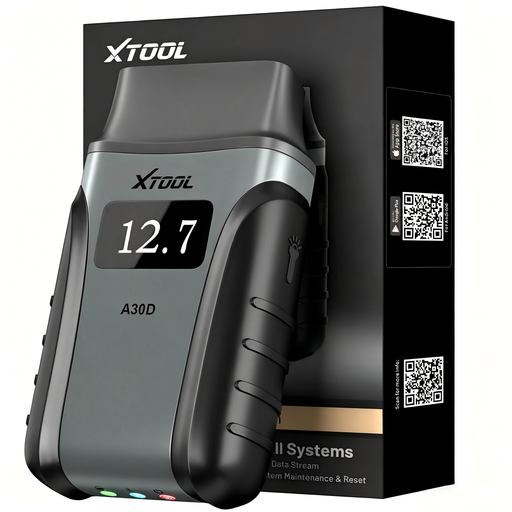
Why this model stands out: The XTOOL A30D shines with its nearly unbeatable features-to-price ratio. It combines Bluetooth connectivity, full all-system diagnostics, and, most importantly, free lifetime updates for all its functions, including bidirectional tests.
Highlights:
Who is it for? The advanced DIYer or small workshop looking for a powerful and future-proof tool without the burden of a subscription. It's an excellent tool for home users who want to go far beyond simple code reading.
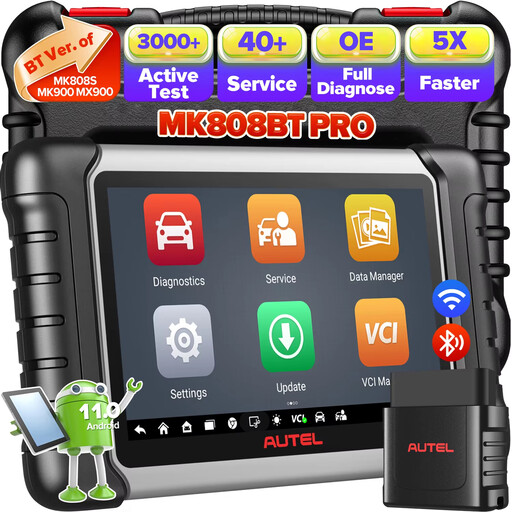
Why this model stands out: Autel is an undisputed leader in the world of professional diagnostics. The MK808BT PRO is a wireless diagnostic tablet that offers impressive vehicle coverage and a myriad of service functions, all delivered through a smooth and intuitive interface.
Highlights:
Who is it for? The professional mechanic, fleet manager, or the highly demanding enthusiast. This professional diagnostic tool is an investment for those who need a reliable, fast, and ultra-comprehensive tool to work on a wide variety of brands. Note that updates are included for the first year, after which they become a paid service.
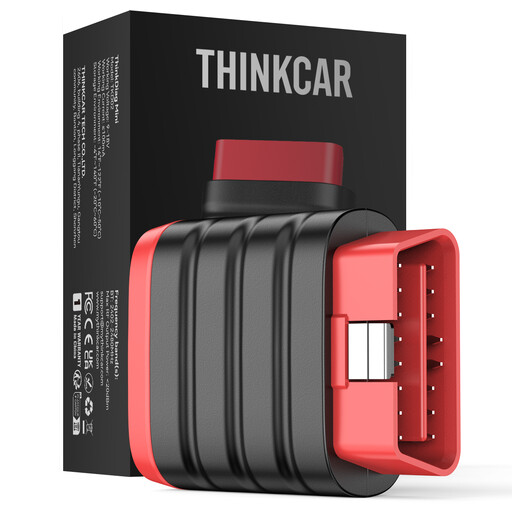
Why this model stands out: The ThinkDiag Mini is the very definition of a portable and affordable diagnostic tool. This small Bluetooth dongle plugs into the OBD2 port and turns your smartphone (iOS or Android) into a powerful analysis tool. Its main advantage: impressive simplicity and free lifetime updates for its diagnostic functions.
Highlights:
Who is it for? The driver who wants an entry-level tool to understand dashboard alerts without breaking the bank. It's the 2.0 version of the fault code reader, perfect for keeping in the glove box to run an initial diagnosis anywhere. Note that this model focuses on diagnostics and does not include advanced service (reset) functions.
If the models presented don't check all your boxes, keep in mind that technology is constantly evolving. Feel free to explore our complete category of Bluetooth Scanners to discover an even wider range of diagnostic tools, suitable for all budgets and needs.
A basic OBD2 reader only reads and clears error codes related to the engine and emissions (EOBD/OBD2 standard). A diagnostic scanner, even an entry-level one, goes much further: it allows for all-system diagnostics (ABS, airbags, transmission, etc.) and, for more comprehensive models, offers service functions for maintenance.
Most scanners are multi-brand and cover a very wide range of vehicles, but none are 100% compatible with every single model and all its functions. Our advice: always check compatibility with your specific vehicle (make, model, year) with the manufacturer before purchasing, especially if you need a specific function.
A diagnostic scanner is primarily a decision-making aid. It tells you where the problem is located (e.g., "faulty front right tyre pressure sensor"). It also allows you to perform software resets after a service (oil change, brake pad replacement). However, it is no substitute for the mechanical skills needed to perform the physical repair. It's the indispensable companion for the advanced DIYer.