
Livraison le jour même ou le lendemain

Qualité garantie

Débloquez vos offres de bienvenue: Livraison GRATUITE | Jusqu'à -80 % | 30 jours d'essai gratuits à JoyPlus
Téléchargez l'application
The check engine light comes on, and with it, a wave of anxiety. Is it serious? How much will the trip to the garage cost this time, just to get an estimate? Getting your own diagnostic tool seems like the perfect solution to take back control and save money. However, in a saturated market, it's easy to fall into common pitfalls that turn a good investment into a useless gadget.
As the Head of the Auto-Tech section at Joybuy, my mission is to clear the path for you. Here are the three mistakes you must avoid:
To make an informed choice, you first need to understand what separates a simple gadget from a true automotive diagnostic tool. Here are the three criteria to analyse.
This is the number one criterion.
Because reading faults is good, but acting on them is better. This is where service functions come in.
The electronics in a 2026 vehicle have nothing in common with those of a 2016 model. Software updates are therefore vital to remain compatible with new vehicles and protocols (like CAN FD or DoIP). A device with lifetime free updates is a future-proof investment and a considerable saving in the long term. If you opt for a Bluetooth diagnostic tool, which offers more flexibility with a smartphone or tablet, make sure the associated app follows this virtuous business model.
To put theory into practice, here is our selection of tools that meet these requirements, for three distinct user profiles.
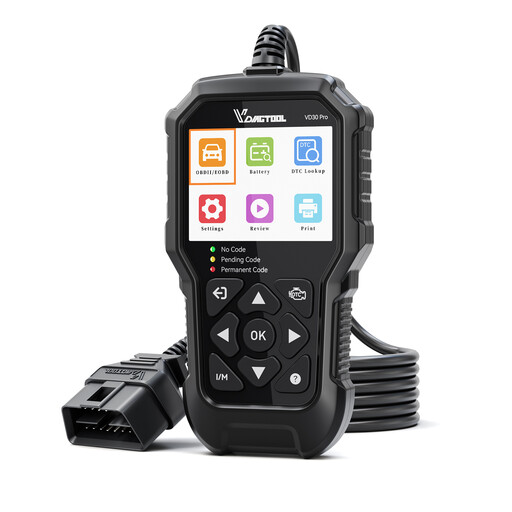
The verdict: Perfect for the driver who just wants to understand why that pesky check engine light is on and turn it off after a small repair. It's completely standalone, independent of a smartphone, app, or Wi-Fi. You plug it in, read the code, look up its meaning in the built-in library, and the job is done.
This tool gets straight to the point. No superfluous functions, no hidden subscriptions. The price you see is the final price, period. Lifetime free updates via USB ensure its relevance for years to come.
Its plug-and-play simplicity. The built-in code library and battery voltage test allow for an immediate initial diagnosis.
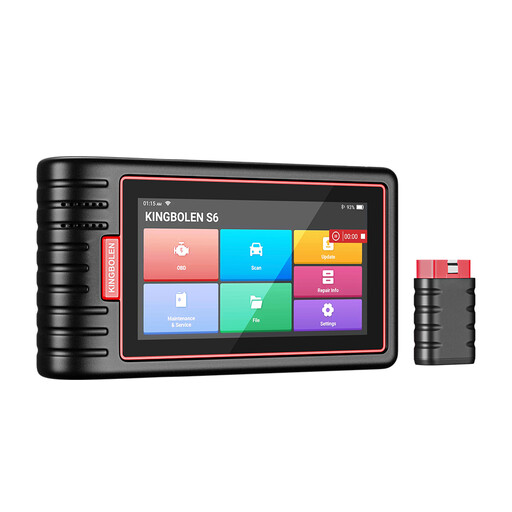
The verdict: For the amateur mechanic who does their own oil changes, replaces brake pads, and wants a complete diagnosis without breaking the bank. It provides access to all vehicle systems and offers over 28 maintenance functions, all on a compact tablet with a convenient Bluetooth connection.
It sidesteps the subscription trap with its promise of lifetime free updates. It's the perfect balance of features and price, without making you pay for complex coding options that are often superfluous for an advanced DIYer.
The winning trifecta: all-system diagnostics, 28 service functions, and lifetime updates included. The Bluetooth connection and automatic vehicle recognition (Auto-VIN) make for a very smooth experience.
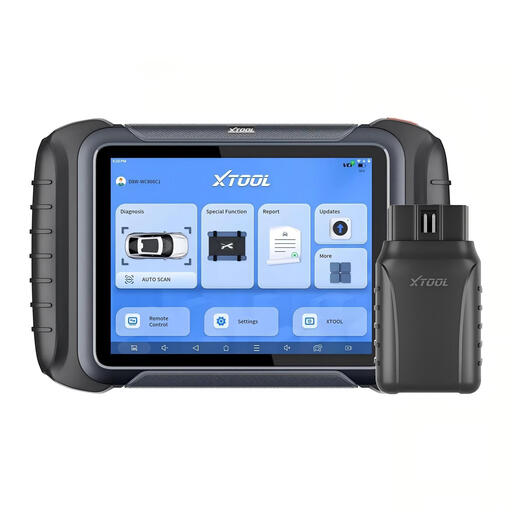
The verdict: Here, we're moving to the next level. This tool is built for pros or highly advanced enthusiasts who demand in-depth diagnostics. It packs cutting-edge features: bidirectional tests, ECU coding, ECU topology mapping, and compatibility with recent protocols (CAN FD/DoIP).
The initial investment is higher, but it includes 3 years of updates, which clarifies the total cost of ownership. Most importantly, it allows you to avoid the prohibitive prices of dealership-level tools while offering a large portion of their capabilities.
Its power and speed. The wireless Wi-Fi connection is stable, the 42+ service functions cover all needs, and the expert functions (coding, active tests) save precious time on complex diagnostics.
Discover our complete selection of diagnostic tools, all tested and approved by our experts for their value for money and transparency.
No, and this is a crucial point. Most tools are OBD2 compatible, the standard that covers engine diagnostics for petrol cars (since 2001) and diesel cars (since 2004) in Europe. But for analysing other systems (ABS, airbags, etc.) and using maintenance functions, the coverage varies enormously by make, model, and year. Always check compatibility with your vehicle before buying.
It all depends on the model. Simple standalone units are generally subscription-free. However, for more sophisticated tools connected to an app, there are two main approaches: those that offer lifetime free updates (the model we recommend) and those that require an annual subscription to access advanced functions and new vehicles. This is a decisive factor for the long-term cost.
Technically, yes, you can clear most codes, which will turn off the warning light. But be careful: if the fault is not repaired, the light and the code will come back very quickly, sometimes after just a few miles. A diagnostic tool is used to identify a problem, not to make it magically disappear. Clearing a code without a repair is at best useless, at worst dangerous, as it can mask a serious malfunction.