
Livraison le jour même ou le lendemain

Qualité garantie

Débloquez vos offres de bienvenue: Livraison GRATUITE | Jusqu'à -80 % | 30 jours d'essai gratuits à JoyPlus
Téléchargez l'application
By Joybuy, our Product Expert | Updated: August 27, 2026
The check engine light comes on, and with it, the dread of a painfully expensive mechanic's bill. As a hands-on car owner, you prefer to maintain your own vehicles and know that investing in a car diagnostic tool is key. But there's a problem: the market is a jungle of marketing promises that can quickly turn a smart investment into a wasted expense. To help you make the right choice, here are the three most common pitfalls to avoid.
The Hidden Subscription Trap: Many tools lure you in with an attractive purchase price but fail to mention that advanced features, or even simple updates, expire after a year. You're then forced to pay for a costly annual subscription to keep your device functional. For personal use or a small workshop, a model with free lifetime updates is often far more cost-effective in the long run.
The "All-System Diagnostic" Illusion: The "all-system diagnostic" label is an often misleading marketing claim. An entry-level tool might read codes from the engine (ECM), ABS, and airbags (SRS), but it will quickly show its limitations on more complex modules like the transmission (TCM), body control module (BCM), or climate control. A truly comprehensive diagnosis must be able to query all of your vehicle's Electronic Control Units (ECUs).
The Compatibility Dead End: Buying a tool that can't communicate with modern vehicles is a classic mistake. Cars produced after 2020 increasingly rely on CAN FD (for GM, Ford) or DoIP (for BMW, Jaguar, Land Rover) protocols. Not to mention post-2017 Stellantis group vehicles (Fiat, Chrysler, Jeep), which require secure FCA AutoAuth access. A good multi-brand diagnostic tool must support these new standards to avoid becoming obsolete in a matter of months.
To avoid falling into these traps, focus on three technical features that make all the difference and define the true value of a diagnostic scanner.
A simple code reader only reads and clears fault codes. A bi-directional code reader, in contrast, can send commands to the vehicle's ECUs. This is known as an "active test."
Beyond pure diagnostics, a scanner's usefulness is measured by its ability to handle routine maintenance. Don't settle for a simple oil reset. A high-performance tool should offer a wide range of resets to save you costly trips to the dealership.
The choice often comes down to two formats: standalone tablets and Bluetooth OBD2 scanners that work with your smartphone.
Whatever the format, look for a model with free lifetime updates for a predictable budget and a worthwhile investment over time.
We've analyzed the market with the needs of amateur mechanics and small workshops in mind. Here are options that fit well-defined user profiles, with a focus on performance, value, and transparency.
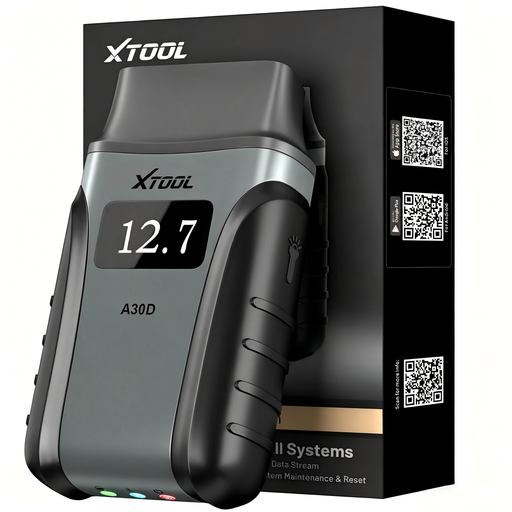
Why we picked it: This Bluetooth adapter transforms your smartphone (iOS or Android) into a powerful diagnostic scanner. It's perfect for those seeking a high-performance yet compact tool that's easy to keep in the glove box for diagnostics at your fingertips.
It includes free lifetime updates, shielding you from the annual subscription trap. It also supports recent protocols like CAN FD and FCA access, ensuring its relevance for years to come.
Full bi-directional control and over 19 service functions (oil reset, ABS bleeding, EPB, etc.) in an ultra-portable format. An excellent feature-to-price ratio.
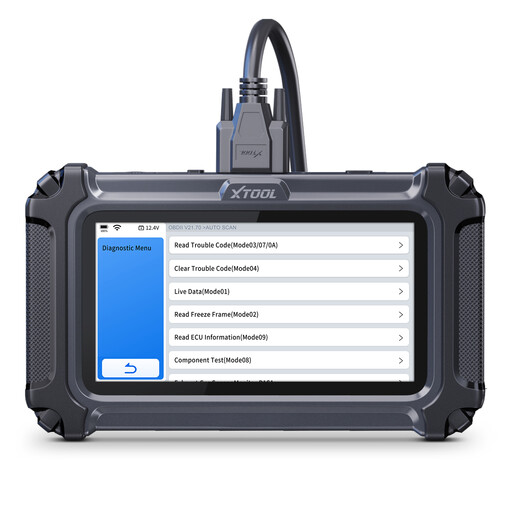
Why we picked it: For the home mechanic who manages multiple cars, including recent models, and needs a robust, standalone tool. This tablet offers a far superior user experience to a dongle, with its large screen and dedicated interface.
It offers true all-system diagnostics, not a watered-down version. With free lifetime updates, the price you see is the only price you'll pay, making it a predictable and cost-effective investment for regular use.
The perfect balance of advanced features (bi-directional control, 15+ resets, CAN FD/FCA) and ease of use. The tablet interface is intuitive, and the Live Data analysis is highly visual.
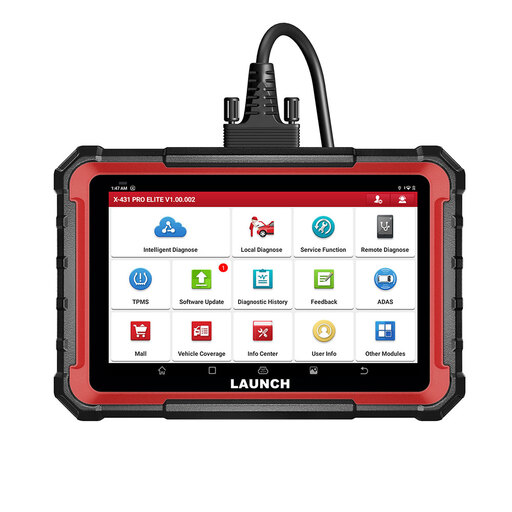
Why we picked it: When diagnostics become a professional activity, you need a no-compromise tool. This 8-inch tablet is built for heavy use, with dealership-level functions like advanced ECU coding and extensive vehicle compatibility.
It is transparent about its business model: 2 years of free updates are included. Most importantly, it natively integrates CAN FD and DoIP protocols, making it a future-proof tool capable of handling the most modern vehicle fleets without extra adapters.
OE-level (Original Equipment) diagnostic power with ECU coding, 31+ service functions, and compatibility with expansion modules (endoscope, battery tester, etc.).
We have compiled a complete and up-to-date list of products that meet our selection criteria and quality standards.
Generally, yes. Manufacturers that adopt this business model build the cost of future development into the initial purchase price. This means you won't have to pay a subscription to receive new vehicle compatibilities and upcoming features. However, always read the description carefully: some very specific functions or access to manufacturer portals (like FCA AutoAuth) may require a separate account, with fees charged by the car manufacturer itself, not the tool maker.
If you own or work on vehicles made after 2020, the answer is increasingly "yes." CAN FD is used by many recent models from General Motors, Ford, and others, as it provides faster communication. DoIP (Diagnostics over Internet Protocol) has become the standard for advanced diagnostics on premium brands like BMW, Volvo, Jaguar, and Land Rover. Investing in a compatible tool ensures you won't be caught off guard by a new vehicle.
A code reader is a passive tool: it only reads the information the car sends it (error codes, sensor data). A scanner with bi-directional control is an active tool: it can send commands to the car to test components. For example, instead of just assuming the fuel pump is faulty, you can command it to activate from the tool to verify if it's actually working. This is the fundamental difference between "seeing" a problem and "interacting" with the vehicle to diagnose it precisely.