
Livraison le jour même ou le lendemain

Qualité garantie

Débloquez vos offres de bienvenue: Livraison GRATUITE | Jusqu'à -80 % | 30 jours d'essai gratuits à JoyPlus
Téléchargez l'application
That infamous check engine light on the dashboard? It's a classic scenario, often a source of anxiety and a potentially expensive trip to the mechanic. For mechanics enthusiasts and savvy DIYers, taking back control of your vehicle's diagnostics is no longer a luxury, but a necessity. A high-performance car diagnostic tool not only allows you to pinpoint a fault but also to perform numerous maintenance tasks yourself.
Faced with the overwhelming number of available models, it's hard to know where to start. This guide is here to cut through the noise: we will break down the essential selection criteria and present our 2026 top picks. The goal? To help you invest in a tool that fits your actual needs, without getting lost in technical jargon.
To make the right choice, let's review the features that separate a simple gadget from a true ally for your workshop.
Not all tools are created equal. A simple fault code reader will only read and clear generic engine-related error codes (OBD2 standard). For more serious work, it's better to opt for a multi-brand car diagnostic tool capable of communicating with most European, Asian, and American vehicles.
The most advanced models offer all-system diagnostics. They can query not only the engine control unit but also the ABS, airbags (SRS), transmission, air conditioning, and all other electronic modules. This capability is essential for tracking down complex faults that don't necessarily trigger the check engine light.
A good diagnostic tool does more than just read faults. Service (or "reset") functions are crucial for maintenance. The oil reset is the most well-known, but others are just as useful: Electronic Parking Brake (EPB) reset, Steering Angle Sensor (SAS) calibration, Diesel Particulate Filter (DPF) regeneration, and even injector coding.
For advanced users, the presence of a bi-directional test (or active control) is a game-changer. This function allows you to send commands directly to the vehicle's components (activate a fan, a fuel pump, open and close an EGR valve) to test their operation in real-time, without having to dismantle them.
The traditional scanner with a built-in screen is increasingly being challenged by the Bluetooth diagnostic scanner. These compact dongles plug into the vehicle's OBD2 port and communicate wirelessly with an app on your smartphone or tablet (iOS/Android). They offer unbeatable flexibility and can be stored anywhere.
Finally, a crucial point: the update policy. Many manufacturers impose expensive annual subscriptions. Opting for a model with free lifetime updates is a very smart move: it ensures substantial long-term savings and guarantees that your device will remain compatible with the latest vehicles.
Here are some recommended options that stand out for their feature-to-price ratio and cater to different needs, from the passionate DIYer to the professional.
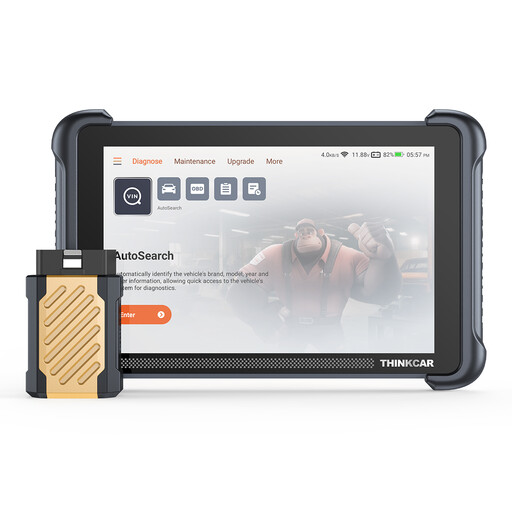
What Sets It Apart
The ThinkScan 689BT plays in the big leagues by combining the power of a dedicated Android tablet with professional-grade features. Its large screen, wireless connectivity, and impressive number of service functions make it a versatile tool for in-depth diagnostics.
Key Features
Who Is It For?
The professional mechanic or the advanced DIYer looking for a powerful, standalone OBD2 diagnostic tool capable of performing complex operations on a wide range of vehicles.
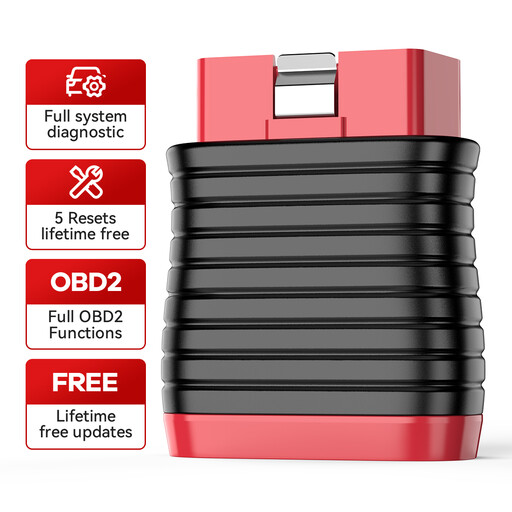
What Sets It Apart
The THINKDIAG BD6 is all about portability and ease of use. This compact dongle turns any smartphone (iOS or Android) into a powerful diagnostic tool for essential tasks, all with lifetime updates included.
Key Features
Who Is It For?
The car enthusiast or DIYer who needs a portable diagnostic tool for regular check-ups, reading codes from all systems, and performing the most common resets.
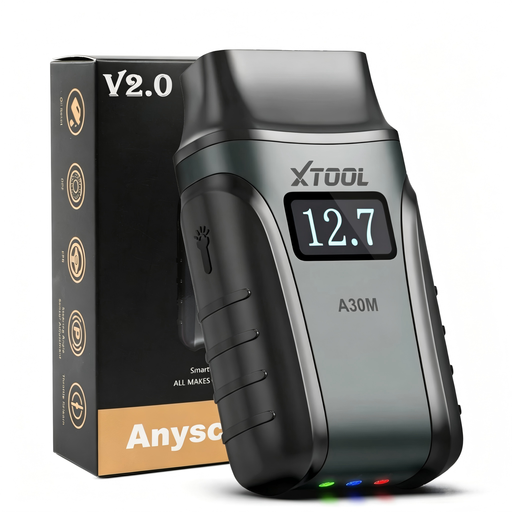
What Sets It Apart
The XTOOL A30M offers an excellent compromise by providing advanced features, like bi-directional testing, in a Bluetooth dongle format. It stands out for its generous number of service functions and its commitment to free lifetime updates.
Key Features
Who Is It For?
The savvy DIYer who wants to go beyond simple code reading and needs the capabilities of a bi-directional test and a wide range of service functions, all in a mobile and economical format.
Our selection focuses on models with an unbeatable feature-to-price ratio. If you can't find what you're looking for or if your needs are more specific, many other tools are available.
Discover our complete collection of diagnostic tools and code readers to find the model that's a perfect fit for your garage.
A simple OBD2 fault code reader is limited to reading and clearing generic error codes related to the engine and emissions system. In contrast, a full diagnostic tool offers all-system diagnostics (ABS, airbags, transmission, etc.), allows you to perform service functions like an oil reset, and can sometimes even perform a bi-directional test to directly command vehicle components.
Absolutely, they are crucial. Car manufacturers constantly update their vehicle software. Regular updates ensure that your tool remains compatible with new models and can correctly diagnose the latest systems. Choosing a device with free lifetime updates is therefore a major long-term financial advantage.
Yes, most modern tools are multi-brand. However, the level of coverage and the availability of certain specific functions (like advanced coding or bi-directional tests) can vary from one brand and model to another. It is therefore always advisable to check the compatibility list provided by the manufacturer before purchasing to ensure it covers the vehicles you plan to service.