
Livraison le jour même ou le lendemain

Qualité garantie

Débloquez vos offres de bienvenue: Livraison GRATUITE | Jusqu'à -80 % | 30 jours d'essai gratuits à JoyPlus
Téléchargez l'application
By the Joybuy Team, Product Recommendation Experts – August 27, 2026
The market for car diagnostic tools is a real jungle. Between promises of unlimited features and prices that can vary tenfold, it's easy to get lost and regret your purchase. Whether you're a professional mechanic looking to equip your workshop or a savvy DIYer hoping to avoid trips back and forth to the garage, choosing the right tool is a crucial step.
Yet, too many buyers fall into common pitfalls, ending up with a device that is quickly obsolete or unnecessarily expensive to use. Before you commit, watch out for these two major traps:
This guide is designed to arm you against these traps and help you identify the features that truly matter. The goal: to make an informed and future-proof choice.
To ensure your investment is sound, focus on these three technical pillars. They determine the power, relevance, and true long-term cost of your OBD2 diagnostic tool.
Modern cars are essentially computer networks on wheels. To communicate with them, your scanner must speak their language.
A multi-brand car scanner that ignores these two protocols will have very limited coverage on the modern vehicle fleet and will quickly become obsolete.
Not all scanners are created equal. It's crucial to understand the different levels of functionality.
code reader only deals with the engine (the infamous check engine light). A high-performance tool must be able to scan all ECUs: ABS, SRS (airbags), transmission, air conditioning, immobiliser, etc.A genuine free lifetime update offer must cover the entire software: adding new vehicles, enhancing service functions, and improving manufacturer-specific diagnostics. Be wary of offers where only the operating system or basic OBD2 functions are updated for free. A model with one or two years of included updates followed by a subscription can be suitable for intensive professional use, but for an independent technician or a knowledgeable enthusiast, a subscription-free model is often much more cost-effective.
Rather than an endless list, we have selected three tools that cater to well-defined user profiles, all while meeting the performance and longevity criteria we've just discussed.
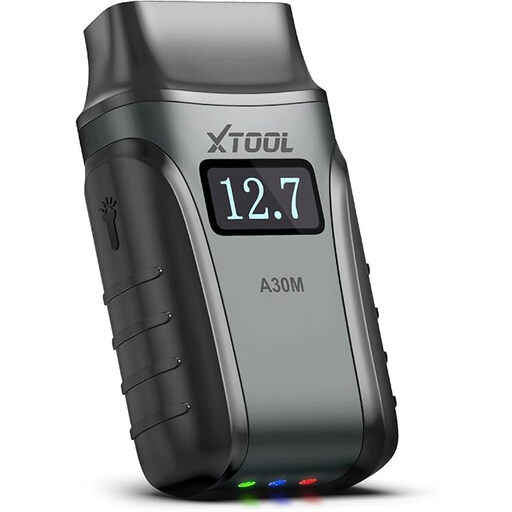
Why we chose it: Perfect for the experienced DIYer who wants to go beyond a simple code reader. This Bluetooth diagnostic dongle transforms any smartphone (Android/iOS) into a powerful tool, capable of performing full system diagnostics, active tests, and over 26 essential service functions. Its portability is its key advantage.
It offers genuine free lifetime updates across all its functions, eliminating the risk of hidden subscriptions. It also includes CAN FD support and FCA access, ensuring its compatibility with recent vehicles.
Its ultra-portable dongle format, stable wireless connection, and excellent balance between advanced features (bi-directional control) and purchase price.
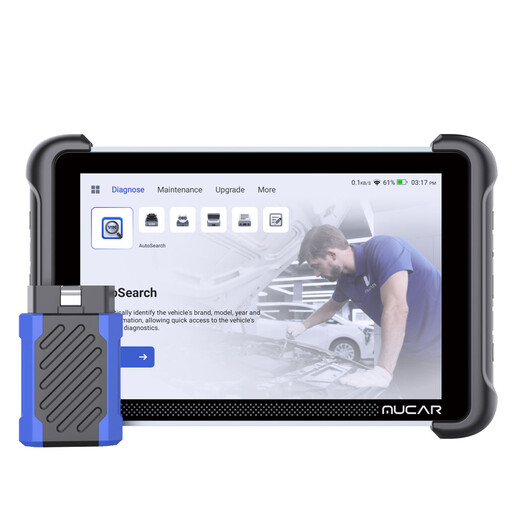
Why we chose it: The ultimate cost-effective, all-in-one solution for small workshops and independent technicians. Its 8-inch tablet is robust, and the tool covers over 100,000 models with advanced functions that rival much more expensive equipment.
It sidesteps both major traps: it includes a free lifetime update for the entire software and supports both CAN-FD and DoIP protocols. A one-time investment, built to last.
An unbeatable features-to-price ratio. It includes ECU coding, bi-directional control, and over 34 maintenance services, all without any subscription fees.
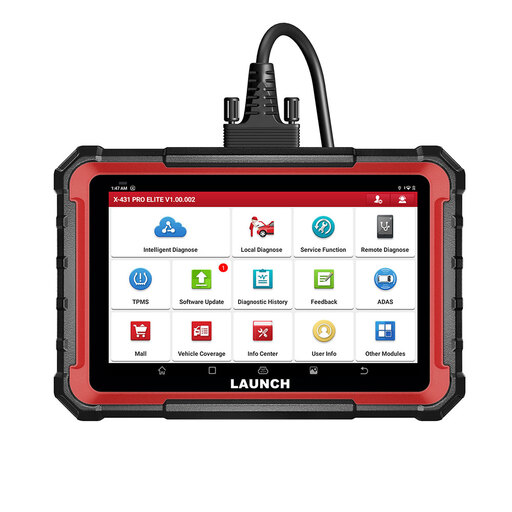
Why we chose it: Built for workshops that demand top-tier performance and high scalability. This tool offers OE-level diagnostics, advanced ECU coding, and a powerful hardware architecture (Android 10, 4GB/64GB) to handle the most complex diagnostics without ever slowing down.
It natively integrates CAN FD/DoIP protocols and offers 2 years of comprehensive updates. Although it transitions to a subscription model afterward, its power and scalability fully justify the investment for intensive professional use.
OE-level diagnostics, guided functions for the VAG group, and compatibility with add-on modules (oscilloscope, battery tester, etc.).
Discover our complete selection of products that meet these demanding criteria and the latest industry standards.
Not always. It is crucial to verify what the "lifetime" offer actually covers. Some manufacturers limit this free service to generic OBD2 functions, charging for updates to manufacturer-specific diagnostics or advanced features after one year. Read the fine print carefully. The models we've selected, like the MUCAR 892BT, stand out for their truly comprehensive, subscription-free update policy.
If you work on recent vehicles (generally post-2020), the answer is a resounding yes. CAN FD is used by manufacturers like GM and Ford for faster communication. DoIP is essential for advanced diagnostics on recent models from European brands like BMW, Jaguar, and Land Rover. Investing in a compatible tool will save you from having to replace it much sooner than expected.
A basic code reader only reads and clears fault codes related to the engine (the infamous orange check engine light). A full system diagnostic tool communicates with all of the vehicle's ECUs: ABS (braking), SRS (airbags), transmission, air conditioning, etc. It provides a 360-degree view of the vehicle's health, which is essential for accurate diagnosis and effective repairs.