
Livraison le jour même ou le lendemain

Qualité garantie

Débloquez vos offres de bienvenue: Livraison GRATUITE | Jusqu'à -80 % | 30 jours d'essai gratuits à JoyPlus
Téléchargez l'application
By Joybuy, your high-tech expert – August 26, 2026
The check engine light comes on, and with it, the cold sweat at the thought of a hefty garage bill. A car diagnostic tool then presents itself as the miracle solution to regain control and make significant savings. The problem: the market is saturated with promises that often lead to costly disappointment. Before you pull out your credit card, it's best to know the most common traps to make a smart investment.
Choosing the right automotive diagnostic tool isn't just about ticking boxes on a spec sheet. Certain details and business models can make a device look very promising on paper but be completely frustrating to use. Here are the three main pitfalls to avoid:
To avoid getting duped, here are the few technical points that make all the difference in the long run and justify the price of a good diagnostic scanner.
A basic fault code reader is a passive tool: it just reads the information the vehicle sends it. A scanner with bidirectional control is an active tool. It can send commands to the car's computer (ECU) to directly test the operation of components.
For example, you can force the radiator fan to activate, test injectors one by one, or operate the wipers from the tool. This capability is crucial for moving from simple code reading to a pro-level diagnosis, and it prevents you from replacing parts unnecessarily.
These intimidating acronyms are actually the passport to your tool's future. They are crucial to ensure your investment doesn't become obsolete within a year.
An OBD2 scanner that doesn't support these protocols will quickly become outdated and unable to diagnose the most modern vehicles.
This is the point that weighs most heavily on the real long-term cost of your scanner.
Rather than an endless list, here are recommended options tailored to distinct user profiles.
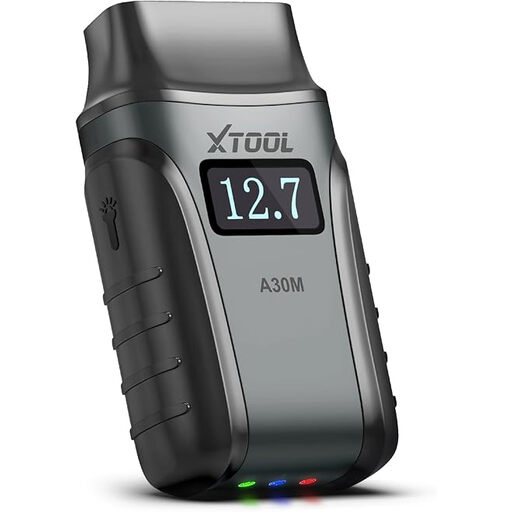
Why we chose it: The perfect tool to go beyond simple code reading without breaking the bank. It connects to your smartphone, making it ultra-compact and easy to use for diagnostics and routine maintenance (like the essential oil reset) on the family cars.
It offers lifetime free updates, which immediately eliminates the annual subscription trap. Its support for the CAN FD protocol and FCA access ensures good compatibility with relatively recent vehicles.
Stable Bluetooth wireless connectivity; basic bidirectional control functions for simple active tests; over 26 maintenance services.
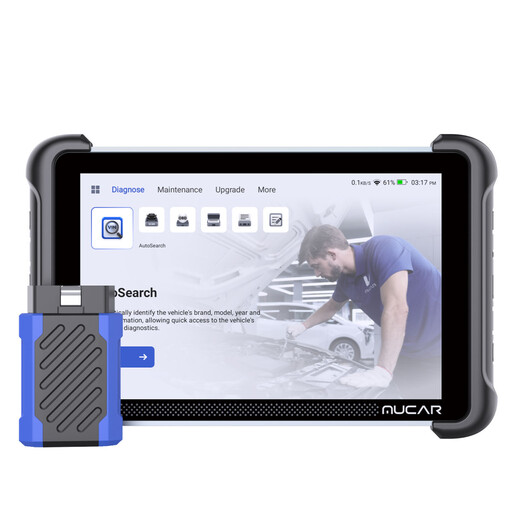
Why we chose it: Ideal for the enthusiast who really gets their hands dirty with complex repairs. The 8-inch tablet, advanced bidirectional control, and ECU coding allow for pro-level diagnostics at home on a wide range of different vehicles.
It includes lifetime free updates and support for CAN-FD and DoIP protocols, ensuring its relevance for years to come. No nasty surprises in the long run, guaranteed.
All-in-one tablet with a magnetic VCI; advanced ECU coding functions and over 34 maintenance services; coverage for over 100,000 models.
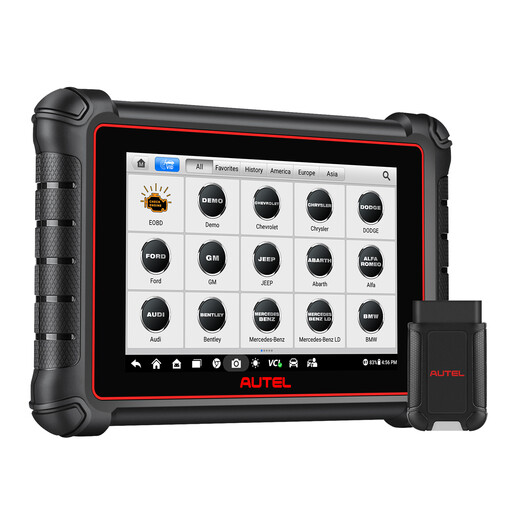
Why we chose it: Built for daily professional use. Its speed, coverage of over 150 brands, and OE-level diagnostics make it a reliable ally for managing a flow of varied and complex vehicles.
Although it switches to a subscription model after the first year (standard for pro tools), its coverage and capabilities justify the investment for commercial use. The business model is transparent, with no surprises.
Full bidirectional control, over 40 services, DoIP/CAN FD protocol support, and the option to expand with a battery tester (BT506).
We have compiled a complete and up-to-date selection of products that meet our demanding criteria and current standards.
No, and this is a major point of caution. Most tools work on vehicles made after 1996 (OBD2 standard), but advanced functions (resets, coding, active tests) depend on the make, model, and year. It is therefore essential to check compatibility with your vehicle (via its VIN) before purchasing, especially for recent European models.
For the diagnosis itself, an internet connection is not usually necessary; the tool communicates directly with the car. However, a Wi-Fi connection is essential for the initial setup, downloading brand-specific software, and future updates that ensure the device's long-term effectiveness.
A fault code reader is passive: it only reads error codes and vehicle data. A scanner with bidirectional control is active: it can send commands to the ECU to test specific components (e.g., activate the fan, open or close an EGR valve). In short, this allows you to find the source of a fault much faster and with surgical precision.