
Livraison le jour même ou le lendemain

Qualité garantie

Débloquez vos offres de bienvenue: Livraison GRATUITE | Jusqu'à -80 % | 30 jours d'essai gratuits à JoyPlus
Téléchargez l'application
The check engine light comes on, and the dread of a hefty garage bill sets in? Don't worry, you're not alone. More and more drivers are looking to take back control of their vehicle's maintenance. A car diagnostic tool seems like the silver bullet, but the market is a jungle of promises that often lead to costly disappointment.
Before you take the plunge, it's crucial to understand the most common pitfalls awaiting the uninitiated. Identifying them will save you from investing in a gadget that ends up at the bottom of a drawer and help you choose a genuinely useful tool.
To cut through the noise and invest wisely, let's focus on the features that separate a simple code reader from a true professional-grade tool.
A basic OBD2 scanner or fault code reader only reads and clears generic codes related to the engine and emissions. An automotive diagnostic tool worth its salt must be able to communicate with all of the vehicle's Electronic Control Units (ECUs):
Also, check the list of service functions. Procedures like an oil reset, Electronic Parking Brake (EPB) management, or Steering Angle Sensor (SAS) calibration are indispensable for routine maintenance.
Bi-directional control, or active testing, is what separates an amateur tool from professional-grade equipment. It allows you to send commands directly to vehicle components from the scanner. For example, you can force the cooling fan to activate, trigger the wipers, or test an injector to verify its operation without removing it. It's a game-changing feature for pinpointing a fault with certainty.
ECU coding, on the other hand, is a more advanced function. It's necessary to "introduce" a new component (like an injector or a battery module) to the vehicle's computer after a replacement.
The tool's business model is a critical factor. Lifetime free updates are the best guarantee that your investment will retain its value over the years, with no hidden fees. As manufacturers constantly update their software, a tool that doesn't evolve quickly loses its effectiveness.
Finally, connectivity directly impacts user convenience. A Bluetooth diagnostic scanner offers welcome freedom of movement around the vehicle, while a wired model ensures a rock-solid connection. Also, make sure the tool supports recent protocols like CAN FD, which is essential for vehicles manufactured after 2020.
Instead of an endless list, we've matched specific tools to distinct user profiles to help you find the perfect fit for your needs.
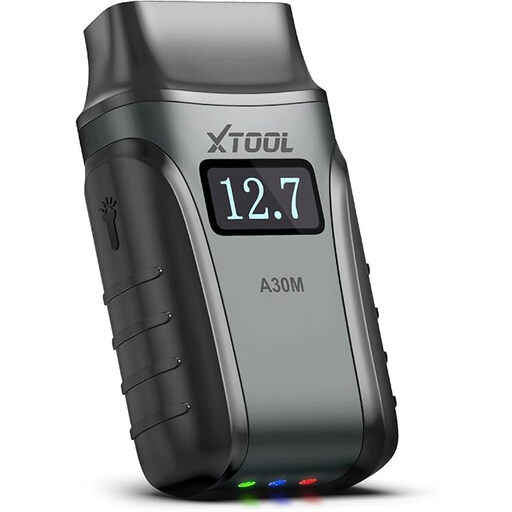
Why it's the right choice: Ideal for routine maintenance on the family car. It turns your smartphone into a powerful diagnostic station—without the bulk of a tablet—and even offers active tests for initial troubleshooting.
Thanks to its lifetime free updates, you can forget the annual subscription trap that makes your device obsolete after just one year.
A reliable Bluetooth connection, all-system diagnostics, and even basic bi-directional control: impressive features for this price point.
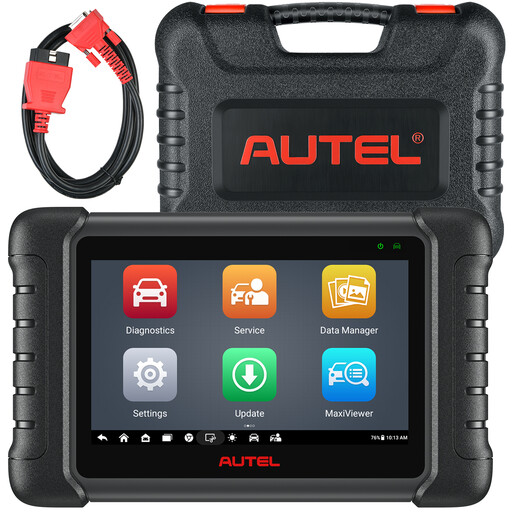
Why it's the right choice: Perfect for those who get their hands dirty on multiple cars (their own, friends'...) and need advanced troubleshooting functions. Its dedicated tablet is more rugged than a smartphone and built for heavy use.
Here, bi-directional control isn't just a marketing buzzword: it's the real deal, enabling precise diagnostics where entry-level models just read codes.
Comprehensive active tests and over 38 service functions for in-depth maintenance on a wide range of vehicles, including recent FCA group models.
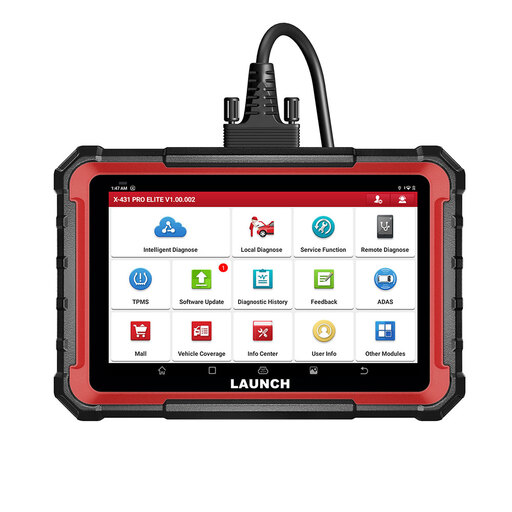
Why it's the right choice: Built for small garages or experts who demand professional-level coverage. It tackles complex tasks like ECU coding and adaptations, which are crucial for seeing a repair through from start to finish.
By supporting recent protocols like CAN FD and DoIP, it ensures flawless compatibility with the most modern vehicles. Say goodbye to the false multi-brand compatibility trap.
Advanced ECU coding, impressive vehicle coverage, and support for the latest communication protocols make this a future-proof investment.
Explore our full selection of tools that meet our demanding specifications and current regulations.
A basic OBD2 reader plugs into your car's port to read and clear fault codes related to the engine and emissions. A full diagnostic scanner goes much further: it communicates with all the vehicle's ECUs (ABS, airbags, transmission, A/C...), displays live data, performs post-maintenance resets, and, for expert models, allows you to run component tests (bi-directional control) and perform coding.
Yes, and this is non-negotiable. Manufacturers are constantly updating their vehicle software. Without updates, your scanner will quickly become unable to communicate with recent models, or even with older vehicles that have had a software update at the dealership. Choosing a model with lifetime free updates is the best way to ensure your investment lasts.
For simply reading fault codes and viewing data, the risk is virtually non-existent: the tool is only 'listening' to what the car is saying. The potential danger arises with write functions, like ECU coding. In that case, it is imperative to follow the instructions to the letter. Tools from reputable brands include safeguards to prevent critical errors, but caution is always advised. If you're just starting out, stick to diagnostics and basic resets before attempting more complex operations.