
Livraison le jour même ou le lendemain

Qualité garantie

Débloquez vos offres de bienvenue: Livraison GRATUITE | Jusqu'à -80 % | 30 jours d'essai gratuits à JoyPlus
Téléchargez l'application
Your car is fresh from the wash, gleaming brightly, but when you touch it... the paint feels rough and gritty. This is due to stubborn contaminants that a standard wash can't remove: industrial fallout, tree sap, tar, brake dust, and more. To get that silky-smooth finish back, a decontamination step is essential.
The car decontamination mitt has emerged as the modern, practical alternative. But be warned—not all mitts are created equal. Before you buy, it's crucial to understand the common pitfalls that could cost you dearly, or even damage your precious clear coat.
Marketing can be misleading. Here are three key points to watch out for to make an informed choice and avoid buyer's remorse after just a few uses.
For effective and risk-free paint decontamination, here are the technical specifications to look for.
This is the core of the technology. Modern mitts feature a synthetic rubber polymer, not natural clay. This technology stands out as the best alternative to the traditional clay bar for several reasons:
Versatility is a hallmark of efficiency. A quality mitt must have:
The mitt should fit your hand comfortably. An elastic cuff is a plus to ensure a secure fit and prevent it from slipping off mid-action. Finally, check the seams: they must be robust to withstand repeated twisting and moisture.
Rather than a random list, we've matched products to user profiles to help you find the tool that truly fits your needs and habits.
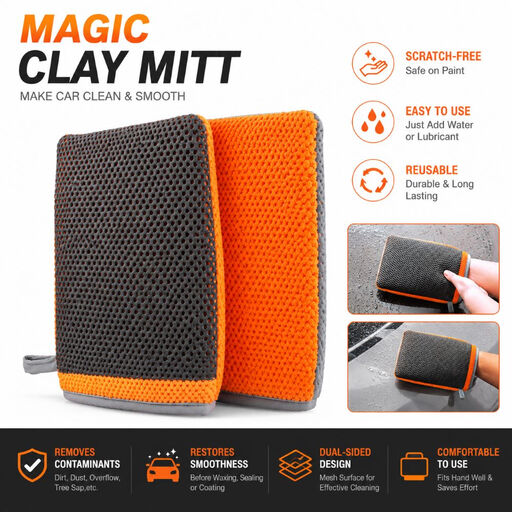
Why this choice? This user is looking for the ultimate tool for effective decontamination without a clutter of accessories. This mitt is the all-in-one solution that replaces the traditional clay bar with greater safety and speed.
Its dual-sided design (microfibre + polymer) avoids the single-function mitt trap. The polymer is calibrated to be effective without being aggressive, thus protecting the clear coat for beginners.
It combines washing and decontamination in a single step, cutting your work time in half. Reusable and easy to rinse, even if dropped on the ground.
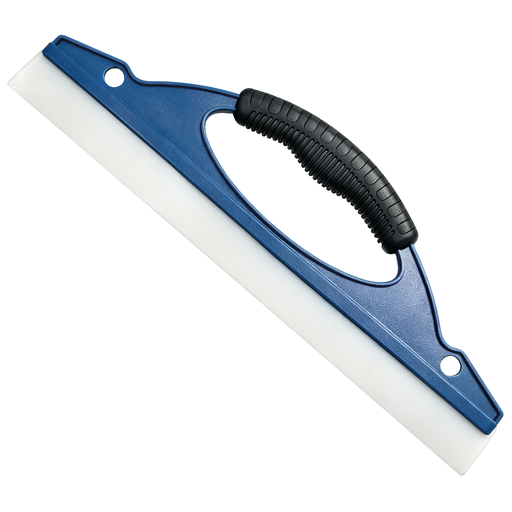
Why this choice? For this user, every minute counts. The silicone squeegee is the perfect companion to the decontamination mitt. It helps wick away the bulk of the water after the pre-wash and final rinse, significantly speeding up the drying process.
Unlike a chamois leather that can trap grit, the soft silicone blade glides over the surface without any risk of scratching (provided, of course, that the paintwork is clean!).
A dramatic time-saver during drying. Its flexible blade hugs the curves of the bodywork and windows to efficiently remove water without leaving streaks.
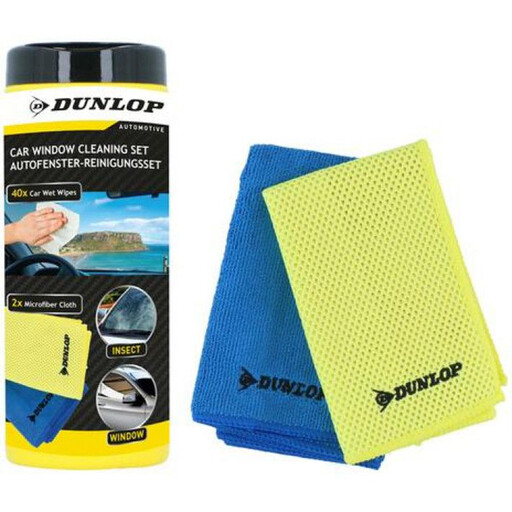
Why this choice? After pampering the paintwork to achieve a perfect surface, this cleanliness fanatic can't stand neglected windows. This complete kit is the finishing touch for a flawless result, with tools dedicated solely to glass surfaces.
It avoids the common mistake of using the same microfibre towels for paint and glass, which almost always leaves behind streaks of wax or product. This kit provides dedicated cloths for a guaranteed streak-free result.
An all-in-one solution for windows, including wet wipes and two distinct microfibre towels: one for general glass cleaning, the other for stubborn spots like bug splatter.
Perfect paintwork deserves flawless glass. Discover our complete selection of window care products, all validated by our experts against strict criteria.
1. Can you use a decontamination mitt on a dry surface? Absolutely not! This is the golden rule: you must always work on a wet and perfectly lubricated surface. Use a diluted car shampoo in a spray bottle or a dedicated clay lube. The lubrication creates a protective film that allows the mitt to glide and encapsulate contaminants without scratching the clear coat.
2. How often should you decontaminate your car? For a vehicle that is parked outside and driven daily, once or twice a year is a good average. The best indicator is the famous "plastic bag test": place your hand inside a thin plastic sandwich bag and gently glide it over the clean paintwork. If you feel any roughness, that's your signal: it's time to decontaminate.
3. Does a decontamination mitt replace polishing? No, they are two distinct but complementary steps. Decontamination removes contaminants that are sitting on the clear coat. Polishing, on the other hand, corrects defects in the clear coat (micro-scratches, swirl marks, oxidation). Decontamination is therefore the essential polishing prep step to ensure you're working on a clean foundation for optimal results.