
Livraison le jour même ou le lendemain

Qualité garantie

Débloquez vos offres de bienvenue: Livraison GRATUITE | Jusqu'à -80 % | 30 jours d'essai gratuits à JoyPlus
Téléchargez l'application
Equipping your vehicle with a car dashcam is no longer a tech enthusiast's whim, but a prudent measure for peace of mind on the road. In the event of an accident, a hit-and-run, or an act of vandalism, the in-car camera becomes your most reliable witness. The problem: the market is saturated with confusing technical promises. Before you choose, it's crucial to know how to separate marketing hype from the features that truly matter.
To avoid buyer's remorse, here are the three most common pitfalls to avoid:
To make the right choice, focus on the technical specifications that truly make a difference in daily use.
Image clarity is the number one criterion. A usable video relies on a winning combination:
The number of channels defines the scope of your protection.
Modern features simplify use and enhance security.
Rather than presenting an exhaustive list, we have matched specific models to distinct user profiles based on the objective selection criteria mentioned above.
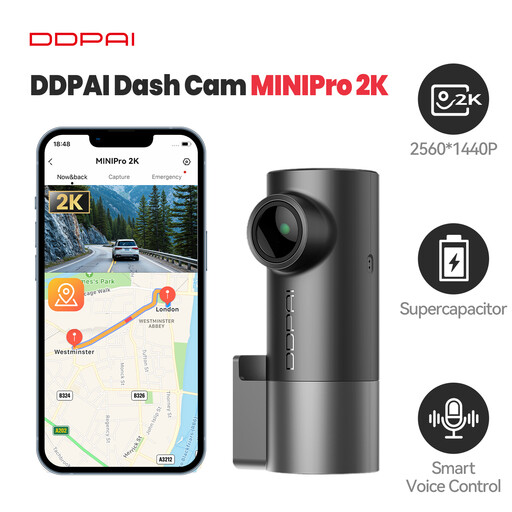
Why this model? Perfect for those seeking a discreet and effective "set-it-and-forget-it" solution without breaking the bank. Its mini form factor hides behind the rearview mirror, and its 2K resolution offers a noticeable sharpness improvement over standard 1080p.
It avoids the "fake 4K" trap by offering a clean, native 2K (1440p) resolution, which is far more useful for capturing details than a disappointing, interpolated 4K.
Excellent value for 2K resolution. Ultra-compact design. Easy access to videos via the Wi-Fi app.
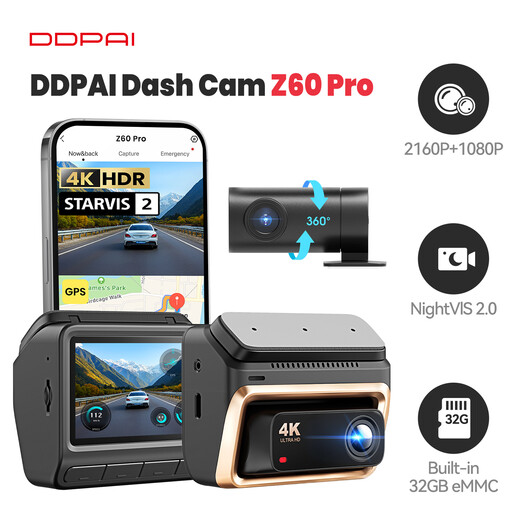
Why this model? For those who demand front and rear protection with zero compromise on image quality. The combination of a 4K front camera and a 1080p rear camera, both equipped with HDR, ensures flawless recordings, day or night.
It counters the pitfalls of poor image quality and gimmicky night vision by incorporating Sony STARVIS 2 sensors (IMX678 front, IMX662 rear), the industry benchmark for low-light performance.
4K HDR (front) and 1080p HDR (rear) image quality. Latest-generation Sony STARVIS 2 sensors. Dual storage (eMMC + microSD) for enhanced reliability.
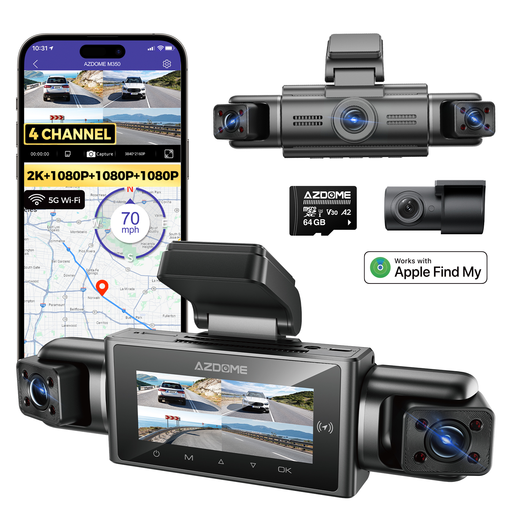
Why this model? The ultimate solution for those who tolerate no blind spots. With its four cameras, this system records everything around the vehicle. Its native integration with Apple's "Find My" network is a unique bonus for locating your car.
It solves the problem of blind spots that persist even with the best dual-camera systems. The surveillance here is truly comprehensive, with no gaps in coverage.
Complete 360° video coverage (4-channel). Integration with the Apple "Find My" network. Main camera in 2.5K.
We've selected other models for you that meet these quality criteria.
Yes, using a car dashcam is perfectly legal in France for personal use. In the event of an accident, recordings are admissible as evidence by insurance companies and the courts. However, be aware: publishing these images online or sharing them with third parties without blurring faces and license plates is prohibited, in accordance with privacy laws (GDPR).
This is a real risk with a basic installation. To prevent it, it is essential to use a hardwire kit designed for parking mode. These kits include a protection system that monitors your battery's voltage and automatically cuts power to the dashcam if it drops below a critical threshold, thereby preserving enough power for your car to start.
Dashcams record in a loop, meaning they are constantly writing and rewriting data. This continuous write and rewrite process wears out standard memory cards prematurely. For long-term reliability, it is advisable to choose "High Endurance" microSD cards, which are specifically designed to withstand intensive write cycles. In a dashcam, their lifespan is far superior to that of standard cards.