
Livraison le jour même ou le lendemain

Qualité garantie

Débloquez vos offres de bienvenue: Livraison GRATUITE | Jusqu'à -80 % | 30 jours d'essai gratuits à JoyPlus
Téléchargez l'application
A car dash camera can provide video evidence in the event of a bump, dispute or vandalism. Yet product listings often focus on resolution or the number of sensors without explaining what that actually means in practice. To avoid buying the wrong model, it’s worth looking beyond simple mentions of “4K” or “night vision”.
A 4K car camera boasts more pixels on paper, but readability also depends on the lens, image processing, exposure and stabilisation. A highly detailed clip in broad daylight can lose significant clarity at night or when headlights approach from the opposite direction.
So check the definition of each camera, not just the front sensor. On a front and rear dashcam, the rear camera often only offers 1080p resolution. That’s fine for monitoring traffic, but the level of detail won’t match a 4K front sensor.
24-hour parking mode usually requires a constant power supply. Many models need a hardwiring kit, often sold separately, which connects to the fuse box. Without this accessory, the camera will typically only record when the 12V socket is powered.
Before ordering, check what’s in the box, whether the kit is compatible with your vehicle, and the installation requirements. Professional fitting may be advisable to avoid airbag zones and protect the vehicle’s electrical system.
High-definition videos quickly fill a memory card. Loop recording normally overwrites the oldest files when space runs low, while footage locked by the G-sensor is saved separately.
Choose a suitable microSD card, Class 10 or U3 as recommended by the manufacturer. Some models include one, others don’t. Also check the maximum supported capacity – it can range from 128GB to 512GB depending on the dashcam.
Look for a sufficiently wide aperture lens and HDR or WDR functionality. If the interior is being recorded, infrared night vision can also make a difference. However, these features are technical indicators – they don’t guarantee that every number plate or face will be readable.
The frame rate is also worth considering. Video at 60 frames per second makes motion smoother, while higher resolution quickly increases file sizes.
Built-in GPS adds location, speed and route information that you can view in the manufacturer’s app or player. Wi-Fi makes it easier to view and transfer videos to a smartphone without removing the memory card. Voice control can reduce the need for manual operation, but check which languages are supported.
In the UK, these images should be used responsibly. Avoid publishing a video where people or number plates are identifiable without taking the necessary precautions. If you need to share a recording with your insurer or the authorities, keep the original file and limit its distribution to that purpose.
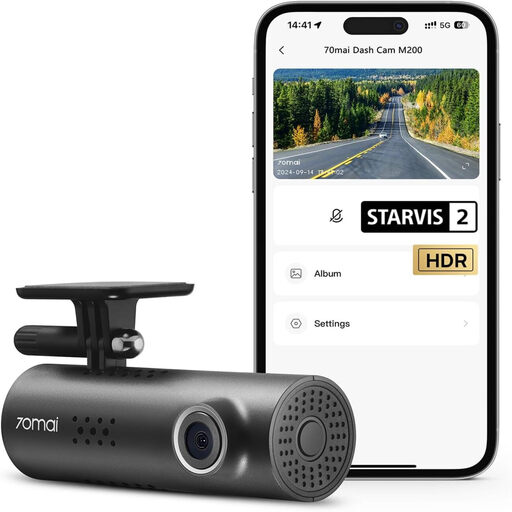
Why this suits this profile: Its compact front-only design and 1080p resolution are ideal for a first installation, without the need for extra accessories.
The listing clearly states it’s a front-only camera and that the microSD card isn’t included. This means you can budget accurately from the start.
HDR, Wi-Fi, voice control and G-sensor with emergency footage locking.
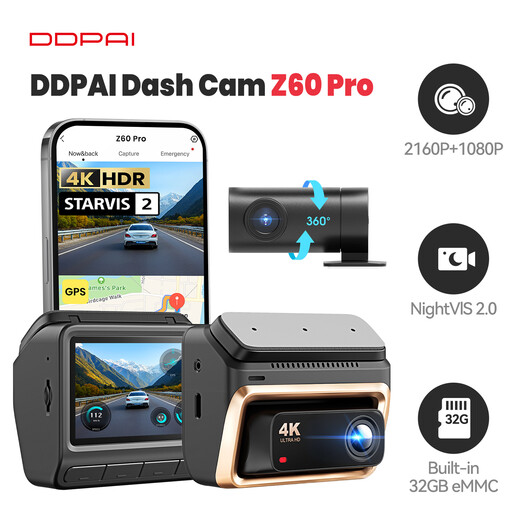
Why this suits this profile: This model is aimed at drivers who want a detailed front camera combined with a rear camera and connected features.
The listing distinguishes between parking mode, the hardwiring kit and the 4G module. The latter two may be offered as optional extras.
4K front recording, 1080p rear, HDR, GPS, 5 GHz Wi-Fi and 32GB internal memory.
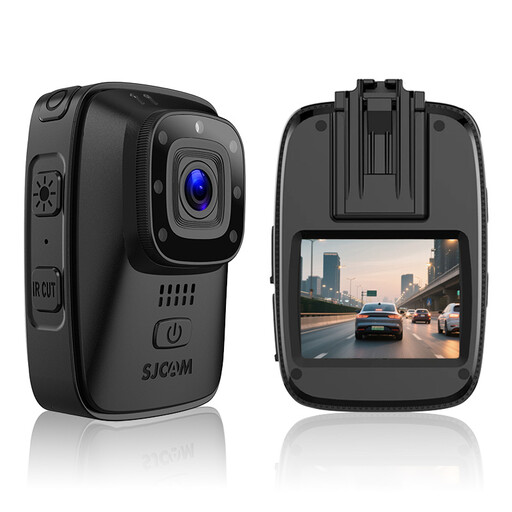
Why this suits this profile: Its compact design, claimed battery life of up to 450 minutes and IP65 certification make it suitable for mobile or professional use.
It doesn’t rely on a fixed installation and offers several modes, including motion detection and loop recording.
Infrared night vision, 64GB card included, 2-inch touchscreen and support for cards up to 128GB.
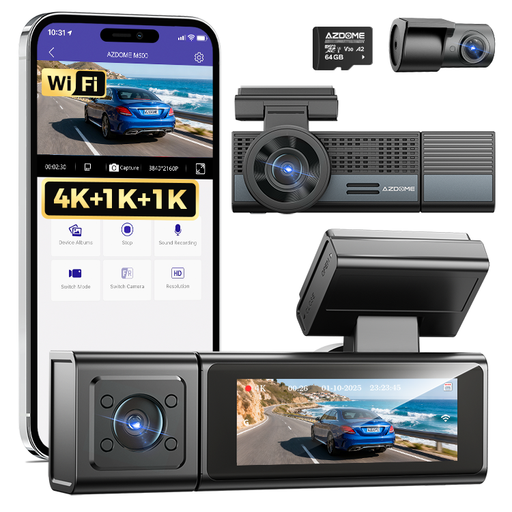
Why this suits this profile: Simultaneous recording of the front, interior and rear covers the needs of a family car or a frequently used vehicle.
The number of channels is clearly stated and the 64GB card is listed as included. This means installation can be planned without any nasty surprises.
4K front camera, two 1K channels, Wi-Fi, 3-inch screen, night vision and parking surveillance.
We’ve put together a comprehensive, real-time selection of products that meet these demanding criteria and comply with European safety regulations.
Private use of a dash camera is generally permitted, but the footage must be handled with care. Avoid publishing videos that could identify individuals or number plates. In the event of an accident, only share the relevant footage with your insurer or the appropriate authorities.
Often, yes. 24-hour parking mode usually requires a permanent hardwiring kit. Check the model’s manual, verify its compatibility with your vehicle, and make sure a device protects the battery from excessive discharge.
A dashcam uses very little power when powered while driving. The main costs involve the microSD card, the hardwiring kit for parking surveillance and, depending on the model, a 4G module or data subscription. Remember to check your recorded files and the condition of the memory card regularly.