
Livraison le jour même ou le lendemain

Qualité garantie

Débloquez vos offres de bienvenue: Livraison GRATUITE | Jusqu'à -80 % | 30 jours d'essai gratuits à JoyPlus
Téléchargez l'application
A car dash cam lets you keep footage of a journey, document an incident, or monitor your vehicle while it’s parked. Yet product listings often list resolution, connected features and night-vision promises without spelling out their real-world limitations. Before you buy a dashcam for your car, focus on the actual coverage, storage requirements, and the conditions needed for parking mode to work.
A 4K dashcam captures more detail than a Full HD model in certain conditions. However, the final quality also depends on the sensor, lens, compression and lighting. A very sharp image can still be hard to use if the windscreen is dirty, headlights cause glare, or the camera is poorly positioned.
The frame rate matters too. A camera that records at 60 frames per second produces smoother motion than one limited to 30 frames per second, especially when vehicles are moving quickly.
A microSD card isn’t always included. The 70mai A200 single, for example, is sold without a memory card and only has a front camera. The A200 dual model adds a rear camera, but the card is still sold separately.
To monitor your vehicle while parked, a hardwire kit can be essential. Without one, parking mode may only work while the camera still has power. Also check the maximum supported capacity and choose a card designed for repeated writes, usually identified by a high speed class.
A front camera doesn’t capture the sides or the interior. A front and rear car camera setup widens the coverage, while a three- or four-channel system can also monitor the interior and sides. This extra coverage does mean more cables, a longer installation, and larger files.
Having GPS, Wi-Fi or driver-assistance features doesn’t make up for a careful installation. ADAS alerts, where offered, should be treated as simple aids, not as a guarantee against accidents.
For everyday use, Full HD can be enough if you mainly want to document a journey and its key events. 2K and 4K give you more detail, but need a faster memory card and produce larger files.
The viewing angle should be wide enough to cover several lanes without excessively distorting the scene. The models shown here have angles of 130°, 140° or 143°, depending on the camera. A very wide field doesn’t guarantee better readability of number plates that are far from the lens.
Night vision depends on the sensor, lens aperture, HDR processing, and the presence of stray light sources. HDR helps balance dark and bright areas, but it doesn’t make every scene perfectly readable.
For a dashcam, look for a detailed description of the sensor and aperture, then check that the rear or interior camera also has low-light processing.
Loop recording automatically deletes the oldest files when the memory is full. Videos locked after a collision or manual action shouldn’t be removed by this mechanism, but it’s best to save important footage quickly.
The G-Sensor detects vibrations and impacts, and can protect the relevant clip in an emergency folder. Parking mode may rely on collision detection, motion detection, or time-lapse recording. Check the power requirements carefully: prolonged monitoring can drain your vehicle’s battery.
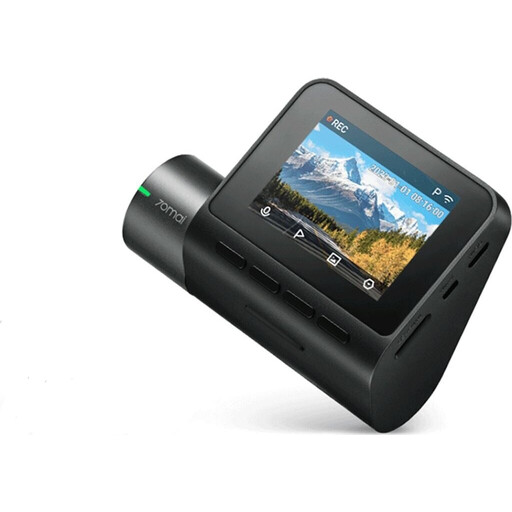
Why this choice suits this profile: This front camera is aimed at drivers who want a simple setup for their daily journeys, without installing a rear camera straight away.
The listing clearly states it’s a front-only model and that the microSD card isn’t included. This saves you from an unpleasant surprise when you come to install it.
1080P recording at 60 frames per second, HDR, Wi-Fi, 2-inch IPS screen and G-Sensor.
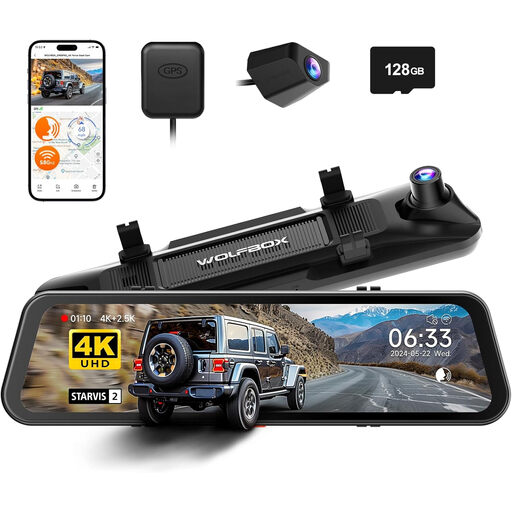
Why this choice suits this profile: Its rear-view mirror screen format and dual coverage appeal to drivers looking for a front and rear camera with plenty of built-in features.
The included 128 GB card means you don’t have to buy a storage accessory straight away. GPS and loop recording also cover everyday needs.
Front 4K camera, rear 2.5K camera, claimed STARVIS IMX678 sensor, GPS, 5.8 GHz Wi-Fi and voice control.
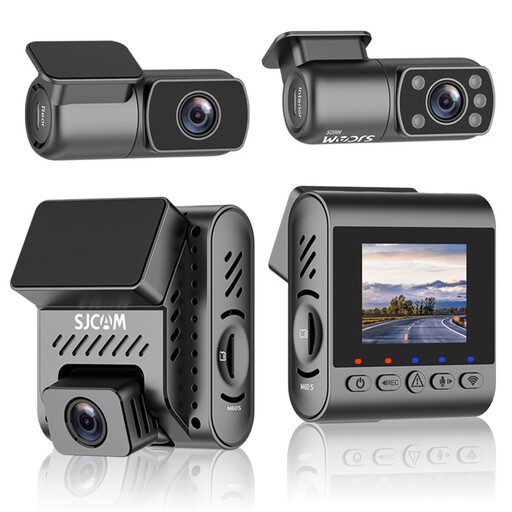
Why this choice suits this profile: Taxi drivers, road professionals and anyone who wants to film the front, rear and interior benefit from extended coverage.
The listing details the three channels, the 140° and 130° angles, and the included 64 GB card. You’ll still need to plan for cable routing and check the rules on interior recording.
Front 4K video, rear 2K camera, interior 1080P camera, infrared night vision, Wi-Fi, H.265 and parking surveillance.
We’ve put together a complete, real-time selection of products that meet these demanding criteria and European safety regulations.
Install the camera behind the interior rear-view mirror, in a position that doesn’t reduce the driver’s field of vision. Clean the windscreen before attaching the mount and make sure the lens is level. For a rear camera, route the cable without interfering with side airbags or vehicle controls.
Recording public roads and people must be proportionate to the purpose. Avoid publishing a video where faces or readable number plates appear without taking the necessary precautions, and check the privacy rules that apply to your situation. Useful files can be kept and shared with the relevant parties, rather than being made public.
Using a camera in a vehicle isn’t automatically banned. However, collecting, storing and sharing footage must comply with data protection rules and road traffic laws. The camera must not obstruct the driver’s view. If you’re unsure, check official guidance from the Information Commissioner’s Office (ICO) or seek advice based on your circumstances.
Choose a microSD card whose capacity and speed class match the manufacturer’s recommendations. 4K video and multi-channel setups take up more space. A card designed for continuous recording will generally be more suitable than one intended for occasional use. It will still need to be replaced as soon as errors or corrupted files appear.
Wi-Fi is mainly used to view or transfer videos to a phone and doesn’t usually require a subscription. GPS records position and speed data. A remote 4G connection, where offered, may need a separate module and data plan. Also remember to factor in the cost of the memory card, any hardwire kit, and its installation.