Joybuy Insights

Buyer’s Guide to Choosing the Right Car Cleaning Accessories

A pristine car is a source of pride. But finding the right equipment to achieve that can often feel like an uphill battle. Between the lure of marketing and opaque technical specifications, making a costly mistake is all too easy. As a product expert at Joybuy, my mission is to help you cut through the noise. Let's break down the pitfalls to avoid and the essential criteria for choosing car cleaning accessories that will truly make a difference.

The 3 Pitfalls to Avoid When Buying Detailing Equipment

The market is flooded with products that look appealing but often disappoint in practice. Here are the common mistakes that will cost you time and money.

  1. The myth of the "ultra-powerful" pressure washer: Many manufacturers highlight a very high maximum pressure (in bars), which is a peak value, not the actual working power. A machine might claim 200 bars but have such a low water flow rate that it struggles to wash away dirt. True effectiveness lies in the balance between pressure and flow rate.
  2. The ineffective or dangerous polisher: An entry-level car polisher with an anemic motor or poor ergonomics won't tackle any real imperfections. Worse, an overly aggressive rotary model used without experience can burn through the clear coat in seconds, causing irreversible damage.
  3. "All-in-one" kits filled with gadgets: These sets promise a complete solution but often contain poor-quality accessories: microfibers that scratch, unsuitable brushes, or ineffective chemical products. It's better to invest in a few quality tools than in an array of useless accessories.

Key Parameters for an Informed Choice

To avoid these pitfalls, focus on a few key technical specs that don't lie.

Pressure Washer: The Pressure / Flow Rate Balance

A good car pressure washer is about more than just its bar rating.

  • Pressure (bars): This determines the force with which water hits the surface to lift stubborn dirt. For automotive use, an operating pressure (not maximum) of 110 to 140 bars is more than enough.
  • Flow Rate (litres per hour, L/h): This is the volume of water being projected. A high flow rate helps to quickly wash away the dirt loosened by the pressure. Aim for at least 400 L/h for efficient work. A machine with 130 bars and 450 L/h will often be more effective for washing a car than a model claiming 180 bars with only 350 L/h.

Polisher: Movement Type and Power

The choice of a polisher depends on your goal: a simple wax application or true micro-scratch correction.

  • Random Orbital (DA - Dual Action) Movement: The polishing head spins on its own axis while also moving in an orbit. This dual motion generates less heat and is much safer for beginners. It's ideal for applying waxes, glazes, and correcting light defects.
  • Rotary Movement: The head only spins on a central axis. It's more powerful and faster for correcting deep defects but requires a certain level of skill to avoid damaging the paint.
  • Power and Variable Speed: A power rating of at least 700W (for corded models) and a variable speed control are essential to adapt the action to the product and the area being treated.

The Often-Overlooked Step: Decontamination

Even after a thorough wash, contaminants (iron particles, resin, tar) remain embedded in the clear coat, making it feel rough. Applying wax or polish to a non-decontaminated surface is like trapping dirt underneath.

  • The Clay Bar: This is the go-to tool. Used with a lubricant, this decontamination clay bar glides over the bodywork and captures these impurities without scratching. The result? A perfectly smooth surface, ready to be protected.
  • The Alternatives: Decontamination mitts or towels also exist. They are often faster to use on large surfaces but can be less precise than a traditional clay bar.

Recommended Cleaning Accessories

Instead of an endless list, here is a curated selection for different user profiles, chosen for its relevance and design.
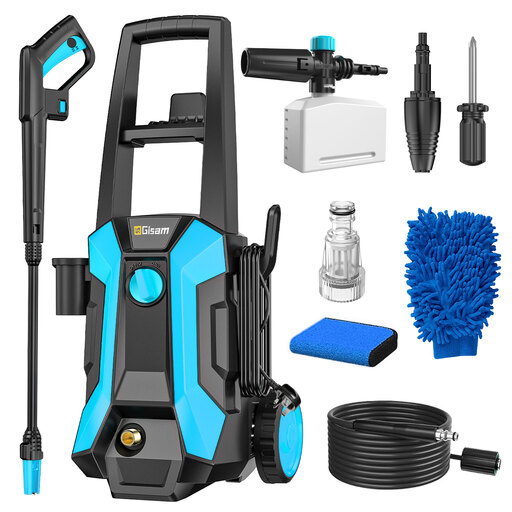
FOR THE EFFICIENCY-FOCUSED USER
Nettoyeur haute pression 2200W 180Bar

2200W 180Bar 480L/H Electric Pressure Washer

Why we recommend it: Ideal for the car owner looking for a powerful and versatile tool to clean their car, as well as their patio or garden furniture. It offers an excellent balance for both regular and deep cleaning.

How it avoids the pitfall

It doesn't rely solely on raw pressure. Its 480 L/h flow rate ensures efficient dirt removal, making it more effective than a model with higher pressure but a weak flow rate.

The detail that makes a difference

Its integrated hose reel and 8-metre hose offer real ease of use and simplified storage—practical details too often missing from entry-level models.
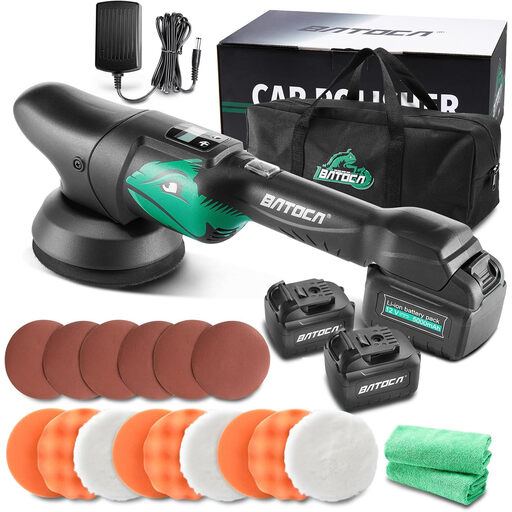
FOR THE PERFECT FINISH ENTHUSIAST
Polisseuse BATOCA S2 sur batterie

BATOCA S2 Cordless Polisher with LCD Screen

Why we recommend it: For the car detailing enthusiast aiming for a flawless finish. The freedom of cordless operation, the runtime from two 5Ah batteries, and precise control via the LCD screen make it a formidable tool for paint correction.

How it avoids the pitfall

This is a random orbital polisher (with an 8 mm throw), which makes it very safe, even for intensive use. The LCD screen displays the speed and battery status, offering full control to prevent user error.

The detail that makes a difference

The inclusion of two 5.0Ah batteries ensures enough runtime to polish an entire vehicle without interruption, a common weakness on many cordless competitors.
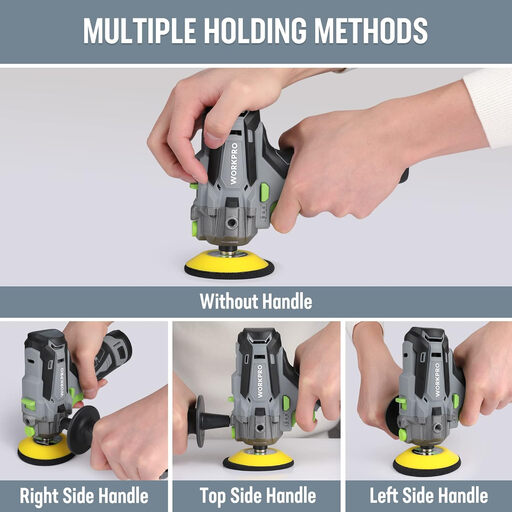
FOR THE BEGINNER GETTING STARTED
Mini polisseuse WORKPRO 12V

WORKPRO 12V Cordless Mini Polisher

Why we recommend it: Perfect for getting started with polishing without breaking the bank. Its compact size is less intimidating and ideal for treating targeted areas like door pillars, bumpers, or headlights.

How it avoids the pitfall

It is sold as a complete polishing kit with two batteries, a fast charger, and a variety of pads. This avoids the trap of needing additional purchases and allows you to get started right away.

The detail that makes a difference

Its feather-light weight (0.88 kg with battery) and small size make it extremely maneuverable for hard-to-reach areas where a standard polisher would be bulky and impractical.

Looking for other hidden gems?

We have curated a comprehensive and up-to-date selection of products that meet our selection criteria and current standards.

Frequently Asked Questions (FAQ)

Can a pressure washer damage my car's paint?

Yes, if used incorrectly. To avoid any damage, follow these simple rules:

  • Use a wide-angle nozzle (25° or 40°) rather than a pencil jet (0°).
  • Maintain a distance of at least 30 to 40?cm between the nozzle and the bodywork.
  • Avoid aiming the jet directly and for extended periods at rubber seals, stickers, or areas where the paint is already chipped.

How often should you use a clay bar on your car?

For a daily-driven vehicle, a clay bar decontamination is generally recommended twice a year: in the spring to remove winter contaminants, and in the autumn to prepare the bodywork for the cold season. If your car is often parked outdoors, near industrial areas, or railway tracks, more frequent use may be necessary. The test is simple: after washing, run the back of your hand over the bodywork. If it doesn't feel perfectly smooth, it's time to decontaminate.

What is the difference between an orbital and a rotary polisher?

The fundamental difference lies in the movement of the polishing head.

  • The rotary polisher has a simple, direct rotational movement. It is very effective for correcting major defects but generates a lot of heat and can easily "burn" through the clear coat if not handled by an experienced user.
  • The orbital (or random orbital) polisher has a dual motion: it spins on its own axis while also following an orbit. This movement mimics hand polishing, distributes heat, and significantly reduces the risk of damaging the paint. It is the recommended choice for the vast majority of users, from beginners to seasoned enthusiasts.