
Livraison le jour même ou le lendemain

Qualité garantie

Débloquez vos offres de bienvenue: Livraison GRATUITE | Jusqu'à -80 % | 30 jours d'essai gratuits à JoyPlus
Téléchargez l'application
Staying connected in your car has become a necessity, whether for GPS, music, or simply ensuring your phone isn't dead on arrival. Yet, choosing a car charger can quickly become a headache. Between promises of "ultra-fast" charging and low-cost models that give up the ghost after a few weeks, it's easy to make a mistake.
As the Head of Product Selections at Joybuy, my mission is to help you see things more clearly. Let's break down the most common pitfalls and the essential criteria for finding the perfect charger for your needs, without getting fooled by marketing jargon.
The market is flooded with models that look similar but whose performance can vary wildly. Here are the most frequent mistakes that lead to a disappointing purchase.
To make an informed choice, focus on these three technical points. They are the key to your future charger's performance and versatility.
Power, expressed in watts (W), is the number one criterion. Here are a few benchmarks for a fast car charger:
Always check for the Power Delivery (PD) or Qualcomm Quick Charge (QC) logos to ensure speed will be on your side.
The era of the single USB-A port is well and truly over. Today, a good charger must be able to juggle your various devices.
The charger is no longer just for charging. Its form factor plays a key role in the ergonomics and organization of your car's interior.
Rather than drowning you in an endless list, we have matched specific models to well-defined user profiles.
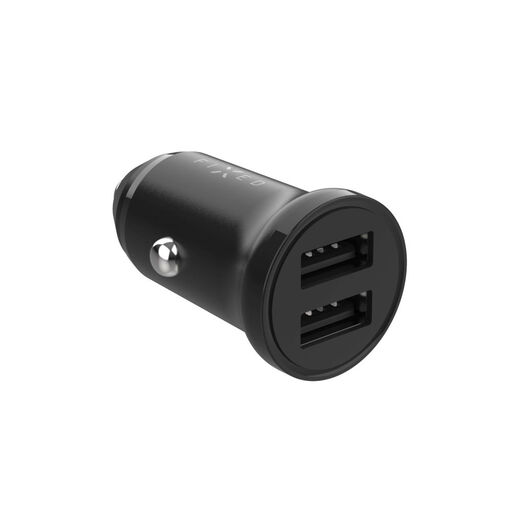
Ideal for: The user looking for a simple, reliable solution to maintain their phone's charge (and a passenger's) on daily commutes. No frills, just the essentials that work.
This charger makes no false promises. Its 15 W of total power is clearly calibrated for standard charging on two devices, allowing it to sidestep the trap of an overrated power output.
Its ultra-compact design and compatibility with both 12 V (car) and 24 V (truck) sockets make it a versatile, all-rounder choice.
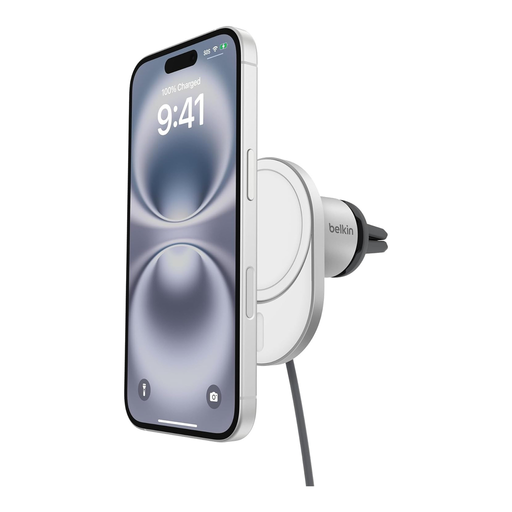
Ideal for: The iPhone user (MagSafe compatible) who wants an elegant and high-performance 2-in-1 solution (mount + charger). Perfect for using Waze or Maps without cable clutter.
It is Qi2 certified, the new standard that guarantees fast and efficient 15 W wireless charging. This helps avoid the trap of non-certified magnetic chargers that overheat and charge at a snail's pace.
The ultra-reliable magnetic attachment and 360° rotation provide a smooth and secure experience, even on bumpy roads.
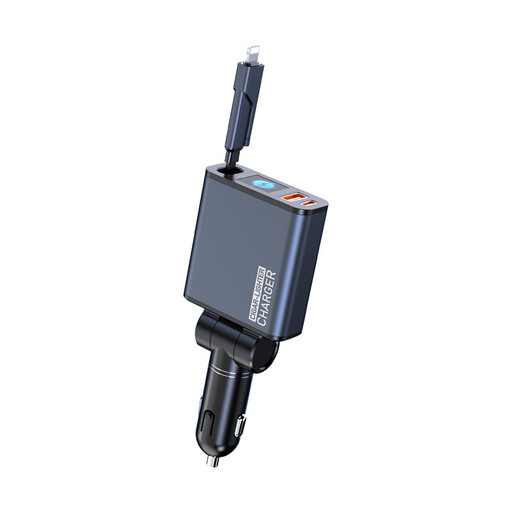
Ideal for: Professionals on the go, large families, or anyone who needs to charge multiple devices simultaneously, including a laptop. A true mobile power station.
With a colossal 160 W of power, QC5 certification, and multiple ports, it's built for high performance. It avoids the shared power pitfall by ensuring simultaneous fast charging on all fronts.
The two integrated retractable fast-charging cables (90 cm) keep the car's interior tidy and put an end to the tangled mess of cables.
We have selected a full range of products for you that meet our quality criteria and current safety standards.
It all depends on your devices. For fast charging a smartphone, aim for 18 to 20 W per port. For a tablet or to charge two phones at full speed, a 30 W model is more suitable. If you plan to plug in a laptop, you'll need a charger of at least 45 to 65 W with a USB-C port compatible with Power Delivery (PD).
Yes, and this is a pitfall to be aware of! Even with nothing plugged into it, some chargers draw a tiny amount of power continuously. In most modern vehicles, the cigarette lighter socket turns off with the ignition. But be careful: if this isn't the case with your car and you leave it parked for several days, it's best to unplug the charger to avoid a nasty surprise when you start the car.
The choice depends on your priorities: