
Livraison le jour même ou le lendemain

Qualité garantie

Débloquez vos offres de bienvenue: Livraison GRATUITE | Jusqu'à -80 % | 30 jours d'essai gratuits à JoyPlus
Téléchargez l'application
Whether for your daily commute or a long holiday road trip, keeping our devices charged has become essential. But with an overwhelming selection of car chargers on the market, it's easy to make the wrong choice and regret your purchase. As the Head of Product Curation at Joybuy, I'm here to help you see things more clearly and make the right decision, without the headache.
Before you even start comparing spec sheets, it's crucial to know the common mistakes that can turn a great deal into a disaster.
To navigate the jungle of chargers, here are the essential points to check. These are what will make all the difference in daily use.
Power, measured in watts (W), determines charging speed. For a car phone charger worthy of the name, aim for at least 20?W per port for truly fast charging.
It all depends on your daily needs.
Here, we're moving into a different category. We're no longer talking about a simple cigarette lighter charger, but about charging solutions for the vehicle itself.
Wallbox): This is the fixed, wall-mounted solution. A 22kW wallbox enables ultra-fast three-phase charging for compatible vehicles, cutting the waiting time by half or even two-thirds compared to a standard station.To put theory into practice, here are a few models that perfectly meet specific needs.
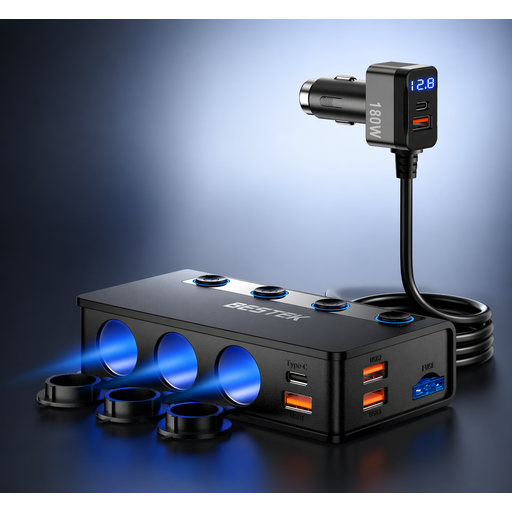
Why we chose it: The perfect tool for ride-share drivers, sales reps, and anyone juggling multiple devices. It simultaneously charges a laptop (via 65W PD), a smartphone, a GPS, and a dash cam, without ever slowing down.
With 180 W of total power, it bypasses the power-sharing trap: each port (including dedicated PD and QC ports) receives the necessary energy for optimal charging.
Its comprehensive connectivity (3 cigarette lighter sockets, 6 USB ports) and independent switches offer unmatched modularity and control.
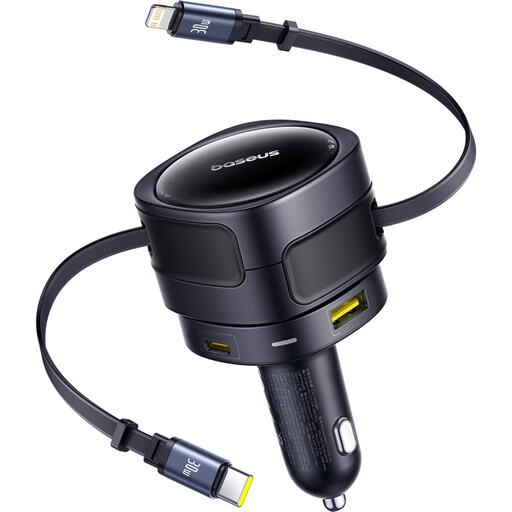
Why we chose it: The perfect companion for long family road trips. No more forgotten or tangled cables! Its two integrated retractable cables (USB-C and Lightning) keep the car's interior tidy, and the additional ports are there for other devices.
It ends the compatibility headache by directly integrating connectors for both the Apple (Lightning) and Android (USB-C) ecosystems, in addition to free ports.
The retractable cables are the game-changing detail for a tidy car interior. Its 90 W output ensures fast charging for three devices at once (30W + 30W + 30W).
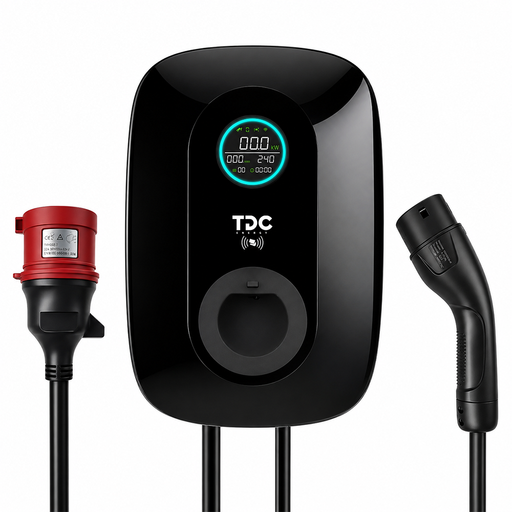
Why we chose it: The benchmark solution for EV owners with a three-phase electrical installation. This wall-mounted station guarantees fast, safe, and convenient charging at home.
As a dedicated and certified solution, it eliminates any risk associated with using non-compliant or underpowered equipment to charge an electric vehicle.
Its 22 kW power output slashes charging time compared to standard solutions. App control and RFID card unlocking provide simple and secure management.
We have curated a complete range of products that meet our quality requirements and European standards.
For effective fast charging on a recent smartphone, a charger with at least 20?W per port is the bare minimum. Opt for a model compatible with Power Delivery (PD) that has a USB-C port. If you're charging multiple devices, make sure the charger's total power output is high enough for each port to deliver its promised power.
A quality, CE-certified charger poses no risk to your car's battery. It integrates electronic protections (against over-voltage, overheating, etc.) to ensure safe charging. The real danger comes from cheap, uncertified chargers, which can indeed malfunction and damage your vehicle's electrical system.
It all depends on your primary use case.
Wallbox) is the fixed solution, perfect for daily charging at home. It's more powerful (up to 22?kW) and therefore much faster.