
Livraison le jour même ou le lendemain

Qualité garantie

Débloquez vos offres de bienvenue: Livraison GRATUITE | Jusqu'à -80 % | 30 jours d'essai gratuits à JoyPlus
Téléchargez l'application
A dead battery in the middle of a drive is every motorist's nightmare. Your smartphone dying during GPS navigation, the kids' tablet shutting off at the best part of the cartoon… A good car charger is no longer a gadget, but an essential piece of equipment. The problem?: the market is flooded with models making tempting promises that often hide nasty surprises. To avoid buyer's remorse, let's review the pitfalls to avoid.
This guide is here to help you decode the technical jargon and find the perfect charger for your needs.
To make the right choice, three technical criteria must be examined closely. They determine both the performance and safety of your future cigarette lighter charger.
Charging speed isn't just a number followed by a "W". It primarily depends on the fast-charging protocols your devices can use.
Our advice?: check your phone's spec sheet to identify its fast-charging protocol. A 30W PD charger will be far more effective for a recent iPhone than an older 15W model without this protocol.
The choice of connectors is just as crucial as the power.
For maximum versatility, a USB car charger that combines a USB-C port (for fast charging) and one or more USB-A ports (for passengers or secondary devices) is the ideal solution.
Your cigarette lighter socket can do much more than just charge a phone. Depending on your needs, you can opt for much more comprehensive devices?:
Rather than an endless list, we've selected products tailored to specific user profiles. It's up to you to find the one that suits you.
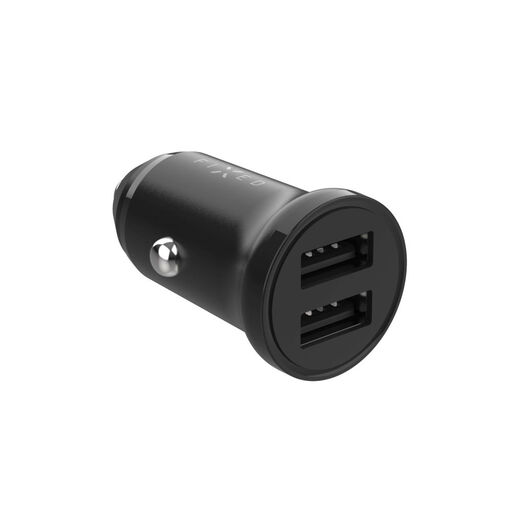
Why it's the right choice : for the daily commute, you want simplicity and reliability above all. This compact charger lets you maintain your phone's charge and a second device (GPS, headphones) without cluttering your dashboard. It gets straight to the point.
It doesn't make false power claims. Its 15W is distributed stably for effective trickle charging, without risk of overheating thanks to a simple design and built-in protections.
Compact and discreet : its minimalist design blends into the car's interior. Dual USB-A port : ideal for charging two devices at the same time.
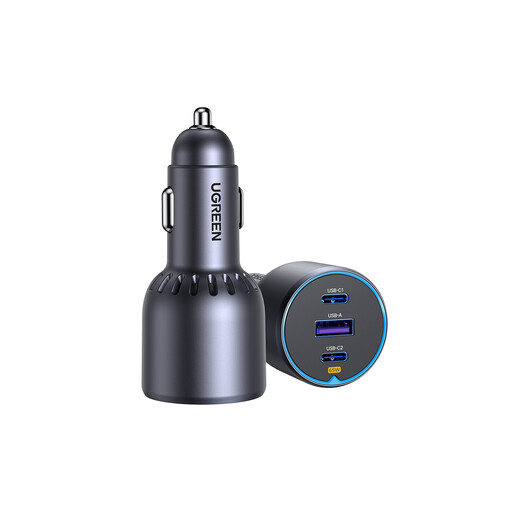
Why it's the right choice : with its two USB-C ports and one USB-A port, it can simultaneously power a laptop (via the 65W port), a fast-charging smartphone, and a third device. The perfect solution for long family road trips or for professionals on the go.
The false promise of "total power". Its spec sheet is transparent and details the maximum power for each port (up to 65W on one USB-C port). You know exactly what you're buying.
Power and versatility : capable of charging a laptop via its main 65W USB-C port. Triple port : enough to keep all passengers happy by charging three devices simultaneously.
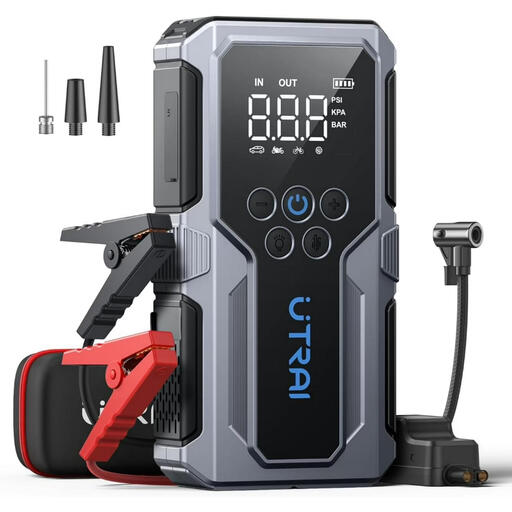
Why it's the right choice : much more than a simple charger, this is the motorist's Swiss Army knife. It can jump-start a car with a dead battery, reinflate a tyre, serve as a high-capacity power bank, and even act as a torch. Peace of mind that fits in your glove box.
Device clutter. No need to buy, store, and remember to charge a separate booster, compressor, and power bank. Its all-in-one design is more practical and cost-effective, with dedicated safety features for each function.
5-in-1 emergency solution : battery booster, air compressor, power bank, LED light, and multiple protections. Jump-starting power (3000A) : compatible with most petrol and diesel engines.
We've put together a complete selection of products that meet our quality criteria and current safety standards.
On most modern vehicles, the cigarette lighter socket is no longer powered once the ignition is off, which eliminates any risk. On older models, a quality charger consumes only a negligible amount of power when not in use. As a precaution, however, it's still a good idea to unplug it if you won't be using your car for several days.
Thanks to the USB standard, compatibility is nearly universal. For fast charging, the crucial point is to check whether your phone uses the Power Delivery (PD) or Qualcomm Quick Charge (QC) protocol. Then, choose a fast car charger that explicitly mentions this standard. Note that a PD charger will work with a QC phone (and vice versa), but at a standard, non-optimised charging speed.
It all depends on its build quality. A budget model might give out in a few months, whereas a charger from a reputable brand, equipped with protections against overheating and power surges, will last you for several years. Warning signs of failure?? Intermittent charging, abnormal overheating, or ports that stop working.