
Same-day & Next-day Delivery

Quality Guaranteed

Unlock Your Welcome Offers: FREE Delivery | Up to 80% OFF | Free 30-day JoyPlus trial
Download the APP
A puncture on a remote road, a cool box that doesn’t keep food cold enough, or a battery that drains too quickly can turn a getaway into a real logistical headache. Whether you’re a motorist, a camper, a motorhome owner, or a van conversion enthusiast, your accessories should be chosen based on your actual needs — not just a marketing promise.
An inflator that boasts a high maximum pressure doesn’t guarantee a quick tyre top-up. The PSI value is a theoretical limit. In practice, the airflow rate, battery life, and cooling time are just as important.
A cordless portable tyre inflator is handy in an emergency, but check its capacity and the time needed to inflate several tyres in a row. A wired car compressor, on the other hand, will depend on the 12 V socket and the length of its cable.
A portable electric cool box, a camping fridge, or a 12 V to 220 V inverter can put a heavy strain on a vehicle’s battery. Socket compatibility isn’t enough: you also need to consider the power draw, low-voltage protection, and how long you’ll use it with the engine off.
A device left running all night on the starter battery can stop the vehicle from starting the next morning. For regularly powering your gear off-grid, an auxiliary battery or a compatible power station is usually a better choice.
A portable fridge must be placed on a flat surface, with enough space around its ventilation grilles. In a van or motorhome, a device that’s simply set down can become dangerous during sudden braking.
The same caution applies to a portable diesel heater. It needs proper ventilation, must be kept away from flammable materials, and should be used according to its instructions. A combustion heater must never run in an enclosed space without a suitable exhaust system: the risk of carbon monoxide poisoning is very real.
Start by identifying the power source you have available:
A 12 V to 220 V inverter must be sized according to the continuous power of the device you’re plugging in. The peak power is mainly for handling the surge when certain motors start; it shouldn’t be confused with the nominal power available continuously.
For a cool box or camping fridge, the volume should match the number of travellers and the length of your trip. A 6 L model is fine for drinks and small provisions, while a 22 L compartment offers more space for a weekend away or regular use in a converted vehicle.
Also check the temperature range. A thermoelectric model can cool and warm, whereas a compressor unit is designed to reach much lower temperatures, sometimes down to freezing. The outside temperature, sun exposure, and how often you open the lid will all directly affect power consumption.
For travel accessories, weight, size, and ease of storage matter just as much as the advertised performance. Pay particular attention to:
The products below meet different needs. The features listed are based on the information provided for each item; always check the product page and manual before use.
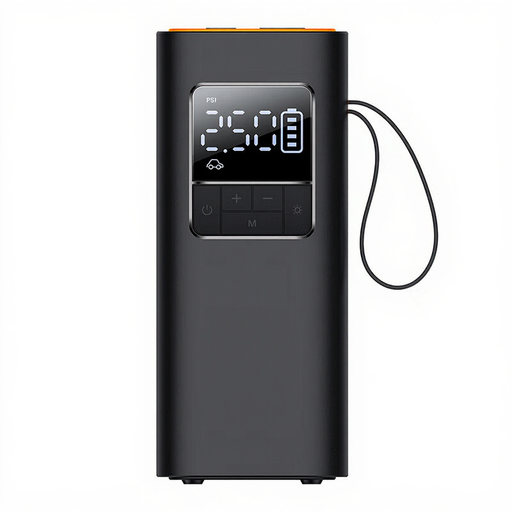
Why this choice suits this profile: Its cordless operation and 4,000 mAh battery make first-time repairs on a car, motorbike, bike, or ball simple, without needing a 12 V socket.
The battery capacity and the stated time of 6 to 8 minutes for an R175 tyre give you more concrete benchmarks than just a maximum pressure figure.
USB-C 5 V/2 A input, cable-free use, and claimed compatibility with cars, motorbikes, bikes, and balls.
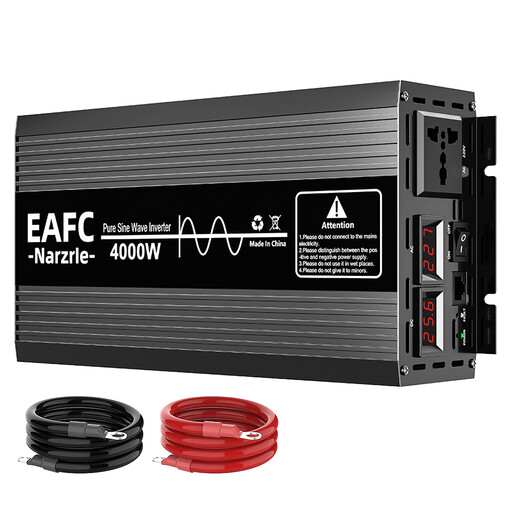
Why this choice suits this profile: Regular motorhome, truck, or van conversion users can monitor input and output consumption thanks to the two digital displays.
The distinction between 2,000 W nominal and 4,000 W peak helps you correctly size the devices you plug in, rather than relying on the maximum figure alone.
Pure sine wave output, dual ventilation, and claimed protection against overload, overheating, short circuits, and reverse polarity.
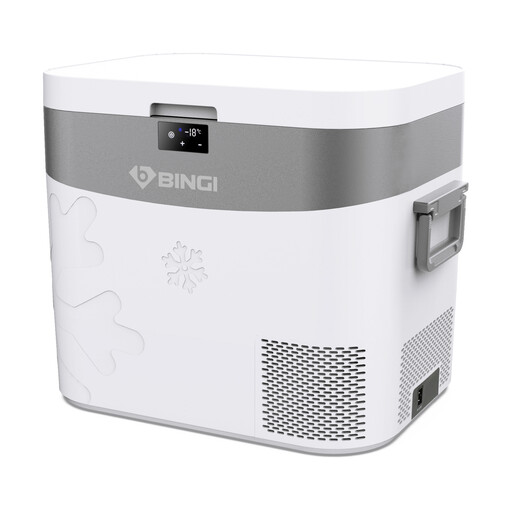
Why this choice suits this profile: Its 22 L capacity and 12/24 V or 100-240 V power supply meet the needs of long journeys in a motorhome, boat, truck, or van.
The adjustable range from -18 °C to +15 °C and dual power supply mean you’re not limited to a simple cool box on a 12 V socket.
Switchable fridge or freezer mode, continuous power supply option, and detailed instructions on ventilation, securing, and moisture protection.
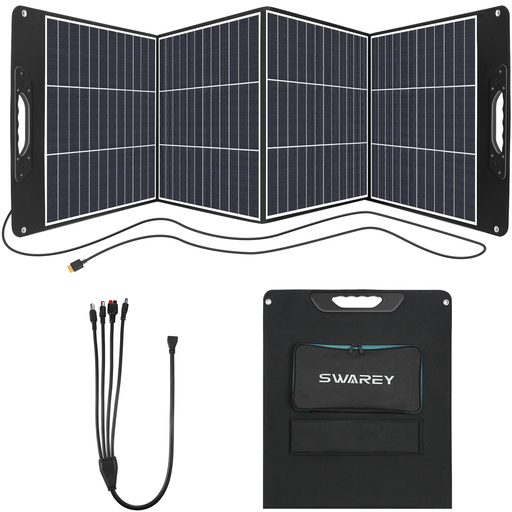
Why this choice suits this profile: Travellers looking for a portable power source can pair it with a compatible power station to charge their devices and equipment off-grid.
The supplied adaptors and folded dimensions make it easier to check compatibility and storage size before you buy.
Claimed 200 W power, USB-A, USB-C and QC3.0 outputs, adjustable stands, and an XT60 cable with several adaptors.
We’ve put together a comprehensive, real-time selection of products that meet these strict criteria as well as European safety regulations.
Well-used equipment will generally keep its performance for longer. With an inflator, check the recommended pressure in your vehicle’s manual and let the device cool down if the instructions say so. For a compressor cool box, pre-cool your food and make sure not to block the ventilation grilles.
With an inverter, add up the power of all the devices you’re plugging in and keep a margin against the nominal power. For a foldable solar panel, regularly re-angle the surface towards the sun and protect the connectors from moisture. Finally, any diesel heater must be installed and ventilated according to the manufacturer’s instructions.
A cordless model is fine for top-ups and emergencies. For inflating several tyres, a wired 12 V compressor can be more practical thanks to its continuous power supply. Compare the stated inflation time, battery life, cable length, and the nozzles supplied.
Yes, but it depends on the power source and low-voltage protection. A 12 V socket connected to the starter battery can drain it. For overnight use, go for an auxiliary battery or a suitable power station, and check the power consumption stated by the manufacturer.
Add up the power of the devices you’ll use at the same time, then compare the total to the continuous power of the power station or inverter. Also consider the capacity in watt-hours, which determines runtime, as well as the compatible connectors and voltages.