
Livraison le jour même ou le lendemain

Qualité garantie

Débloquez vos offres de bienvenue: Livraison GRATUITE | Jusqu'à -80 % | 30 jours d'essai gratuits à JoyPlus
Téléchargez l'application
A dead battery is every driver's nightmare, especially on a freezing morning or just before a crucial appointment. To put an end to this sudden stress (and the associated roadside assistance costs), equipping yourself with a car battery tester is the best form of prevention. The problem? The market is flooded with models making tempting promises, and it's easy to get fooled by a device that turns out to be useless. Here is our guide to avoiding the pitfalls and choosing the tool that's perfectly suited to your needs.
Investing in a diagnostic tool is an excellent idea, but only if you choose the right one. Here are the classic mistakes to avoid:
To be confident in your purchase, here are the technical specifications on which you should make no compromises. This is your guarantee of an accurate and genuinely useful diagnosis.
The number one criterion: versatility. Ensure the device can handle all the vehicles you might need to test, both now and in the future.
Selecting the correct battery type in the tester's menu is a crucial step to ensure the reliability of the diagnosis.
A good tester doesn't stop at the battery. It must be able to inspect the entire starting and charging system. Make sure it offers these three fundamental tests:
There's no need to drown in dozens of options. We've selected one model that stands out for its versatility and will satisfy the DIY mechanic as well as the tradesperson or professional.
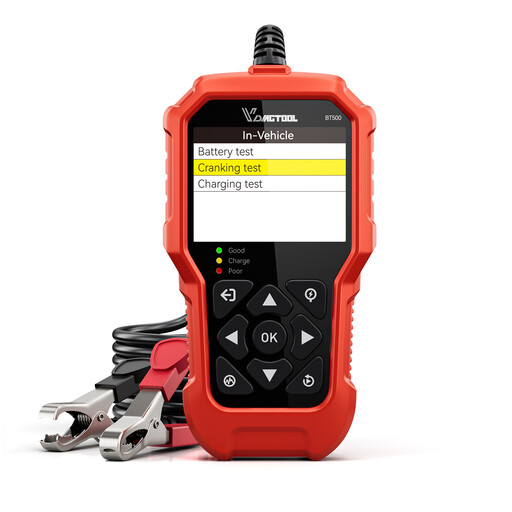
Why we recommend it: It's the ultimate all-in-one solution. Its triple 6V, 12V, and 24V compatibility makes it just as comfortable with a weekend motorcycle and the family car as it is with a fleet of commercial vehicles. It's the ideal tool for a mobile mechanic or the advanced DIYer who wants a device that can evolve with their garage.
It goes far beyond a simple voltmeter by integrating cranking and charging tests. It's a true Swiss Army knife of diagnostics. Its extremely broad compatibility (6V/12V/24V and all modern battery types) eliminates the risk of a wrong diagnosis due to unsuitable equipment.
Complete system analysis (battery, alternator, starter). Its interface is designed to be simple and intuitive, ensuring immediate usability, even for non-experts.
Explore our full selection of products that meet our strict selection criteria and current standards.
A voltmeter simply measures voltage at a single point in time. A battery tester is much smarter: it applies a load to simulate stress and measure the battery's true ability to deliver current (CCA), its internal resistance, and its overall State of Health (SOH). Most importantly, it can analyze the charging and starting system, which a simple voltmeter is incapable of doing.
Absolutely, provided it includes a charging circuit test function. This test measures the voltage sent by the alternator while the engine is running. If this voltage is too low (typically below 13.2V), too high (above 14.8V), or unstable, it's a sign that the alternator or its regulator has a problem.