
Livraison le jour même ou le lendemain

Qualité garantie

Débloquez vos offres de bienvenue: Livraison GRATUITE | Jusqu'à -80 % | 30 jours d'essai gratuits à JoyPlus
Téléchargez l'application
A dead battery: every driver's nightmare, especially when it happens at the worst possible moment. On a freezing morning, late at night, in the middle of nowhere… Waiting for a tow truck or relying on the kindness of another driver isn't always possible or practical. This is precisely where a car battery jump starter becomes your best friend.
This compact device, sometimes called an emergency starter, brings your engine back to life in minutes, without needing another vehicle. But with so many options on the market, how do you find the right one? This guide is here to help, with practical advice and a selection of the best current models, so you can find the one that's a perfect match for your car and your needs.
Before you dive in, let's review the key technical criteria that make all the difference in terms of performance and safety.
A jump starter's number one feature is its peak current, measured in amps (A). This value determines the "punch" the device can deliver to turn the starter and fire up the engine.
Always check the jump starter's compatibility with your engine's displacement (in litres), information that is always provided by the manufacturers.
Expressed in milliampere-hours (mAh), the capacity determines the jump starter's autonomy. The higher it is, the more starts you can perform before needing to recharge it. This also dictates its usefulness as a power bank.
Most modern jump starters do more than just start your car. They often include very practical additional features:
Safety is not optional. A good battery jump starter must include multiple protections to safeguard your car's electronics and the device itself. Look for models with "smart" clamps that protect against:
An audible or visual alert system for incorrect connections is a real plus, especially if you're not a mechanical expert.
To help you make an informed choice, we've selected three models that stand out in their category, from the most versatile to the most portable.
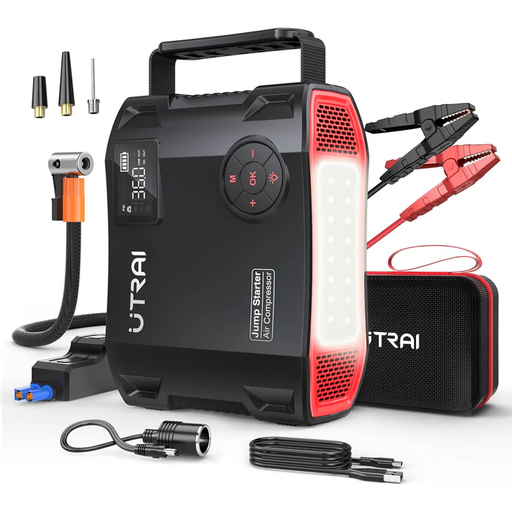
Why it stands out: This powerhouse combines colossal starting power with a digital air compressor. It's the ultimate emergency tool. Its 160W DC output also makes it a valuable companion for campers and tradespeople.
Key features?:
Who is it for? A must-have for owners of large vehicles (SUVs, 4x4s, vans, motorhomes, boats) and for anyone who wants a single device to handle both dead batteries and tyre maintenance.
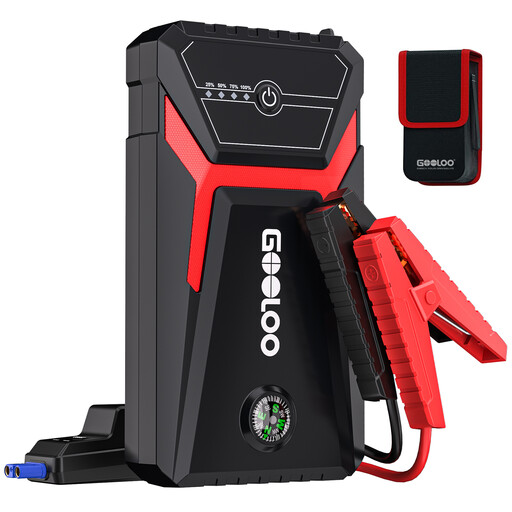
Why it stands out: The GOOLOO GE1500 gets straight to the point: it's a reliable, simple, and effective jump starter designed for the vast majority of cars on the road. Its compact size and safety features make it a smart choice for the everyday driver.
Key features?:
Who is it for? The ideal companion for drivers of compact cars, sedans, or small SUVs. It's aimed at those looking for an effective, no-frills device to be prepared for any eventuality.
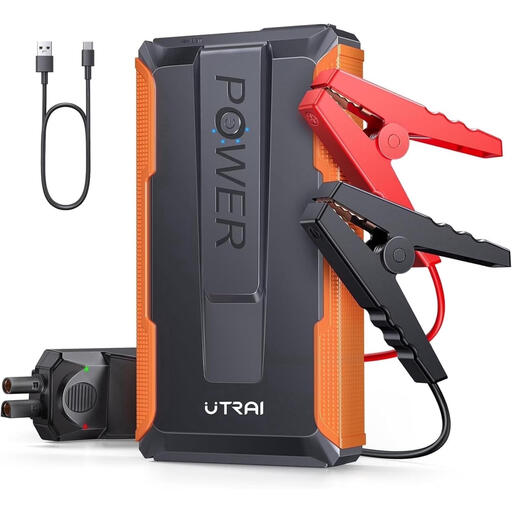
Why it stands out: This jump starter proves that you can be small but mighty. With 2000 A in a package that fits in your glove box, it combines high performance for a wide range of vehicles with outstanding portability.
Key features?:
Who is it for? The perfect choice for those who want maximum power in a minimal amount of space. It will also appeal to digital nomads who will regularly use it as a power bank for their gadgets.
Your car is ready for adventure. But once you're back home, why not travel back in time? If you're passionate about technology in all its forms, explore our collection of retro TVs with VCR players for a healthy dose of nostalgia.
1. What power rating is needed for a diesel battery jump starter? Diesel engines are more demanding and require a higher starting current. For a mid-sized engine (around 2.0L), a jump starter of at least 1500 A is recommended. For larger ones (3.0L and up), your best bet is a model with 2000 A or more, especially in cold weather.
2. Can you leave a jump starter in your car permanently? It is strongly discouraged. The lithium batteries in these devices do not handle extreme temperatures well, whether it's freezing in winter or the furnace-like heat of a car's interior in summer. This can damage the cells and drastically reduce their lifespan. It's best to keep it in its case, stored safely in the glove box or boot, and remember to check its charge level every 3 to 4 months.
3. Can a jump starter recharge a car battery? No, and this is a common misconception. A battery jump starter (or starter) is designed to deliver a very powerful, very brief pulse of current—just enough to start the engine. It does not recharge the battery. Once the engine is running, your car's alternator takes over to recharge the battery as you drive.