
Livraison le jour même ou le lendemain

Qualité garantie

Débloquez vos offres de bienvenue: Livraison GRATUITE | Jusqu'à -80 % | 30 jours d'essai gratuits à JoyPlus
Téléchargez l'application
A flat battery can leave your car stranded in a car park, by the roadside or outside your home. A car battery booster provides a compact emergency solution, without having to wait for help from another driver with jump leads. However, product listings often feature impressive figures that, on their own, are not enough to help you make the right choice.
Before buying a portable battery jump starter, pay particular attention to its compatibility with your engine, its built-in safety features and its storage requirements. Here are the key criteria to check so you can avoid any unpleasant surprises.
A stated current of 2,000 or 4,000 A certainly grabs attention, but this figure alone is not enough to assess the real capabilities of a car jump starter. Also check which engine types it supports, the system voltage and, where available, the starting current.
A 12 V car booster designed for a small petrol engine will not necessarily be suitable for a large diesel engine, even if both vehicles use a battery with the same voltage. Always compare the stated limits for petrol and diesel engines.
A car emergency jump starter delivers a burst of power to try to restart the engine. It does not replace a car battery charger, which gradually recharges the battery from the mains or via a suitable socket.
If the battery keeps going flat, look for the cause — an ageing battery, journeys that are too short, an accessory left plugged in or a circuit fault — rather than relying on repeated jump starts.
A car battery booster left in the boot for several months can lose charge, particularly because of significant temperature fluctuations. Several manufacturers recommend recharging it regularly, often every two or three months. The model’s instructions should always be followed.
You should also avoid leaving the device exposed to direct sunlight, damp conditions or temperatures above the permitted limit for extended periods. A storage case protects the clamps and reduces the risk of impact damage.
Start by identifying:
Heavy vehicles fitted with a 24 V system, certain heavy goods vehicles and high-voltage traction batteries in electric vehicles are not automatically compatible. A 12 V booster must never be used on a 24 V circuit.
Choose an intelligent jump lead with a connection indicator and protection against reverse polarity, short circuits, overcharging and overheating. These features help reduce the risk of mistakes, but they do not replace careful handling.
Connect the red clamp to the positive (+) terminal and the black clamp to the negative (-) terminal, or to a suitable earth point, as instructed in the manual. The quality of the metal clamps, the insulation on the handles and the flexibility of the cables matter more than a simple marketing claim.
Also check that the product comes with instructions in French, the contact details of the person responsible established in the European Union and the applicable compliance information, including CE marking where required. The presence of this marking does not remove the need to read the operating instructions.
A battery booster with a power bank function can recharge a phone, GPS device or tablet through its USB ports. An emergency LED light offering steady, flashing or SOS illumination makes it easier to connect the device at night and improves visibility around the vehicle.
A charge-level indicator is another real advantage: it lets you check that the device is ready before a long journey. By contrast, a capacity expressed in mAh does not allow all models to be compared directly, as the voltage and the capacity actually available may vary.
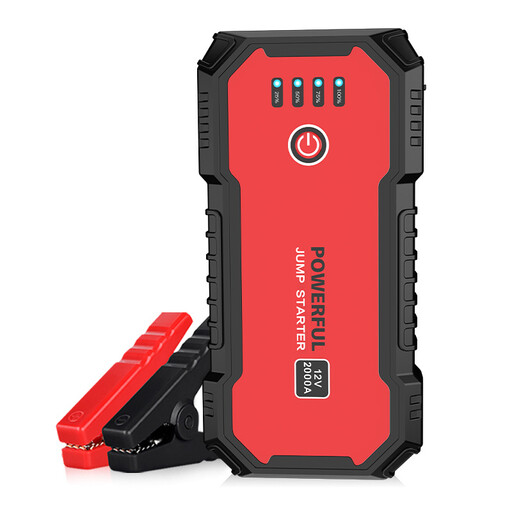
Why it suits this profile : At around 430 g, it can easily fit in a glove compartment or emergency bag. It supports 12 V petrol and diesel vehicles, within the limits stated by the manufacturer.
The LCD screen lets you check the power level. The USB outputs and USB-C input also make it easier to monitor charging.
Stated peak current of 1,500 A, 14,000 mAh battery, 18 W fast charging and a three-mode light.
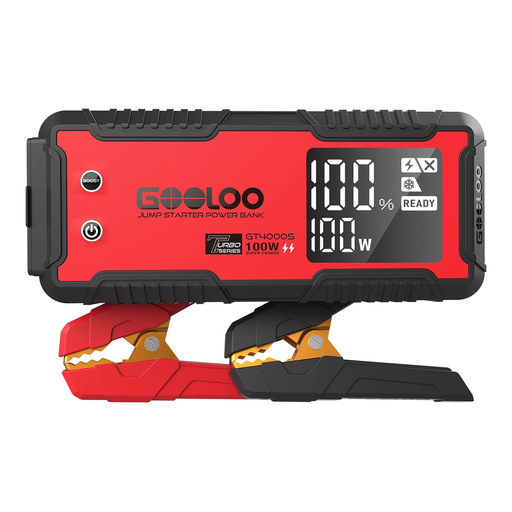
Why it suits this profile : Drivers of SUVs, motorhomes or high-capacity vehicles may need broader compatibility and fast-charging features.
The listing mentions a display screen, ten built-in safety features and a 100 W car charger included. These are all details to check before buying, rather than focusing solely on the peak current.
Stated peak current of 4,000 A, compatibility indicated up to 12 l for petrol engines and 10 l for diesels, USB ports and 100 W USB-C output.
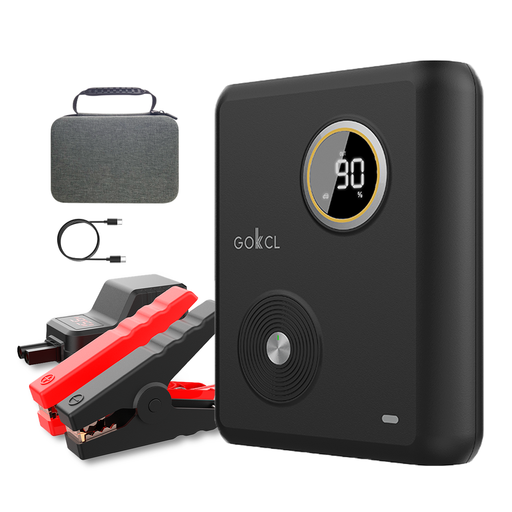
Why it suits this profile : This model may appeal to people who make long journeys, use a commercial vehicle or want to leave longer between recharging their emergency device.
The listing mentions a sodium-ion battery, low stated self-discharge and a wide operating temperature range. These figures should nevertheless be checked against your actual storage conditions.
Stated capacity of 27,500 mAh, 60 W PD input and output, copper clamps, 12 V interface and 200-lumen LED light.
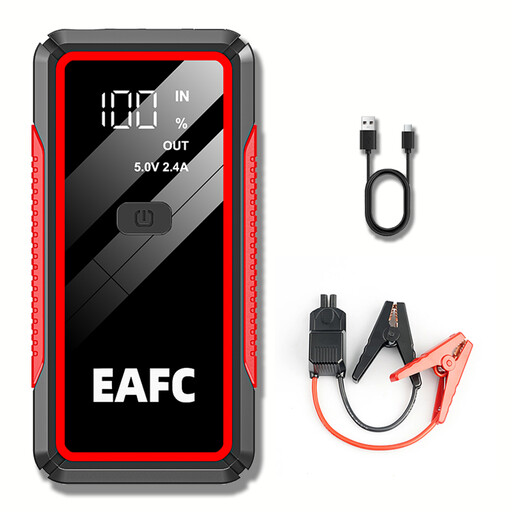
Why it suits this profile : Drivers of cars, MPVs, SUVs or vans may be looking for a versatile device without having to buy multiple accessories.
The separate specifications for petrol and diesel engines prevent you from judging compatibility based solely on the “2,000 A” label.
Stated 10,000 mAh battery, digital display, reverse-polarity protection and a three-mode LED light.
We have put together a complete, real-time updated list of products that meet these strict selection criteria and the requirements of European safety regulations.
Never use a device that is damaged, swollen or has a frayed cable. If the battery is leaking, you notice an unusual smell or there are persistent sparks, move away and seek appropriate assistance.
Its lifespan depends on the battery technology, the number of jump starts, the temperature and how well it is maintained. Recharge the device according to the instructions, check its charge level before a journey and replace it at the first sign of damage.
This is not recommended if the boot becomes very hot or very cold. Follow the temperature range specified by the manufacturer and choose a dry location away from direct sunlight. Checking the charge level regularly helps keep the device ready for use.
No. It is an emergency device that lets you try to start the engine when the battery is temporarily weak or flat. If the problem keeps recurring, have the battery and charging system checked by a qualified professional.