
Livraison le jour même ou le lendemain

Qualité garantie

Débloquez vos offres de bienvenue: Livraison GRATUITE | Jusqu'à -80 % | 30 jours d'essai gratuits à JoyPlus
Téléchargez l'application
A dead battery: every driver's nightmare. Finding yourself with a car that won't start, especially after it's been sitting for a long time or on a cold winter morning, is a situation no one wants to be in. Faced with this hassle, the car battery booster stands out as the modern, compact solution to ensure you're never left stranded.
However, the market is flooded with models making sometimes misleading claims, making the choice a daunting task. To help you navigate this jungle of offers, we've broken down the pitfalls to avoid and the criteria that truly matter for making the right choice.
Before you fall for the first model you see, learn to spot the marketing claims that are too good to be true and often lead to buyer's remorse.
To ensure you're making a sound investment, focus on these three non-negotiable technical specifications.
Peak amperage (expressed in amps, A) represents the maximum current the booster can deliver in an instant. It's this raw pulse that will bring your starter motor to life.
Choosing a 12V booster with an amperage suited to your engine is the guarantee of a successful start on the first try.
Nearly all modern boosters use a lithium battery. This technology offers an unbeatable power-to-weight ratio, allowing for ultra-compact devices that are easy to slip into the glove box.
But battery technology isn't everything: safety systems are paramount. Insist on the following protections:
These safeguards make using a battery jump starter completely safe, even for absolute beginners.
A good booster must be practical. Its weight, size, and the inclusion of a carrying case are details that matter in day-to-day use. Many models also double as a power bank, allowing you to charge a smartphone or tablet via their USB ports. This is a welcome bonus, but it should never overshadow the device's primary mission: starting your car.
To illustrate these criteria in action, here is our selection of solutions tailored to different user profiles.
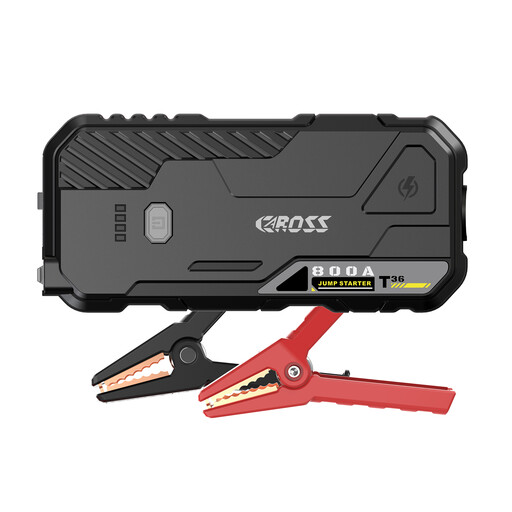
Why it's perfect for this profile: Perfect for city cars and petrol sedans. Its compact size fits anywhere, and its 800 A output is more than enough for short trips and occasional breakdowns.
It focuses on the essentials: an appropriate peak amperage (800 A) and all the necessary safety features (spark-proof, reverse polarity). The result: simple and risk-free operation.
Its excellent balance of compactness, power, and safety. It comes with a rigid carrying case, a real plus for protecting it in the boot or glove box.
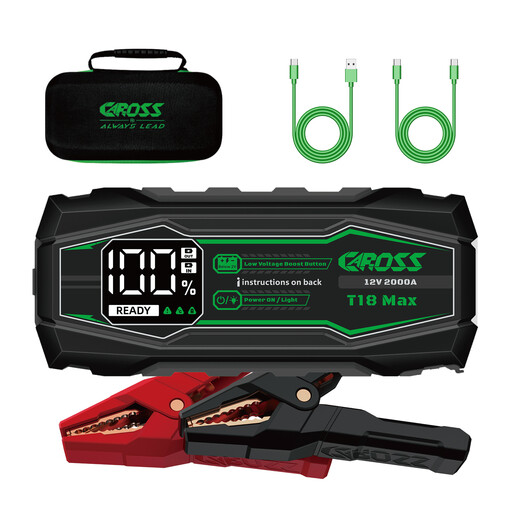
Why it's perfect for this profile: Built for SUVs, vans, and large diesel engines. Its 2000 A power ensures a flawless start, even in extreme cold or with a particularly stubborn battery.
Here, the peak power (2000 A) isn't a marketing gimmick; it's a necessity for extreme situations. Its digital screen displays clear information for stress-free use.
Its raw power, capable of starting any 12V vehicle. The 2.3-inch LED screen is a real convenience for monitoring charge levels and operations.
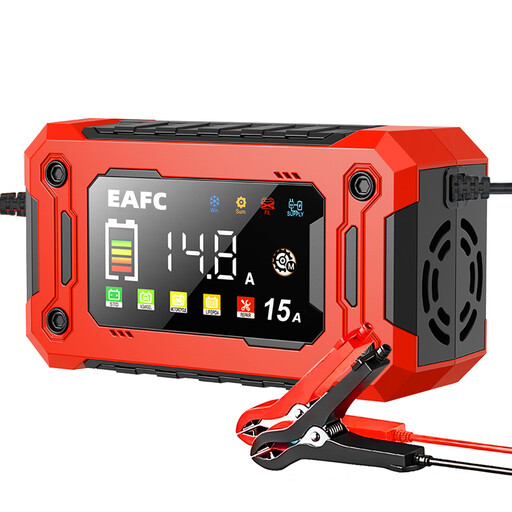
Why it's perfect for this profile: For anyone who believes prevention is better than cure. It's the perfect solution for maintaining the charge of infrequently used vehicles (motorcycles, classic cars, camper vans) and thus extending their battery life.
Note: this is not a booster, but a smart charger. Its mission isn't emergency jump-starting, but long-term maintenance: slow charging, conditioning, and desulfation to prevent the battery from dying.
Its pulse repair function, which can revive some tired batteries. Its smart charging modes (summer/winter) automatically adjust to the ambient temperature for optimal efficiency.
Discover our full selection of products that meet our rigorous selection criteria and the strictest safety standards.
The lifespan of a lithium battery booster depends on its quality and is measured in charge cycles. A good model can hold its charge for several months. We still recommend a full recharge every 3 to 6 months to ensure it's always ready when you need it.
No, as long as you choose a quality model. Modern boosters are equipped with multiple protections (reverse polarity, spark-proof, etc.) specifically designed to protect your vehicle's sensitive electronics. That's why it's crucial never to compromise on these safety features when buying.