
Livraison le jour même ou le lendemain

Qualité garantie

Débloquez vos offres de bienvenue: Livraison GRATUITE | Jusqu'à -80 % | 30 jours d'essai gratuits à JoyPlus
Téléchargez l'application
Whether you're a passionate weekend mechanic or a seasoned pro, choosing the right car and motorcycle tools is crucial. Quality equipment isn't just a guarantee of efficiency; it's a matter of safety. Yet, faced with an overwhelming market and sometimes misleading marketing promises, it's easy to get lost. Before you invest, it's vital to know how to spot the common pitfalls to ensure every tool is a reliable ally for the long haul.
To choose well, you need to know what to look for. Here are the two most frequent and costly mistakes that catch unwary buyers out:
To avoid these setbacks, the golden rule is to rely on objective technical criteria rather than advertising claims.
For successful motorcycle or car maintenance, the performance of your tools depends on very specific characteristics. Ignoring these fundamentals means risking a job done poorly, or even dangerously.
The tightening torque, expressed in Newton-metres (N·m), is a critical value provided by manufacturers for every bolt and nut. Adhering to it is non-negotiable to ensure the reliability of assemblies, hence the need for a digital or mechanical torque wrench.
Always check the tool's accuracy margin, usually indicated as a percentage (e.g., ±2%). A small margin of error is the hallmark of a professional-grade tool. Digital models often offer practical features like audible or vibrating alerts when the target torque is reached, significantly reducing the risk of over-tightening.
For any lifting equipment, like a motorcycle lift, the maximum load capacity is not a suggestion. As a safety precaution, always choose a model with a capacity at least 20% greater than your vehicle's weight. Pay close attention to the quality of the materials (heat-treated steel), the width of the base for good stability, and the presence of locking mechanisms to hold the load in the raised position without relying solely on the hydraulic system.
A versatile tool is often the best investment. A car battery tester, for example, should be compatible with multiple voltages (6V, 12V, and 24V) to be useful for a motorcycle, car, or utility vehicle. Similarly, a portable compressor will prove useful for your car and bike tyres, and even for recreational equipment. Finally, an adjustable-jaw oil filter wrench or a motorcycle repair kit with multiple adapters will save you from buying different tools for similar tasks.
Different users have different needs, and for every need, there's a tool. Here is our selection, designed for various profiles and engineered to avoid the classic pitfalls.
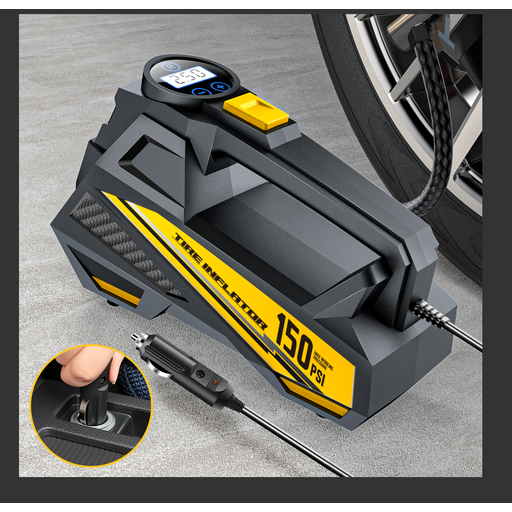
Why we chose it: Perfect for routine maintenance, like adjusting tyre pressure on a car, motorcycle, or bicycle. It's simple and effective, avoiding the complexity and cost of a full-size workshop compressor.
It focuses on a single function—inflation—and performs it with great reliability. Its corded 12V design ensures a stable power supply, unlike battery-powered models that can fail mid-use.
Compact and powered directly from a 12V socket, it can be used anywhere and will never let you down due to a dead battery.
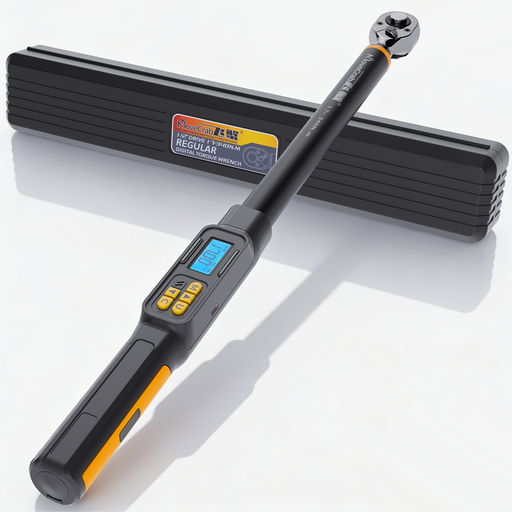
Why we chose it: For enthusiasts tackling advanced mechanical work (wheel changes, engine jobs) where precise torque is non-negotiable for adhering to manufacturer specs.
It counters the "misleading accuracy" trap by displaying a clear ±2% error margin and a multi-unit digital screen (N·m, ft.lb, etc.). Its triple-alert system (vibration, sound, light) ensures you never exceed the target torque.
Its wide torque range (17-340 N·m) and multiple alerts ensure high-precision tightening on the most critical components.
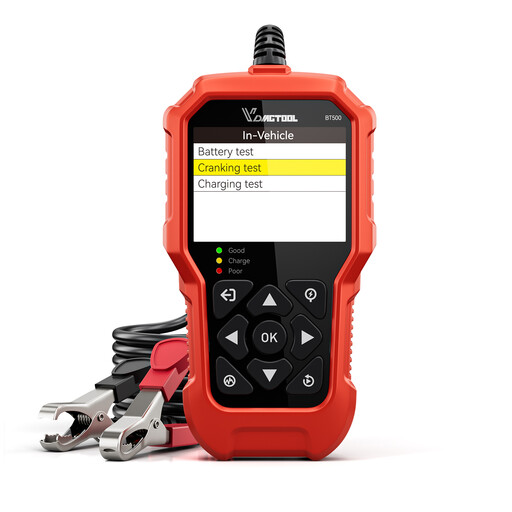
Why we chose it: Essential for those who maintain multiple vehicles (car, truck, motorcycle) and need a single diagnostic tool to predict battery failures and check the charging system.
It avoids the trap of limited compatibility. This battery tester works on 6V, 12V, and 24V systems and supports numerous battery types (AGM, GEL, EFB), making it a true Swiss Army knife for the garage.
A comprehensive analysis of the cranking and charging system for preventative diagnostics across a wide range of vehicles.
Explore our full selection of tools that meet our strictest quality and safety standards.
For regular hobbyist use, a check every one to two years is good practice. For intensive professional use, an annual check is recommended. Most importantly, always store it in its case, away from impacts and extreme temperatures, to preserve its accuracy.
A scissor-style motorcycle lift is typically more compact and operated manually with a wrench, making it suitable for lighter bikes and smaller spaces. A hydraulic model, on the other hand, uses a foot pedal to lift heavier loads effortlessly, offering far superior comfort for frequent use.
Yes, provided the tester is compatible with your motorcycle's voltage (usually 12V, but sometimes 6V on older models). Devices like the VDIAGTOOL BT500 offer dedicated modes for motorcycle batteries, which have a lower CCA (Cold Cranking Amps) rating, to ensure an accurate measurement. In any case, always check the product's specifications before use.