Switching from capsules to a bean-to-cup espresso machine is worth considering if you make coffee regularly, want to choose your beans and are happy to maintain the machine. The cost per cup may influence your decision, but you’ll need to weigh it against the cost of the machine and how much coffee you actually drink. If space and simplicity matter most, sticking with capsules may still make sense. Coffee pods and portafilter machines are also options to consider, depending on which consumables are available and how much hands-on preparation you’re happy to do.
Who is this switch right for?
Households that make coffee often
If you use capsules regularly, compare the cost of your usual consumption with the cost of beans, and don’t forget to factor in buying and maintaining a new machine. How often you use it matters more than a universal payback threshold.
Households looking for more variety
Think about the drinks you actually make. If you’re interested in milk-based drinks, check how the milk system is cleaned too: this feature adds another step to your coffee-making routine.
Small kitchens and busy mornings
Measure the space you have and consider the grinding noise before replacing a capsule machine. A grinder that gets in the way of your worktop or takes too much effort to use may not suit your need for simplicity.
How do you compare machines?
If you’re switching from capsules, start with how much coffee you drink and which drinks you want to make. Then consider each option in light of the space you have and the time you can spend on maintenance.
Bean grinder
Consider this if: you make coffee often and want to choose your beans.
Be prepared for: maintaining the machine, including rinsing the containers and descaling.
Capsules
Stick with these if: pre-measured coffee and a compact machine matter most to you.
Check: which capsule format is compatible and how much it will cost based on your consumption.
Coffee pods
Consider these if: you want to keep using pre-measured coffee without switching to a grinder.
Check: which format the machine accepts and whether the corresponding pods are readily available.
Portafilter
Consider this if: you’re happy to measure out your coffee and handle the portafilter.
Be prepared for: emptying the portafilter after use. Que Choisir describes this step in its hands-on review of one model.
| Criteria |
What to check |
Who is it for? |
| Cost of use |
Compare the cost of the machine and coffee over the same period, taking into account how often you make coffee and the maintenance supplies you’ll need. |
If I make coffee regularly, I want to know whether my usage justifies changing machines. Around 33% of consumers would put this calculation at the top of their list of concerns. |
| Maintenance |
Check the machine’s instructions for rinsing the containers, maintaining the brew unit and descaling to suit your water. |
I may enjoy bean-to-cup coffee without wanting to spend time cleaning the machine or responding to alerts. Maintenance would be the top priority for around 25% of consumers. |
| Drinks |
Check which recipes are available and, for milk-based drinks, what preparation and cleaning steps are required. |
If my household makes several types of coffee or milk-based drinks, I want features we’ll actually use. This variety would come before other criteria for around 25% of consumers. |
| Space and simplicity |
Measure the space needed to fill and empty the machine, and consider how noisy it is while grinding. |
In a small kitchen, I may prefer to stick with capsules rather than add an appliance that’s a hassle to use every day. Space and simplicity would come first for around 17% of consumers. |
Mistakes to avoid
-
Judging value for money by the cost per cup alone
A coffee made with beans may cost less in consumables than one made with a capsule, but that difference alone doesn’t tell you when switching machines will offset its cost. The result depends on what you buy and how many drinks you make.
Compare both options over the same period, based on how much coffee you drink and the beans or capsules you would actually buy.
Include any filters, cleaning and descaling products, and other running costs that apply to your machine.
-
Choosing a milk system without planning for cleaning
A milk carafe or steam wand adds extra maintenance steps when you make milk-based drinks. The process depends on the model and the system you choose.
Before buying, check the instructions and choose this feature only if you’ll make these drinks often enough to be happy with the cleaning routine.
-
Measuring only the space the machine takes up
You’ll also need access to the water tank and containers. The noise made while grinding may matter in a kitchen that’s used early in the morning.
Check the dimensions with all the parts that need to open, and look for reviews of the model you’re considering that describe how noisy it is during preparation.
-
Assuming all capsules should be recycled in the same way
The material a capsule is made from determines how it should be sorted. In France, ADEME says aluminium and plastic capsules should go in the bin, bag or container for paper and packaging.
Check what your capsules are made from and follow the local recycling guidance. Don’t switch machines on the assumption that it will definitely reduce waste.
Brands to consider
There are no brand profiles to show in this section.
Bean-to-cup machines on Joybuy
These machines are bean-to-cup options to consider when switching from capsules. Compare the features that suit your usual drinks, then check the instructions to see what maintenance your chosen model requires.
 Image unavailable
Philips Series 2200 EP2230/10 LatteGo, glossy black
Worth considering if you want to switch to beans and are looking at a machine from the LatteGo range for your drinks. Check how to maintain the milk system and which supplies are needed for this variant.
View on Joybuy
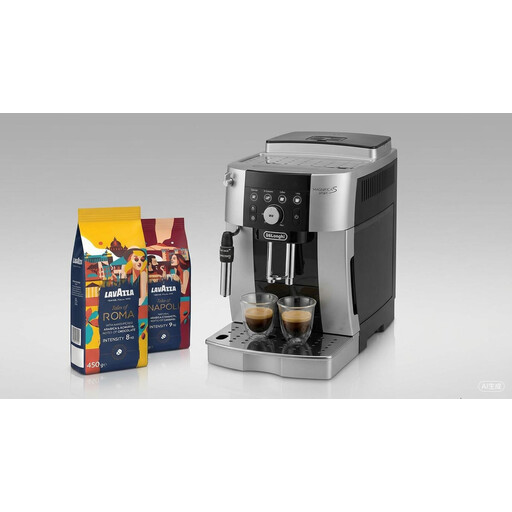 Image unavailable
Barrista Summer: DeLonghi Magnifica ECAM250.23.SB and 2 450 g packs of Lavazza Tales of Napoli and Roma
This bundle may suit a household looking to get started with an automatic bean-to-cup machine, with beans included. It comes with two 450 g packs of Lavazza coffee. Check what’s involved in cleaning the steam wand and brew unit.
View on Joybuy
 Image unavailable
HiBREW H16, automatic espresso machine with grinder and milk system
Worth a look if you want to choose from the six coffee varieties listed in the product name. Check the instructions to find out how to clean the milk system and the machine.
View on Joybuy
 Image unavailable
DeLonghi Magnifica Start ECAM220.21.WW, white
This bean-to-cup machine is worth comparing if you’re looking for automatic coffee made from beans. If you’d also like to make milk-based drinks, check what’s involved in using and cleaning the steam wand.
View on Joybuy
 Image unavailable
HiBREW H7A, dual boiler, 20-bar pump, 2.8 L tank, black and silver
Worth comparing if you’re looking for a bean-to-cup machine with a dual boiler. The product name lists a 20-bar pump and a 2.8 L tank, but these features alone don’t tell you how good the coffee will be or how easy the machine is to maintain. Check the instructions for cleaning guidance.
View on Joybuy
Frequently asked questions
How can I tell whether switching from capsules to beans is worth the cost?
Compare the costs of both options over the same period, using the number of coffees your household actually makes. Include the machine you would buy in each case, your usual beans or capsules, and maintenance supplies. The difference in cost per cup alone won’t tell you when you’ll recoup the cost.
How often should you descale a bean-to-cup espresso machine?
How often you need to descale depends in part on your water hardness and the instructions for your model. DeLonghi France recommends following the procedure specified for your machine. Check its instructions and descale when the alert appears.
What should you do with leftover capsules in France?
Sort them according to their material and the guidance that applies where you live. ADEME says aluminium and plastic capsules should go in the bin, bag or recycling container for paper and packaging.
Who should you contact if a new machine doesn’t match its description?
In France, contact the retailer with your proof of purchase to claim your statutory legal guarantee of conformity, if you meet the conditions. The French Ministry of the Economy explains that this compulsory guarantee applies, among other cases, to goods sold by a business to a private individual. It is separate from a retailer’s returns policy.


