Households making several coffees a day
When you make coffee several times a day, the repeated steps matter. Think about loading the coffee, the portions you’ll need and how much cleaning you’re happy to do regularly.


If you make coffee at home regularly and want to keep things simple, choose capsules or pods that are compatible with your machine. A portafilter gives you more control over dosing and manual preparation; a grinder lets you start with whole beans and automate your coffee, but you’ll need to empty and rinse its trays regularly. If you also make milk-based drinks, check the cleaning steps for the system you choose.
When you make coffee several times a day, the repeated steps matter. Think about loading the coffee, the portions you’ll need and how much cleaning you’re happy to do regularly.
Capsules and pods let you make a single serving without measuring or tamping the coffee. However, check that the format is compatible with your machine and look up the model’s descaling instructions.
A portafilter lets you adjust the dose and preparation; a grinder lets you use beans, with settings that vary by model. A steam wand or milk carafe means extra cleaning steps.
For regular use, start by thinking about the steps you want to take for each cup, then check the maintenance involved and which drinks the machine can actually make.
| What to consider | What to check | Depending on your needs |
|---|---|---|
| Everyday steps | Check which capsule or pod format the machine accepts, or the steps involved in measuring, tamping and emptying the coffee grounds. For a grinder, check how easy it is to access the trays, too. | I make several cups a day and want to know what I’ll need to do each time. |
| Choice of coffee | Pre-measured portions must be compatible with your machine. For a portafilter, check which formats it accepts; for a grinder, check which settings the model offers. | If I want to choose my own beans or adjust the preparation, I’d rather not rely solely on pre-measured portions. |
| Cleaning and milk | Check the model’s descaling instructions. For a grinder, look at how to rinse the trays; for a steam wand or milk carafe, check how to clean it after making milk-based drinks. | I sometimes make drinks with milk, so the steps to take straight afterwards matter when I’m choosing a machine. |
| Waste per cup | Check what packaging each portion comes in. In France, ADEME advises putting aluminium or plastic capsules in the paper and packaging recycling bin. | I’d like to know what waste each coffee leaves behind and how to recycle it at home. |
Automating your coffee doesn’t get rid of the grounds, the drips collected in the trays or the need to descale. Que Choisir recommends rinsing the coffee grounds and drip trays regularly.
Before choosing a grinder, check the model’s manual and make sure you’re happy with how easy it is to access the parts that need cleaning.
Allow time to empty and rinse the trays and follow the descaling programme.
How you recycle a capsule depends on its material. In France, ADEME advises putting aluminium or plastic capsules in the paper and packaging recycling bin.
Check what your capsules are made of and look up the recycling instructions that apply where you live.
A steam wand or carafe adds cleaning steps after making milk-based drinks. De’Longhi advertises a self-cleaning function on some carafes, but you should still read the instructions for your model.
If you make drinks with milk often, check the rinsing procedure and which parts need to be removed before choosing a machine.
Cleaning the milk system adds time to your daily routine.
Nespresso offers capsule systems including Original and Vertuo, designed to make one serving at a time.
Senseo uses soft coffee pods to make one serving at a time.
The De’Longhi range includes manual portafilter machines and automatic machines with grinders.
These machines showcase grinder and portafilter options for making espresso at home. Compare their controls and milk systems based on the steps you want to take.
 Image unavailable
If you want to make a drink from whole beans without measuring coffee into a portafilter, the H16 combines a grinder, touchscreen and milk system. The product name lists six coffee varieties; check the manual for how to clean the grinder and milk system.
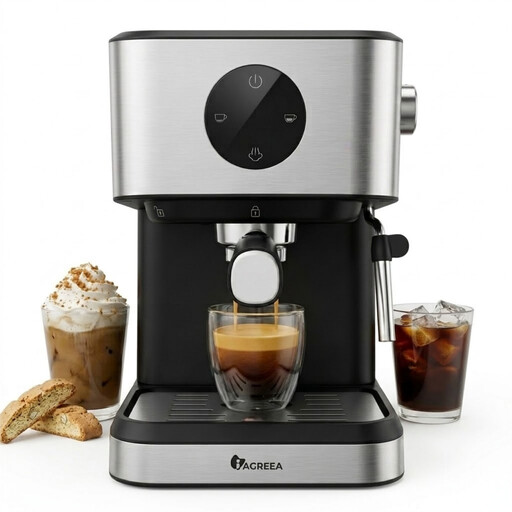 Image unavailable
This machine is for anyone who wants to make coffee and use a steam wand to heat and froth milk. The product name lists a 50 Oz water tank and cup warmer. Remember to clean the wand after use and check the model’s descaling instructions.
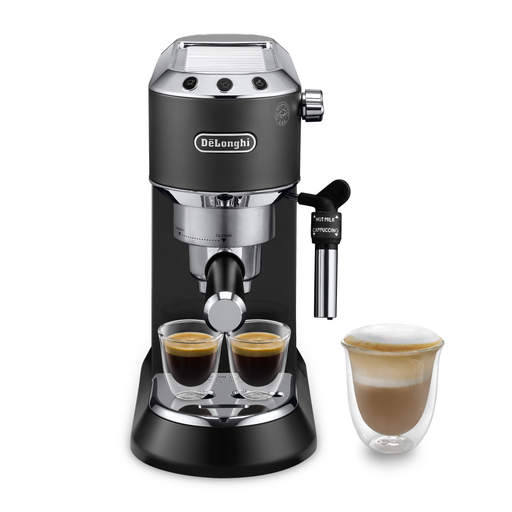 Image unavailable
This portafilter model is a good choice if you want more control over how your coffee is made. The product name lists 15 Bar. The tank capacity is given differently across descriptions of this variant, so confirm it before choosing, along with the steam wand care instructions.
 Image unavailable
This semi-automatic machine for ground coffee can also make milk-based drinks. The product name lists an automatic milk frothing system; check the manual for how to clean the system and descale the machine.
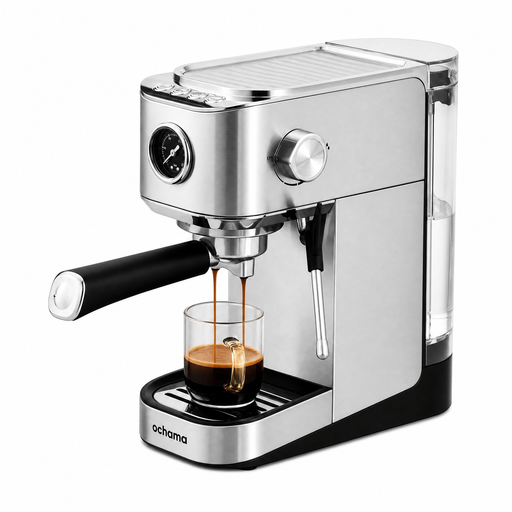 Image unavailable
This model has a steam wand, so you can make coffee by hand and froth milk, too. The product name lists a removable 0.9 L tank, pressure gauge and cup-warming function. Check which coffee formats the portafilter accepts and read the descaling instructions.
Descaling is part of maintaining the capsule and grinder machines covered here. Follow the manual and the instructions for your model. De’Longhi says that how often its grinders need descaling depends on water hardness. Nespresso advises against using vinegar on its machines, as it can damage them.
As well as descaling, a grinder machine needs its coffee grounds and drip trays emptied and rinsed regularly. Que Choisir recommends rinsing them; also check your model’s instructions for any other accessible parts.
Clean the steam wand or follow the instructions for your model’s milk carafe. De’Longhi advertises a self-cleaning function on some carafes, but you should also follow the other care instructions for your machine.
ADEME advises putting aluminium or plastic capsules in the paper and packaging recycling bin. Check what your capsules are made of and look up local guidance for other formats.
Check which parts and repair services are available for the specific model. Nespresso says that if parts are unavailable, its service may not be able to repair the machine in question.