
Livraison le jour même ou le lendemain

Qualité garantie

Débloquez vos offres de bienvenue: Livraison GRATUITE | Jusqu'à -80 % | 30 jours d'essai gratuits à JoyPlus
Téléchargez l'application
The arrival of sunny days heralds the return of time spent in the garden, on the terrace, or on the balcony. But when the sun is beating down, comfort can quickly disappear. The cantilever umbrella, also known as an offset umbrella, is the ideal solution for creating a stylish, adjustable shaded area without the obstruction of a central pole.
With the multitude of models on the market, it can be difficult to know where to start. This guide breaks down the essential criteria to help you find the perfect large garden umbrella that will enhance your outdoor space while perfectly meeting your needs.
By Joybuy, Your Product Advisor
Choosing an umbrella isn't just about colour or size. Three key elements must be scrutinised to ensure comfort, safety, and durability.
A cantilever umbrella's defining feature is its offset pole, which creates significant leverage. Its stability is therefore a non-negotiable criterion. A patio umbrella with a suitable base is essential. Most models come with a cross base, which must be secured with weighting slabs.
For your safety, always check the manufacturer's recommended base weight.
The key advantage of a cantilever umbrella is its flexibility. To take full advantage of it, opt for a tilting and rotating umbrella.
These two features combined ensure you have custom shade at any time of day.
The canopy is what protects you, so its quality is paramount.
Finally, don't overlook the protective cover for your umbrella. It is essential for protecting the canopy from the elements, UV-related fading, and dirt when not in use.
To help you make your choice, we have scrutinised several models based on functionality, material quality, and practicality.
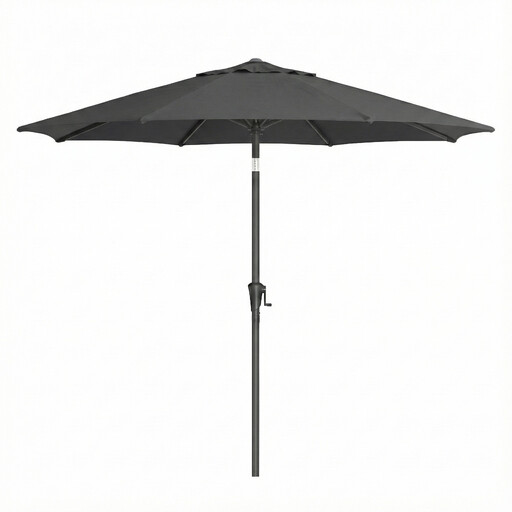
What sets it apart?: Its main strength is its ease of use. Its crank-handle opening mechanism is smooth, and its push-button tilt system allows you to adjust the shade effortlessly. Its treated steel frame ensures good durability.
Key Features?:
Who is it for??: Ideal for those looking for a functional and easy-to-handle umbrella for a garden, terrace, or large balcony. Please note, the weighting base is not included with this model.
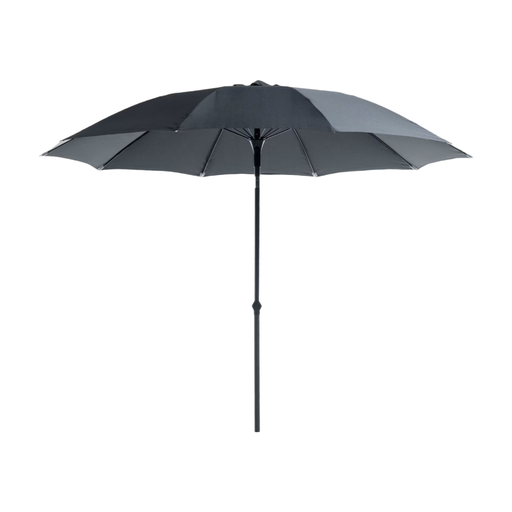
What sets it apart?: Although this is a centre-pole model, this umbrella is an excellent option for smaller spaces. Its design with 10 fibreglass ribs gives it lightness and flexibility in the wind. Its telescopic and tilting pole ensures excellent versatility.
Key Features?:
Who is it for??: The smart choice for limited outdoor spaces that don't allow for a large cantilever umbrella, but where a high-quality, tilting product is still desired. A 35?kg base is recommended (sold separately).
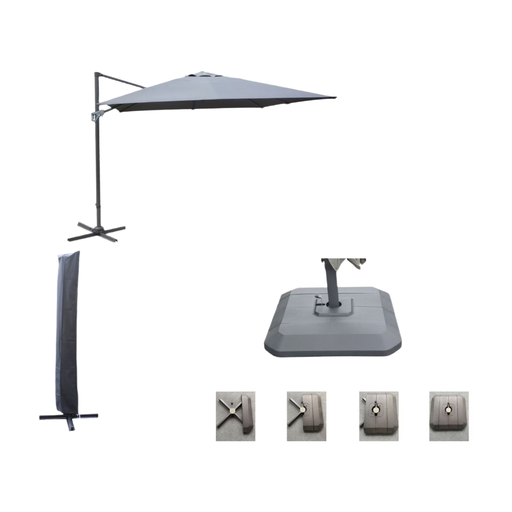
What sets it apart?: The epitome of peace of mind! This all-in-one kit includes the 3x3 cantilever umbrella, a set of 4 water-fillable base slabs (up to 76?kg), and a protective cover. No need to hunt for compatible accessories.
Key Features?:
Who is it for??: Perfect for those who want a robust, turnkey solution ready to shade a large terrace, garden, or poolside area, without worrying about buying accessories.
If the models in our selection don't exactly match what you're looking for, or if you need a specific colour to coordinate with your garden furniture, many other possibilities are available.
? Discover our full range of grey patio umbrellas
1. What is the difference between a cantilever umbrella and a straight-pole umbrella? A straight-pole umbrella has a central pole that goes through a garden table or stands beside it. A cantilever (or offset) umbrella has its pole to the side, which completely frees up the space under the canopy. It is much more flexible for shading a garden lounge set or a relaxation area without being obstructed by the base.
2. How do you properly weight a cantilever umbrella to withstand wind? The golden rule: follow the manufacturer's recommendations. Generally, a 3x3?m umbrella requires a base weight of at least 80?kg. For maximum stability, opt for slabs filled with sand (which is denser, and therefore heavier, than water). As a safety precaution, it is imperative to always close your umbrella in strong winds or when you are not using it.
3. Is a protective cover necessary for an umbrella? Yes, and it's even essential. A protective cover shields the canopy from the elements, pollen, bird droppings, and especially from UV rays, which fade the fabric over time. It's a small investment that significantly extends the life of your umbrella.