For a dish that uses a lot of tuna in one go, a large tin can mean opening fewer tins. For several recipes or meals, separate tins let you adjust the quantities. Start with the drained weight required by the recipe, then choose solid tuna if you want the pieces to remain visible, or flakes and chunks if the fish will be mixed in.
Who are these formats best for?
Anyone preparing a main course for several guests
If tuna is a key ingredient in your recipe, compare the amount you need with the drained weight of a large tin or the combined weight of the tins in a multipack. Carrefour, for example, lists a tin with a drained weight of 560 g.
Anyone who wants the pieces to remain visible
For a pasta salad, a cold platter or a topping added at the last minute, look for solid tuna or fillets rather than flakes. Check the exact product description.
Anyone stocking up for several recipes
Separate tins mean you only need to open the amount you’ll use for each dish. Compare their drained weights and read the storage instructions before choosing between a multipack and a large tin.
What should you look for?
To choose between one large tin and several smaller ones, first decide whether you’ll use the tuna in a single dish or spread it across several recipes. Then check the texture and the type of tuna in the tin.
Large tin of tuna in brine
Choose this if: you’re using a large amount of tuna in one dish. Carrefour, for example, lists a tin with a drained weight of 560 g.
Bear in mind: once opened, any leftover tuna must be stored according to the instructions for that particular product.
Several tins
Choose this if: you’re splitting the tuna between pasta, a salad and toppings, or serving the dishes at different times.
Bear in mind: add together the drained weights to work out how much fish the multipack will provide for your recipes.
| What to consider |
What to check |
Who is it for? |
| Usable quantity |
Compare the drained weight with the amount required by the recipe; add together the drained weights of the tins in a multipack. The DGCCRF specifies that this information must be given for products presented in a covering liquid. |
When I’m preparing a dish for several guests, I want enough tuna without opening more tins than necessary; around 33% of consumers put this quantity first. |
| Texture in the dish |
Read the exact product description: solid tuna, fillets, chunks or flakes. |
For a pasta salad, I want visible pieces rather than tuna mixed into a sauce; texture is the top priority for around 25% of consumers. |
| Flexibility when stocking up |
Check how many tins there are and their size, then read the storage instructions for after opening. |
If my dishes are served at different times, I’d rather open one tin at a time; this flexibility comes first for around 25% of consumers. |
| Ingredients and fishing information |
Check the ingredients, salt content and any fishing information for the specific product. |
Before choosing tuna for my recipe, I mainly want to check its ingredients or a particular fishing claim; nearly 17% of consumers prioritise these details. |
Mistakes to avoid
-
Opening a large tin without planning how to use the leftovers
Storage instructions after opening vary by product. For its Cultivons le Bon solid skipjack tuna in brine, Auchan advises transferring the contents to an airtight container, keeping it between 0 °C and +4 °C and eating it within 48 hours.
If you’re preparing several dishes to serve at different times, check the instructions on the tin before choosing a large format.
-
Treating tuna in brine, oil and sauce as if they were the same
The covering liquid and other ingredients affect how the tuna will work in your dish. For one of its products in brine, Carrefour Classic’ lists skipjack tuna, water and salt; this does not describe tuna in oil or tomato sauce.
Choose the type that suits your sauce or topping, then read the ingredients list on the tin you’ve selected.
-
Assuming a fishing claim applies to every tin from a brand
An MSC label, a fishery improvement programme or a claim that the tuna was caught without fish aggregating devices applies to the specific product or range it appears on.
If this matters to you, check the claims on the exact product rather than assuming they apply based on the brand name alone.
Brands to consider, depending on the product
Petit Navire
According to Petit Navire, its Démarche Responsable tuna in brine range includes formats from 2 × 80 g to 400 g.
- The brand lists “tuna, water, salt” for this product.
- Petit Navire describes this product as part of a fishery improvement programme; don’t confuse this with MSC certification. The brand also notes that small bones may remain.
Saupiquet
Saupiquet offers solid tuna in brine, fillets and tuna in sauce, so you can choose the texture that suits your dish.
- Saupiquet describes its MSC-certified solid tuna in brine range as MSC certified and says it does not need draining; check which products these claims apply to.
- Check the exact recipe and format: tuna in sauce is used differently from tuna in brine.
Carrefour / Carrefour Classic’
Carrefour lists solid tuna, chunks and flakes, including a Carrefour Classic’ multipack of 2 × 140 g drained weight.
- The product details for this Classic’ solid tuna list skipjack tuna, water and salt.
- Check the drained weight and ingredients of every other product rather than assuming they match this multipack.
Pêche Océan (E.Leclerc / Marque Repère)
The E.Leclerc catalogue lists solid albacore tuna in brine in several formats, including 2 × 140 g drained weight, as well as flakes and other recipes.
- These options let you look separately for tuna with a more substantial texture or tuna intended to be mixed in.
- Check the recipe, format and availability of the product you’re considering.
Auchan / Auchan Cultivons le Bon
Auchan lists solid skipjack tuna in brine in 140 g and 280 g formats, as well as chunks and flakes.
- The product details for Cultivons le Bon solid skipjack tuna in brine list skipjack tuna, water and salt.
- The storage instructions after opening for this product should not automatically be applied to other tins in the range.
Tuna for your evening recipes
These two Joybuy products suit different cooking needs: tuna flakes in tomato sauce to mix into a dish, and solid tuna in brine when you want visible pieces. To plan how much you’ll need, check the drained weight and the number of tins in the product you choose.
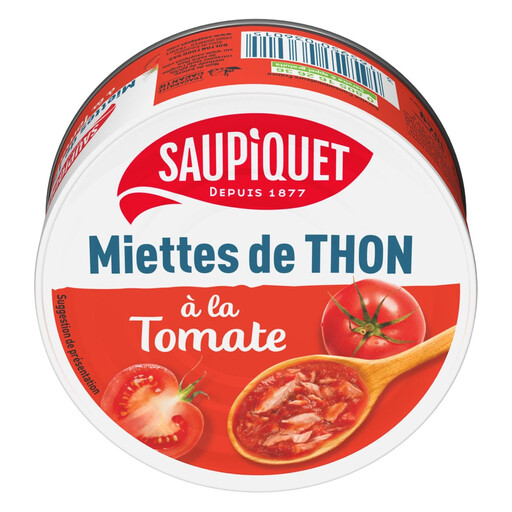 Image unavailable
Saupiquet Tuna Flakes in Tomato Sauce, 160 g
Worth considering for pasta or a topping where the tuna is mixed into the sauce.
Stated net weight: 160 g. If your recipe calls for tuna in brine, check the ingredients before choosing this version in sauce; also check the drained weight needed for your meal.
View on Joybuy
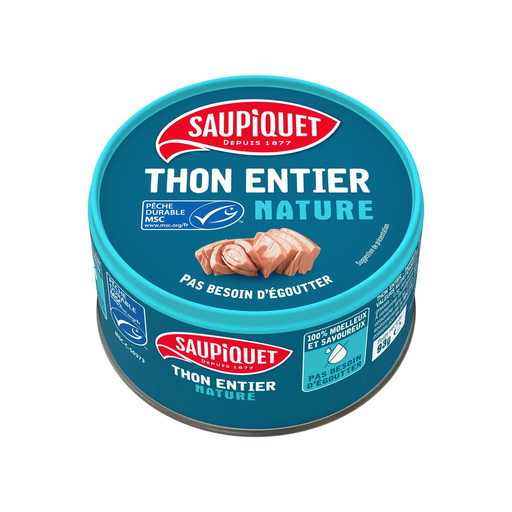 Image unavailable
Saupiquet Solid Tuna in Brine, 93 g
Worth considering for a pasta salad or cold platter where you want the tuna pieces to remain visible.
Stated net weight: 93 g. Check the drained weight and how many tins you’ll need if you’re preparing the dish for several guests.
View on Joybuy
Frequently asked questions
Which weight should I compare to work out how much tuna a recipe needs?
Compare the drained weight when the tuna is presented in a covering liquid. The DGCCRF specifies that this information must appear on the label in such cases. For a multipack, add together the drained weights of the tins before comparing the total with your recipe.
Can you keep tuna after opening a large tin?
Yes, as long as you follow the storage instructions for the product you’ve chosen. For its Cultivons le Bon solid skipjack tuna in brine, Auchan advises transferring the contents to an airtight container, keeping it between 0 °C and +4 °C and eating it within 48 hours. Don’t assume the same time limit applies to another product.
How do I choose between solid tuna and flakes for pasta?
Choose solid tuna if you want visible pieces in a pasta salad; flakes are suited to a dish where the fish is mixed into the sauce. Also check whether the tuna is in brine, oil or sauce.
What should I check if pregnant women or very young children are joining the meal?
Consult Anses guidance on eating fish during pregnancy or while breastfeeding, and for children under 3. Anses notes that specific recommendations apply to these groups because of exposure to methylmercury; choosing a particular tin format is no substitute for following this guidance.


