What should you check?
First, choose a recipe with ingredients that suit the meal you have in mind, then check that the prepared tuna has the required texture. You may prioritise one of the needs below, but should still check the other points that matter for your meal.
| Criteria |
What to check |
Who it matters to |
| Meal texture |
Check the size of the pieces and how well the dish holds together after preparation. If IDDSI Level 6 for adults has been recommended, make sure in particular that pieces are no larger than 1.5 cm on each side. |
If I find it hard to chew large pieces, I need a prepared meal with the texture recommended for me, not simply a tin described as tender. Texture would be the priority for around 46% of the consumers concerned. |
| Sugars in the recipe |
Compare the ‘of which sugars’ figure per 100 g and the ingredients list, particularly for products in sauce. |
If I want to season the tuna myself, I want to know what is in the tin before adding anything. Avoiding added sugars would be the top priority for around 27% of these consumers. |
| Salt and pack size |
Check the salt content per 100 g and choose a pack size that suits the amount you are preparing. |
When preparing a simple meal, I prefer to compare salt levels and avoid opening a pack that is too large for my needs. This would be a priority for around 27% of consumers. |
Canned tuna available on Joybuy
These tins of tuna in spring water or oil can be used as a base for a meal whose texture you prepare yourself. Compare the ingredients of each product and check the result once the dish is assembled.
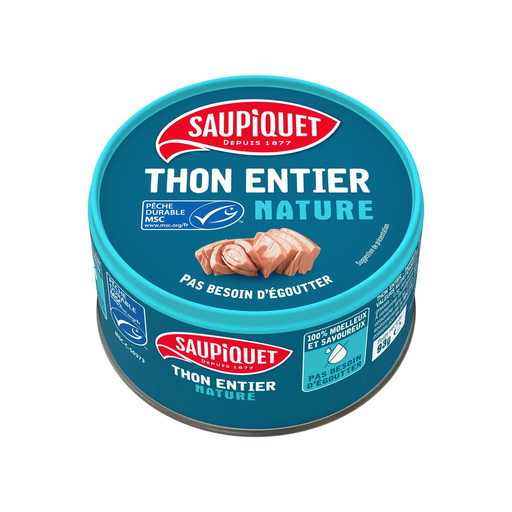 Image unavailable
Saupiquet whole tuna in natural brine, 93 g
For an easy-to-chew meal, flake the tuna if needed and check the texture of the dish before serving.
The Joybuy listing for this product says to refrigerate any leftovers in a non-metallic container and consume within 24 hours of opening.
View on Joybuy
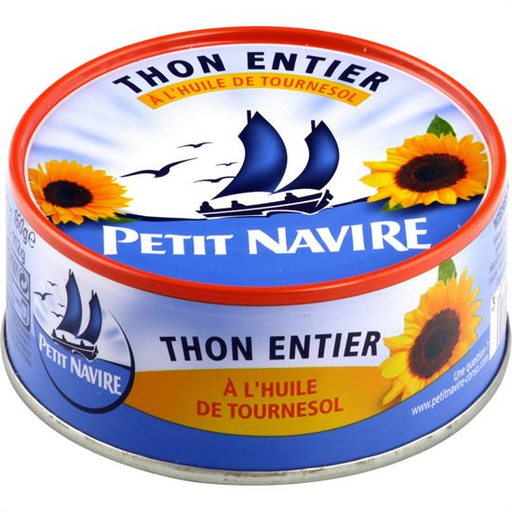 Image unavailable
Petit Navire whole tuna in sunflower oil, 160 g
If you use this tuna in a meal with a modified texture, check the pieces and how well the dish holds together after preparation.
Also check the tuna for any bone fragments and remove them before serving.
View on Joybuy
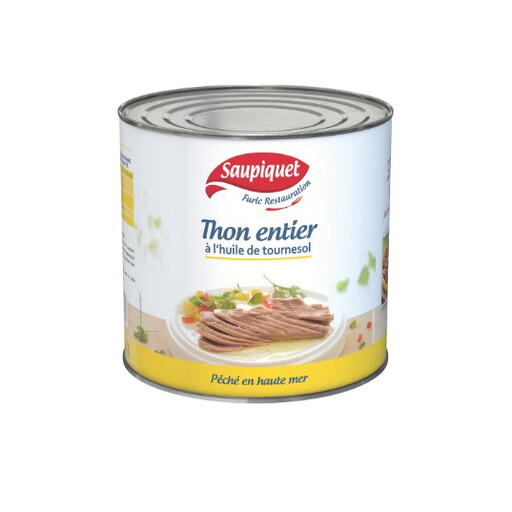 Image unavailable
Saupiquet tuna in vegetable oil, 2.4 kg
This large pack is worth considering if you are preparing several meals, provided you can adapt and check their texture.
Make sure the 2.4 kg pack suits your needs and follow the storage instructions for this product after opening.
View on Joybuy
Frequently asked questions
Should you look for ‘reduced sugar’ on plain tuna?
No. Instead, compare the ‘of which sugars’ line and the ingredients for the product you choose. The plain tuna mentioned from Petit Navire and Saupiquet declares 0 g of sugars per 100 g, unlike Saupiquet’s Catalan-style preparation, which contains sugar.
Can you serve canned tuna straight from the tin in an easy-to-chew meal?
No, you need to check the texture of the tuna once it has been prepared. If IDDSI Level 6 for adults has been recommended, pieces should be no larger than 1.5 cm on each side. If there are swallowing difficulties or food or drink goes down the wrong way, ask a suitably trained professional to assess the required texture.
How long can you keep tuna after opening?
Follow the storage time and refrigeration instructions given for your product. The Saupiquet product information mentioned recommends consuming the tuna within two days, while the Joybuy listing for the 93 g Saupiquet tuna says to consume it within 24 hours of opening.
What should you look for on the label when comparing two tins?
Check the ingredients, sugars and salt in the nutritional information, along with the net quantity and drained weight, if provided. Compare values on the same basis, particularly per 100 g, and check the storage instructions for each tin after opening.


