Hosts looking to avoid added sugars
For savoury crêpes or a buffet, you’re looking for sweetcorn with no added sugar. The ‘no added sugar’ label meets this requirement, but it doesn’t remove the sugars that occur naturally in sweetcorn.


For savoury crêpe fillings, choose a can labelled ‘no added sugar’ if you want to avoid added sugar, then compare the ‘of which sugars’ value per 100 g: sweetcorn contains naturally occurring sugars. This label doesn’t mean the product is ‘reduced in sugar’. Texture and drained weight matter too, depending on how you plan to serve the crêpes.
For savoury crêpes or a buffet, you’re looking for sweetcorn with no added sugar. The ‘no added sugar’ label meets this requirement, but it doesn’t remove the sugars that occur naturally in sweetcorn.
You want to read the ingredients list and compare the nutritional information per 100 g, rather than choosing based solely on the label on the front of the pack.
Whether the kernels will be served in a filling or on the side, you may prefer a texture described as crunchy or tender, and a drained weight suited to the number of guests.
When choosing sweetcorn for a filling, first distinguish between the different sugar claims. Then check the texture and how much you’ll have to serve once it’s drained.
| What to consider | What to check | Who it matters to |
|---|---|---|
| Added sugars | Look for the ‘no added sugar’ label, read the ingredients and compare ‘of which sugars’ per 100 g. Don’t confuse it with ‘reduced in sugar’. | If I want to avoid a sweetening ingredient being added to the filling, I also need to be able to distinguish added sugar from the sugars naturally present in sweetcorn. Around 39% of consumers may prioritise this. |
| Texture | Choose between the textures listed, such as ‘crunchy’ or ‘extra tender’, according to the filling you have in mind. | For filled crêpes or a buffet, I prefer to know whether the kernels will have the texture I’m looking for when they’re served. Around 23% of consumers may prioritise this. |
| Amount to serve | Check the drained weight and, for multipacks, the number of cans. | When I’m catering for several guests, I want enough kernels once the cans have been drained, rather than relying on the pack’s total weight alone. Around 23% of consumers may prioritise this. |
| Organic and residues | Read the exact claim on the product, and check the ingredients and nutritional information separately. | If the production method or a claim about residues guides my choice, I don’t want to assume anything about the sugar content. Around 15% of consumers may put this first. |
Sweetcorn contains naturally occurring sugars. So a can with no added sugar may still show a sugar content in its nutrition table; the label also doesn’t prove that it contains less sugar than a similar product.
Compare the ‘of which sugars’ value per 100 g. If a product is labelled ‘reduced in sugar’, check the comparison with a similar product on which the claim is based.
The pack weight doesn’t necessarily reflect how much sweetcorn you’ll serve once it’s drained. For a multipack, you’ll also need to check how many cans it contains.
Check the drained weight and the number of cans before working out how much filling you’ll need for your guests.
These claims don’t describe the amount of sugar. For example, Bonduelle uses a ‘no pesticide residues’ claim relating to the residues tested for; this is separate from the nutritional information.
Check each point separately: product claims, ingredients, ‘of which sugars’ and salt per 100 g.
Bonduelle offers canned sweetcorn with no added sugar, including an organic option, as well as products carrying a claim about pesticide residues.
The brand offers a can of sweetcorn with no added sugar and a drained weight of 285 g.
E.Leclerc offers crunchy sweetcorn with no added sugar in a 285 g can and a pack of 3 × 140 g.
Auchan offers organic sweetcorn with no added sugar in a 230 g jar.
Carrefour and Auchan stock several Géant Vert varieties, including products described as crunchy or tender.
These sweetcorn products could work well in a savoury crêpe filling. For each one, distinguish the claims in the product name from the nutritional values, and check how much you’ll actually have to serve once it’s drained.
 Image unavailable
This sweetcorn could work well in a savoury filling. The product name gives a weight of 570 g; check the drained weight to see how much you’ll have to serve, and read the label if you’re looking for a claim about added sugars.
 Image unavailable
The two-can pack could suit you if you want to open the sweetcorn in stages for different fillings. Check the drained weight of each can; the organic label doesn’t tell you about the sugar content.
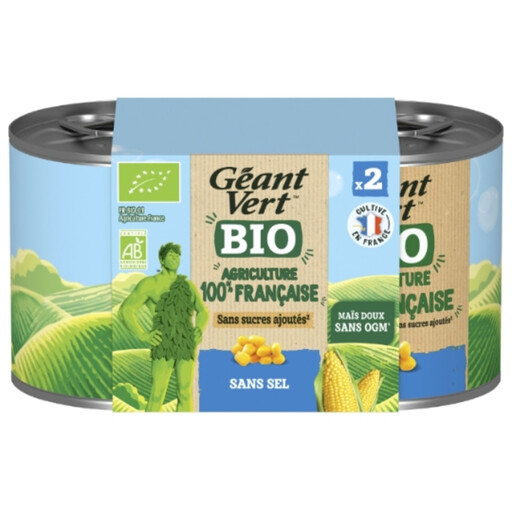 Image unavailable
If you’re considering this sweetcorn for a filling, check the ingredients and salt information for this particular variety on the label. Also check the number of cans and their weight: the pack-size details associated with this product aren’t entirely clear.
 Image unavailable
This sweetcorn could work well in a hot or cold filling. The name gives a weight of 285 g and makes a claim about pesticide residues, but this doesn’t tell you about the sugar content. Check the drained weight to work out how much you’ll have to serve.
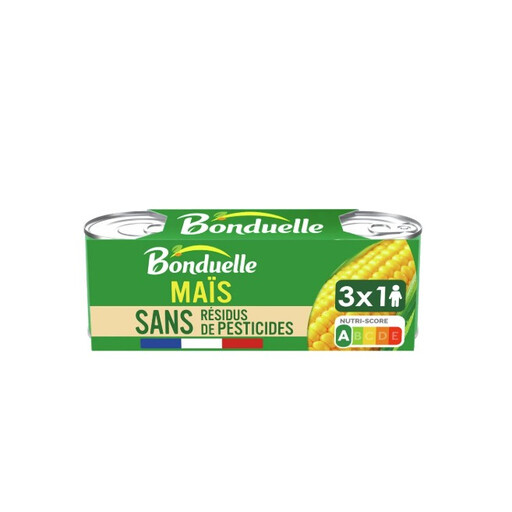 Image unavailable
If you’re considering this pack for several fillings, check the number of cans and their drained weight before working out how much you’ll need. The ‘No Residues’ claim in the product name doesn’t describe the sugar content.
No. Sweetcorn can contain naturally occurring sugars. Carrefour makes this clear for its Classic' product with no added sugar, while Bonduelle lists 7.5 g of sugars per 100 g on the product page for its organic sweetcorn with no added sugar.
Not necessarily. ‘No added sugar’ means that no sugar has been added, while ‘reduced in sugar’ is based on a comparison with a similar product. To rely on the second claim, check the comparison for the specific product rather than assuming it from the ingredients list.
Compare the ‘of which sugars’ and salt values on the same per-100 g basis, then check the drained weight and the stated texture. The DGCCRF explains that displaying nutritional information per 100 g or 100 ml makes it easier to compare prepacked foods.
No. These claims relate to other characteristics of the product. To find out whether sugars have been added and compare the declared amounts, check the ingredients list and the ‘of which sugars’ value respectively.