Hosts avoiding added sugars
When serving sweetcorn with raclette, they look for a recipe with no added sugars while checking how much naturally occurring sugar the product contains.


To serve canned sweetcorn with raclette, look for the words ‘no added sugars’ on your chosen product, then compare the ‘of which sugars’ and salt values per 100 g: sweetcorn can contain naturally occurring sugars. ‘No added sugars’ does not prove that a tin is ‘reduced in sugars’ compared with another. Choose the net drained weight to suit your guests, and plan how to store any leftovers.
When serving sweetcorn with raclette, they look for a recipe with no added sugars while checking how much naturally occurring sugar the product contains.
They check the ingredients and the ‘of which sugars’ and ‘salt’ values per 100 g, rather than relying on a single claim on the front of the pack.
They choose the net drained weight to suit their guests and have a sealed container ready to store any sweetcorn left after opening.
For a raclette side, first check the claim you’re looking for and the nutritional information for the specific tin. Then look at the recipe and how much you plan to serve.
| Criteria | What to check | Who is this for? |
|---|---|---|
| Added sugars | The ‘no added sugars’ claim, the ingredients and the ‘of which sugars’ value per 100 g. | If I want to avoid added sugar in this side, I need to distinguish the recipe from the total amount of sugars. Around 40% of consumers would prioritise no added sugars. |
| Recipe and salt | The ingredients list and the ‘salt’ value per 100 g; check separately for any ‘no added salt’ claim. | If salt matters to me too, I’d rather compare recipes than assume a claim about sugars meets this need. The recipe and salt would be a priority for around 30% of consumers. |
| Pack size and leftovers | The net drained weight, number of tins and storage instructions after opening. | If I’m planning to serve sweetcorn as a side, I’m looking for an amount that suits the number of guests and a way to store any leftovers. This would be the main concern for around 20% of consumers. |
| Production method | The exact claim on the product you choose, such as ‘organic’, ‘GM-free’ or an indication of origin. | I may prioritise a particular production feature, without assuming anything about the sugar or salt content. Around 10% of consumers would put this criterion first. |
A recipe with no added sugar can still contain the sugars naturally present in sweetcorn. On its own, the claim doesn’t quantify a reduction compared with another tin.
Compare the ‘of which sugars’ value per 100 g on the products you’re considering. If you’re specifically looking for a reduction, check that the claim is backed up by an explicit comparison.
‘Organic’ and ‘no added sugars’ don’t tell you whether salt has been added. For example, the product details published for Géant Vert and Notre Jardin show different ingredient lists.
Check the ingredients and the ‘salt’ value per 100 g for the product you plan to serve.
If you don’t serve it all with your raclette, you’ll need to cover and refrigerate the sweetcorn left in an opened tin. For one product, Bonduelle recommends storing it at no more than 4 °C and consuming it within 48 hours.
Compare net drained weights and follow the after-opening instructions on the pack you buy.
The details below apply to the specific products mentioned, not every tinned product from each brand.
Bonduelle lists one sweetcorn product as having ‘no added sugars’. Another product described by Carrefour contains sweetcorn, water and salt, as well as naturally occurring sugars.
Carrefour describes its organic product as having ‘no salt’ and ‘no added sugar’. The ingredients listed are organic sweetcorn and water.
The 285 g ‘Crunchy Sweetcorn No Added Sugars’ product listed by E.Leclerc contains sweetcorn, water and salt.
ALDI lists a 285 g organic sweetcorn product under its BIO® brand.
These products give you the choice of sweetcorn kernels or, for something a little different, baby corn. The product name alone doesn’t prove that they’re ‘reduced in sugars’: check for the claim you’re looking for and the nutritional information on the product you choose.
 Image unavailable
If you’re serving sweetcorn with raclette, check the ingredients, sugar-related claims and values per 100 g on this tin.
The product name highlights that it has ‘no pesticide residues’; this doesn’t tell you how much sugar it contains.
Image unavailable
This size may suit you if you’re planning to serve sweetcorn to several guests; compare its weight with the amount you need.
The Joybuy product listing gives 5.1 g of sugars per 100 g. After opening, it advises storing the sweetcorn in an airtight container in the fridge and consuming it within two days.
 Image unavailable
Two tins can help you open only as much as you plan to serve with your raclette.
The product name includes an organic claim; check the label separately for this product to find out about its sugar and salt content.
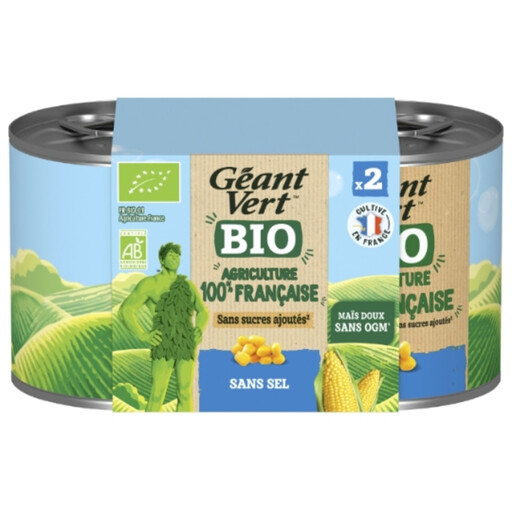 Image unavailable
If you’d also like an organic side, check the pack for this product’s organic claim and the amount you’ll need to serve.
Also check the ingredients and ‘salt’ value before choosing it for a recipe with no added salt: the product name alone doesn’t tell you.
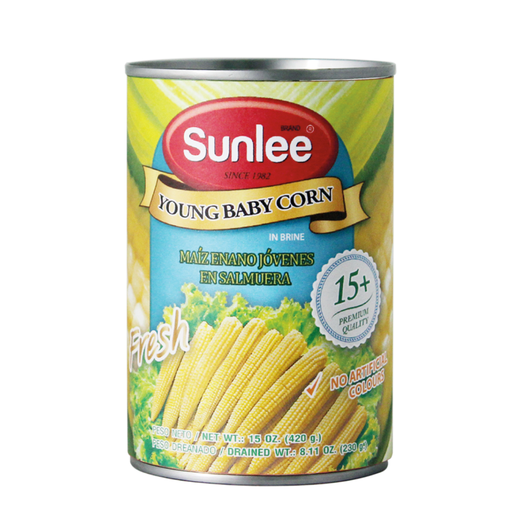 Image unavailable
If you’d like to serve baby corn rather than sweetcorn kernels, check that it suits the side you have in mind.
To compare this tin for its sugar content, check the ‘of which sugars’ value per 100 g, without treating baby corn as the same as sweetcorn kernels.
No. Sweetcorn with no added sugars can still contain naturally occurring sugars. To compare tins, check the ‘of which sugars’ value per 100 g. If you’re looking for a reduction compared with another product, don’t assume it from the absence of added sugars alone.
Look for a separate ‘no added salt’ claim and check the ingredients for the product you choose. Carrefour lists sweetcorn and water as the ingredients in Géant Vert’s organic product, while the Notre Jardin product described by E.Leclerc also contains salt.
Follow the instructions on the opened tin and keep any leftovers covered in a sealed container in the fridge. For one Bonduelle product, the brand recommends storing it at no more than 4 °C and consuming it within 48 hours. Anses recommends keeping food at between 0 and +4 °C in the coldest part of the fridge.