Shoppers mindful of drained weight
If you regularly use sweetcorn in salads or as a side, the drained weight can help you choose a pack size that suits the amount you’ll use.


When choosing canned sweetcorn as part of your weight management plan, start with the amount you intend to serve, then compare the ingredients list and nutritional information per 100 g. ‘No added sugars’ does not mean ‘sugar-free’, so check the sugars and salt separately, as well as the drained weight of the product you choose.
If you regularly use sweetcorn in salads or as a side, the drained weight can help you choose a pack size that suits the amount you’ll use.
A standard tin and a product labelled ‘no added salt’ do not necessarily have the same composition. Compare the ‘salt’ line in their nutritional information.
A short ingredients list, organic certification or a claim about residues can help guide your choice. These details don’t replace checking the nutritional information on the specific tin.
Start with a pack size that suits the portions you have in mind, then check the dietary detail that matters most to you. The claims on the front of the tin don’t tell you everything about its contents.
| Criteria | What to check | Shoppers concerned |
|---|---|---|
| Pack size and drained weight | The drained weight and how much you’ll use once the tin is open. | If I cook with a small amount at a time, I want to avoid leaving a large tin unfinished; around 36% of shoppers would make choosing a suitable pack size their priority. |
| Salt | The ‘salt’ value per 100 g and, if needed, the ‘no added salt’ or ‘salt-free’ claim on the exact product. | When I’m watching the salt in my meals, the tin’s composition matters more to me than its size; around 21% of shoppers would put salt first. |
| Ingredients and sugars | The ingredients list, as well as the ‘carbohydrate’ and ‘of which sugars’ figures per 100 g. | I want to know what ‘no added sugars’ means before putting my meal together; for around 29% of shoppers, checking the ingredients and sugars would be their main concern. |
| Organic certification and residue claims | The claim on the specific tin, followed by its ingredients and nutritional information. | If I’m mainly looking for an organic product or one with a residue claim, I don’t assume that this also determines its salt content; around 14% of shoppers would prioritise this criterion. |
Carrefour says its Classic’ product labelled this way may contain sugars naturally present in sweetcorn.
Check the ingredients list and the ‘of which sugars’ figure per 100 g on the tin you’re considering.
Different packs may contain different drained weights, leaving you with more or less sweetcorn after your meal.
Compare the drained weight and plan how you’ll use each tin once it’s open.
Ingredients vary by product: Carrefour lists salt in its Classic’ sweetcorn with no added sugars, while the listing for a Géant Vert sweetcorn product presented as salt-free gives sweetcorn and water as its ingredients.
Check the ‘salt’ value and ingredients list for the exact product instead of relying on information about another tin from the same brand.
Once opened, the product should be stored according to its specific instructions. For one of its no-added-sugars sweetcorn products, Bonduelle recommends storing it at a maximum of 4 °C and consuming it within 48 hours.
Choose an amount that suits the meals you have planned and check the instructions on your tin.
The details below apply to the products mentioned, not to every product from each brand.
Bonduelle offers canned sweetcorn products including organic varieties, no-added-sugars options and products with a claim relating to pesticide residues.
These Carrefour ranges include standard products and recipes with different claims about sugars or salt.
The E.Leclerc products mentioned include standard sweetcorn, sweetcorn with no added sugars and organic sweetcorn.
Auchan’s range includes a POUCE multipack of three 140 g tins of sweetcorn.
ALDI offers BIO® organic sweetcorn and ALL SEASONS® crunchy sweetcorn in a 285 g pack.
These tins come in different sizes and varieties. To choose one that suits your meals, compare the drained weight and label of each product with the amount you plan to serve.
 Image unavailable
Worth considering if a residue claim matters to you: it appears in the product name, but doesn’t tell you everything about its nutritional information. The stated pack size is 285 g; check the drained weight on the packaging.
 Image unavailable
Consider whether the stated 570 g pack size suits the portions you have in mind. If you don’t use the whole tin, follow the storage instructions for this product after opening.
 Image unavailable
The two 140 g tins let you open one at a time if that suits your portions. Organic certification doesn’t mean the product is salt-free, so check the ingredients for this product.
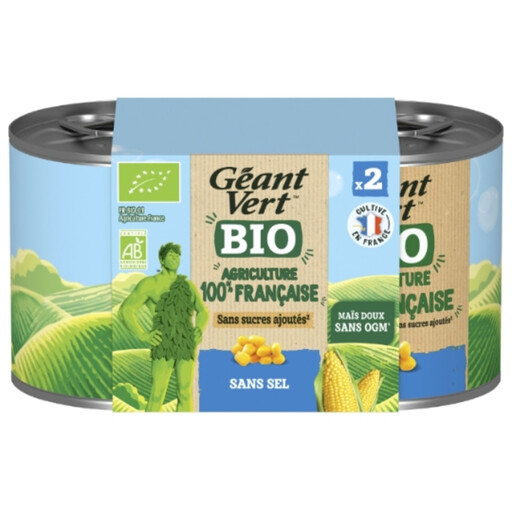 Image unavailable
If you’re looking for an organic product or one with a salt-related claim, check the label before choosing: the listed composition and pack details differ. In particular, confirm the number of tins, quantity, ingredients and ‘salt’ value.
 Image unavailable
Compare the stated 400 g pack size with the amount you need for salads or sides. Check the drained weight and nutritional information for the product you choose.
No. Carrefour says its Classic’ sweetcorn with no added sugars may contain naturally occurring sugars. To find out how much is listed for a particular product, check the ‘of which sugars’ figure per 100 g.
Choose a pack size based on how much you’ll use each time you open a tin. Compare the drained weight and storage instructions: the number of tins in a multipack alone won’t tell you how much is right for your meals.
Follow the instructions for the product you’ve bought. For one of its no-added-sugars sweetcorn products, Bonduelle recommends storing it at a maximum of 4 °C and consuming it within 48 hours of opening.
No. Recipes vary, and Carrefour lists salt among the ingredients in its Classic’ sweetcorn with no added sugars. If salt is a priority for you, compare the ‘salt’ value per 100 g and the ingredients on the specific tin.
Check the ingredients list for the exact product and any other relevant details on its label. Manger Bouger recommends, in particular, that people with allergies check that the ingredients they need to avoid are not listed.