People who count the carbohydrates in their meals
You want to match the carbohydrate content listed per 100 g to the amount of drained sweetcorn you’ll actually serve, rather than relying solely on the wording on the tin.


When choosing canned sweetcorn as part of diabetes-conscious shopping, compare the carbohydrate content with the amount you’ll serve: ‘no added sugars’ does not mean ‘carbohydrate-free’. Then check the ingredients, salt content and pack size, and don’t forget the storage instructions once opened. The French Federation of Diabetes reminds us that a balanced diet should be considered across all your meals, rather than based on a single food.
You want to match the carbohydrate content listed per 100 g to the amount of drained sweetcorn you’ll actually serve, rather than relying solely on the wording on the tin.
You want to distinguish a recipe made with sweetcorn, water and salt from one that also contains sugar, while remembering that sweetcorn naturally contains carbohydrates.
You want to keep tins in the cupboard without opening more than you can use within the time stated once opened. The DGCCRF recommends following the manufacturer’s storage instructions.
Start with the carbohydrate content per 100 g and the amount you plan to serve. Ingredients, salt and pack size can then help you choose between tins that meet your main needs.
| Criterion | What to check | Who is it for? |
|---|---|---|
| Carbohydrates in your portion | Check the carbohydrate content per 100 g, then look at the drained weight and the amount you’ll serve. | If I serve sweetcorn with other foods, I want to understand how that portion fits into my meal. Around 36% of consumers concerned would put counting carbohydrates first. |
| Added sugars | Look for sugar in the ingredients, then distinguish between ‘carbohydrates’ and ‘of which sugars’ in the nutritional information. | I prefer a recipe with no added sugar, but I don’t want to mistake it for a product with no carbohydrates. This would be the main priority for around 29% of consumers. |
| Salt and ingredients | Compare the salt and fibre per 100 g, as well as the ingredients in the product you’re considering. | When several recipes suit me, I also want to compare their salt content and ingredients. Around 21% of consumers would put this criterion first. |
| Pack size and storage | Check the weight of the tins and the storage instructions for once they’re open. | If I only eat a little sweetcorn at a time, I want a tin whose contents I can use without leaving leftovers for too long. Pack size would be the main criterion for around 14% of consumers. |
These two statements answer different questions. Bonduelle lists 11 g of carbohydrates per 100 g for its product with no added sugars.
Read the ‘carbohydrates’ line before ‘of which sugars’, then take into account the drained amount you’ll serve.
Recipes vary: the Pouce product described by Auchan contains sugar, while the Bonduelle product documented contains sweetcorn, water and salt.
Check the ingredients list, then compare the nutritional values on the same per-100 g basis.
For its Pouce product, Auchan says to refrigerate opened sweetcorn in an airtight container and use it within two days. Follow the storage time stated on the tin you buy.
Choose a pack size that suits the amount you plan to use, and read the instructions for once opened before putting the tin away.
Opening a tin that’s too large for your planned meals can lead to food waste.
Auchan says that the ingredients in one of its products may vary depending on the store and the date of purchase. A general product listing therefore doesn’t replace the packaging of the tin you choose.
Check the ingredients and nutritional information on the product when you buy it.
These examples show recipes and pack sizes worth comparing; their characteristics don’t apply to every product from each brand.
Bonduelle’s documented sweetcorn product with no added sugars contains sweetcorn, water and salt.
The products documented by Auchan include different recipes, notably Auchan Bio and Pouce.
The E.Leclerc range includes, among other products, a 285 g tin of crunchy Notre Jardin sweetcorn with no added sugars and a 285 g tin of Bio Village sweetcorn.
Aldi lists a 285 g tin of ALL SEASONS crunchy sweetcorn.
Carrefour lists an organic Géant Vert sweetcorn product described as containing no salt or added sugars, made with organic sweetcorn and water.
These products include sweetcorn kernels in different pack sizes and a tin of baby corn, which is different from sweetcorn kernels. For each one, check the nutritional information, drained weight and storage instructions for the tin you buy.
 Image unavailable
A 285 g pack to consider if you want to open a tin of sweetcorn kernels. For your nutritional criteria, check the carbohydrates per 100 g and the drained weight shown on the packaging.
 Image unavailable
This 570 g tin is worth considering if you plan to use a larger amount of sweetcorn. Compare its drained weight with your needs and plan what to do with the contents once opened.
 Image unavailable
The two 140 g tins let you open one at a time if you only eat a small amount. Check the drained weight of each tin so you can match the listed carbohydrates to the portion you serve.
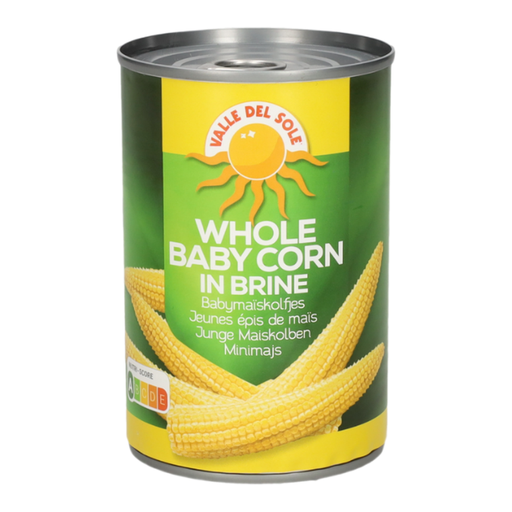 Image unavailable
This is baby corn, for when you want to cook with this type of corn rather than sweetcorn kernels. Check its own nutritional values and drained weight; don’t use the figures for a tin of kernels.
 Image unavailable
This 400 g tin gives you another pack size of sweetcorn kernels to compare. Before choosing, check the carbohydrates and salt on the packaging, then look at the drained weight and instructions for once opened.
No, canned sweetcorn doesn’t need to be avoided altogether. The French Federation of Diabetes explains that there is no single diet for people living with diabetes; the amount you serve should be considered as part of your meal and in line with your care plan.
No: this claim doesn’t remove the carbohydrates naturally present in sweetcorn. For its documented product with no added sugars, Bonduelle lists 11 g of carbohydrates and 5.1 g of sugars per 100 g. Check both lines and take into account the portion you serve.
Follow the draining or rinsing instructions on the tin you choose. Don’t assume that rinsing changes the carbohydrates or salt by a specific amount: use the nutritional information and instructions for that product.
Follow the time limit and storage conditions stated on the tin you buy. For its documented Pouce product, Auchan says to refrigerate it in an airtight container and use it within two days. The DGCCRF reminds shoppers to follow the manufacturer’s instructions once a product has been opened.