Hosts serving several guests
You need to plan enough sardines for lunch and want to distinguish the tin’s weight from the amount of fish you’ll serve.


For an Easter lunch, choose canned sardines based on how much drained fish you need and how you plan to serve them. Whole sardines are suitable if the bones aren’t an issue, while fillets or products specifically labelled boneless offer alternative serving options. Then check the ingredients and instructions for after opening on each tin, as these vary by recipe and product.
You need to plan enough sardines for lunch and want to distinguish the tin’s weight from the amount of fish you’ll serve.
You’re looking for sardines to serve on toast, in a salad or on a plate, without assuming that fillets are necessarily boneless or skinless.
You’re adding sardines to toast, a salad or a pâté and want to choose a recipe that works well with the other ingredients.
Work out how much fish you’ll be serving, then choose a presentation and seasoning to suit your guests. Keep the label for each product handy so you can check the ingredients and storage instructions.
| What to consider | What to check | Who is it for? |
|---|---|---|
| Amount to serve | The drained net weight and how many tins you’ll need, without confusing the total weight with the amount of fish. | If I’m serving several guests, I want to plan for the amount of sardines that will actually end up on the plates; around 36% of consumers rank this as their top concern. |
| Whether they contain bones | Look for the exact wording “boneless” or “skinless and boneless”, rather than relying on the product’s appearance. | For sharing toast with people who find bones a nuisance, I choose an easy-to-eat option; this is the main concern for around 28% of consumers. |
| Recipe | The type of preparation and any added ingredients: plain, in oil or seasoned. | If I’m making a salad or topping myself, I want the recipe in the tin to complement my ingredients; around 18% of consumers put this match first. |
| Ingredients and storage | The ingredients list and storage instructions after opening on the tin you buy. | If I need to take ingredients into account or store an opened tin, I read its label before serving; for around 18% of consumers, this check comes before other considerations. |
For tinned fish packed in liquid, the total weight and drained net weight don’t refer to the same amount of fish.
To plan portions for lunch, check the drained net weight on the packaging and take into account how many tins you’ll need to open.
Whole sardines, fillets, boneless sardines and skinless, boneless sardines suit different serving preferences.
If your guests prefer to avoid bones, look for the relevant wording on the product you choose; check separately whether the skin has been removed.
Sardines in oil, plain sardines and seasoned varieties won’t all work in the same way in a starter that you plan to flavour yourself.
Read the ingredients list before choosing sardines for your toast or salad. Auchan says that the ingredients in its whole sardines in olive oil may vary depending on the store and purchase date, so check the label on the tin you receive.
Instructions for after opening apply to the product you’ve bought and can’t be inferred from the date printed on an unopened tin.
Plan how much you need for the meal, then follow the temperature and use-by instructions on the packaging for any leftovers.
An opened tin also needs suitable space in the fridge and should be used within the stated time.
Carrefour France lists a 135 g tin of sardines in extra virgin olive oil. It offers a useful point of comparison for tin size and ingredients.
Auchan offers whole sardines in extra virgin olive oil, as well as a boneless variety in olive oil. The right choice depends on how you want to serve them.
Connétable offers whole sardines, as well as a skinless, boneless variety in extra virgin olive oil.
Saupiquet offers fillets and whole sardines, including plain varieties, sardines in olive oil and seasoned options such as lemon and basil.
These tinned sardines offer several ways to prepare an Easter starter: sardines in olive oil, a boneless variety in water, fillets and a tomato recipe. Choose according to how you plan to serve them and check the details on each tin, especially the drained weight.
 Image unavailable
For toast or a salad when you’re looking for a recipe with olive oil. The stated pack size is 140 g; check the drained net weight and any information about bones and skin on the tin before planning how to serve them.
 Image unavailable
For a starter served with bread or potatoes. The tin states 135 g; check its drained net weight to work out how much sardine to allow for.
 Image unavailable
For toast or a salad when boneless sardines and a water-based preparation suit your recipe. The stated pack size is 98 g; check the drained net weight on the tin. “Boneless” doesn’t mean the skin has been removed.
 Image unavailable
For a salad or toast when you’d rather serve fillets. The pack is marked 115/81 g; check the packaging to see what each weight refers to and work out the drained amount.
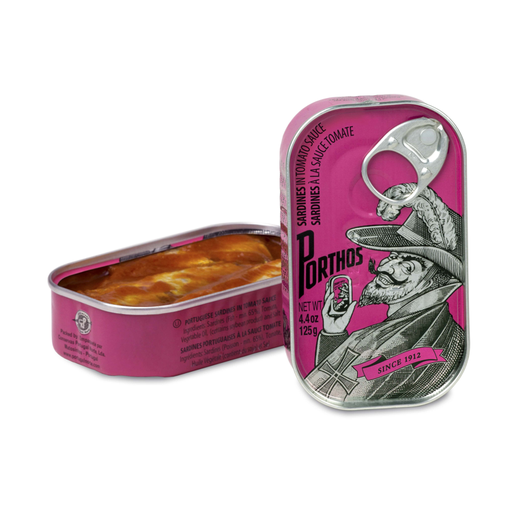 Image unavailable
For a starter or toast when a tomato recipe works with the rest of your menu. The pack is marked 112/81 g; check the tin to see what the two weights refer to, and read the ingredients list before serving.
Check the drained net weight of each product to find out how much fish is in the tins you plan to serve. For products packed in liquid, the French Directorate-General for Competition Policy, Consumer Affairs and Fraud Control states that this weight must appear on the label.
No, the options featured here are canned sardines. If you’d rather serve frozen fish at lunch, check its own label and storage instructions; these can’t be inferred from the instructions for canned products.
Read the ingredients list on the tin you’re serving: sardines are fish, and the recipe may include oil, salt or other ingredients. Don’t rely on the picture or recipe name alone, especially if the ingredients may vary depending on the product you buy.
Follow the temperature and storage-time instructions on the tin you’ve bought. As an example for one specific product, Auchan advises keeping its boneless sardines in olive oil between 0 and +4 °C and eating them within 48 hours of opening. This instruction doesn’t apply to other products.