For making savoury crêpes quickly
If you plan to mash the sardines and spread them across each crêpe, look for fillets and products explicitly labelled “boneless” or “skinless and boneless”.


For a savoury crêpe filling that’s easy to mash or spread, choose sardines explicitly labelled boneless, or sardine fillets—don’t assume all fillets are boneless. If you’d rather serve the fish in pieces, whole sardines are another option; prepare them according to your preferences. When stocking your cupboard, also compare the recipe, the condition of the tin and the storage instructions for after opening.
If you plan to mash the sardines and spread them across each crêpe, look for fillets and products explicitly labelled “boneless” or “skinless and boneless”.
If you keep a few tins in reserve, check their best-before dates, inspect the tins and read the storage instructions for after opening.
If the oil, salt or herbs matter to your filling, compare the ingredients list for each product. Check separately for any origin or certification details you’re interested in.
First decide whether you want to mash the fish or serve it in pieces. Then choose a recipe that works with the other ingredients in your crêpes. For tins destined for the cupboard, check the packaging and storage instructions too.
| Criteria | What to check | Who is this for? |
|---|---|---|
| Fish format | Look for labels such as “fillets”, “boneless” or “skinless and boneless”, depending on how you plan to prepare the fish. | If I’m filling several crêpes and don’t want to remove bones as I assemble them, I’d choose a format that’s easy to mash. Around 33% of consumers would make ease of preparation their priority. |
| Recipe and seasoning | Compare the packing medium, salt and herbs in the ingredients list for the exact product. | If I’m adding cheese or a sauce, I want to know what’s already in the tin so I can adjust the filling. Around 27% of consumers would make checking the recipe their priority. |
| Storage | Choose a tin that’s in good condition; check its best-before date and the manufacturer’s instructions for after opening. | I keep tins in reserve so I can make a meal without having to shop first, but I also want to check they’re in good condition before using them. Around 20% of consumers would put store-cupboard management first. |
| Origin and certification | Check the chosen product for details of the species, origin, fishing area or certifications that matter to you. | When choosing between two recipes, I want to look at the supply-chain information provided, without assuming it tells me about the texture or seasoning. Around 20% of consumers would make this their top criterion. |
The best-before date doesn’t replace checking the tin. The DGCCRF warns that dents, rust or bulging may indicate that the contents have deteriorated.
Inspect each tin before storing or opening it. If you’re unsure whether it’s intact, don’t eat the contents.
The fish format, salt and herbs vary between products. So your filling may need different additions, even when two tins both mention olive oil.
Read the ingredients list on your chosen tin before adding another fat or seasoning your crêpes.
Whole sardines, fillets and products explicitly labelled boneless don’t all have the same format.
If boneless fish is essential for your filling, look for an explicit statement on the label of the exact product you’re buying.
Saupiquet offers sardine fillets in olive oil, in natural juices and with a range of seasonings.
Connétable offers whole sardines in extra virgin olive oil, as well as products labelled “boneless” or “skinless and boneless”.
Carrefour lists a 135 g tin of sardines in extra virgin olive oil.
Auchan offers sardines in extra virgin olive oil, fillets and a product explicitly labelled skinless and boneless.
These tins offer a range of formats and recipes for making savoury crêpes or keeping sardines in reserve. Choose based on the texture you want, then check the details on the tin that matter for your recipe.
 Image unavailable
Worth considering if you’d like sardines in olive oil for your crêpes. The title specifies 140 g; if you need a skinless or boneless option, check that the tin is labelled accordingly.
 Image unavailable
The “boneless” label makes these a good choice for a filling you can mash without having to remove the bones. This product is packed in water rather than oil; check separately whether it contains skin if that matters to you.
 Image unavailable
The fillet format is a good choice if you want to spread the fish through a filling. Check what the two weights on the packaging refer to, and look for an explicit label if boneless fish is essential.
 Image unavailable
This 135 g tin gives you another option to compare for your store cupboard. If you plan to mash the fish, check the format and any information about skin and bones on this product.
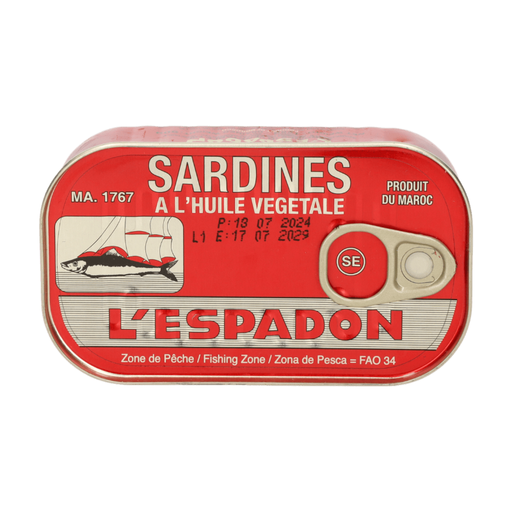 Image unavailable
If you’re making a filling with sardines in oil, compare this 125 g tin with products that specify the type of oil in the title. Read the ingredients list, and check the fish format and best-before date on the tin you buy.
A best-before date is not a use-by date: according to Anses, a product may lose some of its quality after this date. Check the tin too; the DGCCRF lists dents, rust and bulging as possible signs of deterioration. If you’re unsure whether the tin is intact, don’t eat the contents.
Follow the manufacturer’s storage instructions and use-by period after opening, as shown on the tin you buy. The ministry responsible for consumer affairs advises following these storage instructions; the best-before date for the unopened product does not replace them.
Sardines explicitly labelled “boneless” or “skinless and boneless” mean you won’t have to remove those parts during preparation. Fillets can also be easy to spread through a filling. If boneless fish is essential, check the label on the product you choose rather than assuming that “fillets” means boneless.
You can stir it in or drain the sardines, depending on the texture you want; just bear in mind that not all tins contain the same type or amount of oil. Read the ingredients list first, then adjust the other fats and seasonings in your crêpe.