If you need 33 cL cans of mineral water for your lunch box, check that the pack is explicitly labelled as cans: POMONA EpiSaveurs, for example, lists a case of 24 Evian cans. If the small size matters more than the packaging, packs of 33 cL bottles or cartons are other options, but they’re not interchangeable with cans. Before choosing, check whether the water is still or sparkling, and make sure you have room to store the pack.
Who are these sizes for?
Students who want a can for their lunch box
You’re looking for a 33 cL individual portion to chill and take with you. The volume alone won’t tell you what the container is: smaller formats also include bottles and cartons. So check for the word ‘can’ and the number of units before choosing a pack.
Students with a small fridge
You’re happy with an individual bottle if it gives you easy-to-store portions. A pack of eight bottles and a case of 24 cans don’t contain the same total volume. Check how many units you can keep chilled and where you’ll store the rest.
Students who pay attention to mineral content
You want to look at the water’s mineral content, not just its packaging. Compare the values on the labels of the products you’re considering. A higher mineral content isn’t, by itself, a deciding factor for every use.
What should you look for?
When moving into student accommodation, first decide whether you specifically need cans or whether any 33 cL portion will do. Then check what type of water it is and how much you’ll need to store.
| Criteria |
What to check |
Who it matters to |
| Type of container |
Look for ‘can’, ‘bottle’ or ‘carton’, then check the number of 33 cL units. |
I want to put a can in my lunch box, not simply take a small portion of water with me; around 36% of consumers would put this distinction at the top of their list. |
| Type of water and local choice |
Check for ‘natural mineral water’ or ‘spring water’, as well as ‘still’ or ‘sparkling’; see which formats are available where you shop. |
If a can isn’t essential, I want to be able to choose an individual pack that suits the water I drink; around 29% of consumers would make this flexibility their priority. |
| Mineral content |
Read the values shown in mg/L, particularly for calcium, sodium and sulphates, depending on the information provided on the label. |
I compare labels because the water’s mineral content matters more to me than its container; around 21% of consumers would make this their main criterion. |
| Storage and packaging |
Work out the total volume: 24 × 33 cL comes to 7,92 L. Plan where you’ll store it and check the packaging recycling instructions. |
In a small kitchen, I want to be able to store the pack and deal with the packaging as I go; for around 14% of consumers, this would be their main concern. |
Common mix-ups to avoid
-
Assuming ‘33 cL’ means it’s a can
This size is also available in bottles and cartons. So a pack of small portions won’t necessarily suit you if you specifically prefer cans.
Look for the type of container in the product name and description rather than trying to work it out from the volume.
-
Comparing packs without checking the total quantity
A pack of eight 33 cL bottles and a case of 24 33 cL cans aren’t the same amount to carry or store.
Multiply the volume of each unit by the number of units, then check how much space you have at home.
-
Choosing solely on the basis of high mineral content
Mineral content varies between waters. Anses notes in particular that sulphate-rich waters can have a laxative effect, so a high level doesn’t mean a water is more suitable for everyone.
Read the composition of the water you’re considering. If you need to follow specific medical advice, consult a healthcare professional.
-
Confusing spring water with natural mineral water
The Eaux MR pack of 12 × 33 cL is described as mountain spring water. It isn’t suitable if you specifically need natural mineral water.
Check the product’s water description before choosing a different container format.
Brands to know, by format
These examples illustrate different containers and water descriptions. Their inclusion here doesn’t mean that each brand offers the same type of pack.
Evian
Evian offers 33 cL cans of natural mineral water; POMONA EpiSaveurs lists this water in cases of 24 cans.
- Worth considering if a 33 cL can is a must-have for you.
- The case mentioned is listed by a trade supplier, so check the ordering arrangements that apply to you. Don’t confuse it with the sparkling Evian products mentioned below.
Vittel
Carrefour lists a pack of eight 33 cL Vittel bottles of natural mineral water.
- An individual format to consider if a bottle suits your fridge and your outings.
- It won’t meet a requirement for cans; Carrefour lists 240 mg/L of calcium and 400 mg/L of sulphates for this product.
Carrefour Classic’
Carrefour offers its Classic’ still natural mineral water in a pack of 12 33 cL bottles.
- The pack of 12 portions gives you another pack size to compare.
- These are bottles, not cans, so check the container if that’s important to you.
Eaux MR (Marque Repère / E.Leclerc)
E.Leclerc offers Eaux MR mountain spring water in a pack of 12 × 33 cL.
- Individual portions to consider if spring water is what you’re looking for.
- This product isn’t described as natural mineral water and shouldn’t be confused with a can.
Volvic
POMONA EpiSaveurs lists Volvic natural mineral water in a case of 24 33 cL cartons.
- Another individual container to consider if a carton suits you.
- A carton isn’t a can; also check the supplier’s ordering arrangements.
Contrex
Contrex is worth considering if you’re comparing mineral content rather than looking specifically for a 33 cL can.
- The brand lists 479 mg/L of calcium and 72,2 mg/L of magnesium in its water.
- Contrex also lists 1 148 mg/L of sulphates. Don’t assume that a high mineral content means the water is right for your needs.
Joybuy products related to this choice
These products give you the chance to compare two packs of small portions of sparkling Evian water and a pack of Vittel bottles. If you’re specifically looking for cans of still water, check the type of water and the container before choosing one of these products.
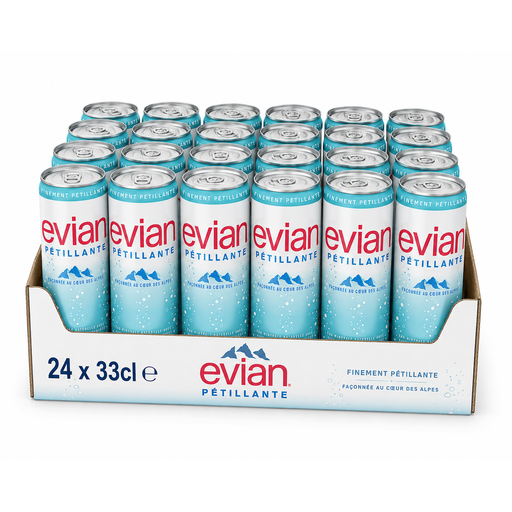 Image unavailable
Evian sparkling mineral water, 24 × 330 ml
Worth considering if you want a pack of small portions of sparkling water for the fridge or for when you’re out and about.
The pack listed contains 24 units of 330 ml. If you specifically need cans, confirm the container on the product page before ordering; this water isn’t still.
View on Joybuy
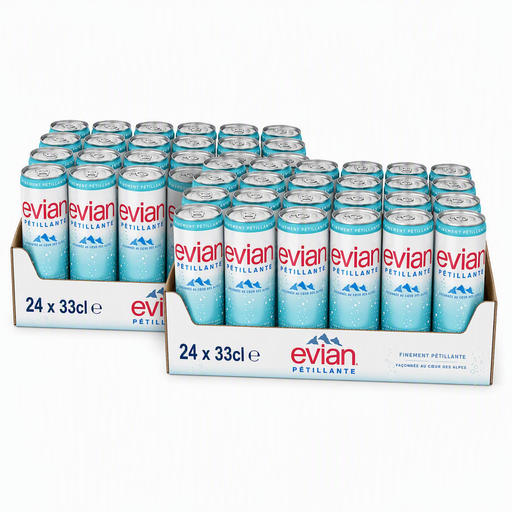 Image unavailable
Evian sparkling mineral water, 2 × 24 × 33 cL
Consider this if you’re looking for portions of sparkling water and have space to store two packs.
The listed pack contains 48 units of 33 cL in total. Check the type of container if you want cans: ‘33 cL’ alone doesn’t tell you what it is.
View on Joybuy
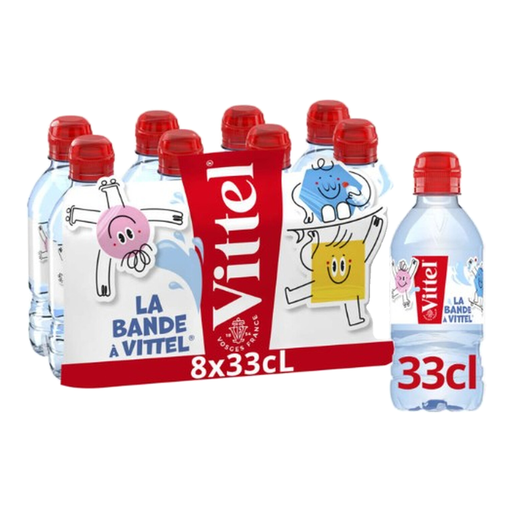 Image unavailable
Vittel, 8 × 33 cL PET bottles, sports cap
An option for keeping individual portions of natural mineral water to hand if you’re happy with a bottle instead of a can.
The pack contains eight 33 cL bottles, or 2,64 L in total. This product won’t suit you if you specifically want cans.
View on Joybuy
Frequently asked questions
How can I tell whether a 33 cL pack contains cans?
Check that the product description explicitly says it contains cans. Evian offers 33 cL cans, while the small Carrefour Classic’ and Vittel packs mentioned here contain bottles, and the Volvic case listed by POMONA EpiSaveurs contains cartons. The volume alone doesn’t tell you what the packaging is.
Is highly mineralised water always suitable for everyday use?
No. A high mineral content doesn’t mean that a water is suitable for everyone. Anses notes in particular that sulphate-rich waters can have a laxative effect. Read the composition of the water you’re considering and consult a healthcare professional if you need to follow specific medical advice.
How should I recycle a water can after use?
Put the empty can in your recycling. ADEME advises that metal packaging should be placed loose in the recycling, without washing it or nesting items inside one another. If you’re unsure, check the recycling instructions on the packaging.
What should I check before choosing a pack?
Start by checking the type of water, the container, the volume of each unit and the number of units. This will help you distinguish, for example, a pack of spring water bottles from a case of natural mineral water cans. If the mineral content matters to you, compare the values on the label too.


