For everyday drinks, Manger Bouger recommends choosing water and limiting fruit juice and sugary drinks. If you’re buying cans for the fridge or lunchboxes, compare the sugar per 100 ml with the amount you’ll actually drink, then check the product description and ingredients. A juice with no added sugar can still contain naturally occurring sugars, while a fruit drink may contain added sugar. Assurance Maladie reminds people that eating plans for those living with diabetes should be tailored to individual needs.
Who are these criteria useful for?
People who count carbohydrates per serving
How much you drink matters just as much as the figure shown per 100 ml. Assurance Maladie advises checking the nutritional information against the amount actually consumed, so you can include it in your personal tracking.
Shoppers distinguishing pure juice from fruit drinks
Avoiding added sugar doesn’t mean choosing a sugar-free drink. The product description, ingredients list and ‘of which sugars’ line help you understand what each recipe contains.
Families stocking the fridge and preparing lunchboxes
Cans are easy to divide between different meals or bags. Their convenient format doesn’t mean you can skip checking the volume of a whole can and planning to drink water every day, as Manger Bouger recommends.
What should you compare before buying?
Water for everyday drinking
Consider this: if you’re planning a drink to have regularly, including for several lunchboxes.
Bear in mind: Manger Bouger recommends prioritising water, but it won’t satisfy an occasional craving for fruit juice.
Pure juice
Consider this: if you specifically want fruit juice and have factored the amount you’ll drink into your eating plan.
Bear in mind: even with no added sugar, pure juice contains sugars that occur naturally in fruit.
Fruit drinks in cans
Consider this: if individually portioned packaging is your priority.
Bear in mind: the recipe may be very different from that of pure juice. For example, Auchan lists water, juices from concentrate and sugar in Tropicana Juicy Tropical 6 × 33 cl.
| What matters |
What to check |
Who it matters to |
| Sugar per can |
Check ‘of which sugars’ per 100 ml and the net volume. For 33 cl, multiply the figure per 100 ml by 3.3. |
When I’m counting what I drink with a meal, the figure per 100 ml doesn’t tell me what’s in the whole can; around 46% of consumers prioritise this per-serving calculation. |
| What the recipe contains |
Compare the product description and ingredients list, and check the percentage of juice in a diluted drink. |
I want to know whether I’m buying pure juice or a fruit drink with added sugar, without confusing ‘no added sugar’ with ‘sugar-free’. This distinction comes first for around 36% of consumers. |
| Individual portions |
Check the number of cans, their volume and when you plan to drink them. |
When preparing several lunchboxes, I prefer portions that are easy to divide up without making juice my everyday drink; this convenience is the priority for around 18% of consumers. |
Common misunderstandings to avoid
-
Reading ‘no added sugar’ as ‘sugar-free’
Juice can contain sugars that occur naturally in fruit, even if no sugar has been added. The claim alone doesn’t tell you how much sugar is in a can.
Check ‘of which sugars’ per 100 ml and work out the figure for the amount you plan to drink.
-
Assuming a fruit drink is the same as pure juice
Auchan’s product listing for Tropicana Juicy Tropical 6 × 33 cl describes a drink containing 79% water, 16% juice from concentrate and sugar in the ingredients. The product name alone doesn’t tell you what’s in the recipe.
Compare the product description, ingredients and percentage of juice shown on each pack.
-
Choosing a large multipack without planning when to drink it
Cans ready to take with you can be convenient, but Manger Bouger recommends limiting juice and sugary drinks and choosing water for everyday drinking.
Decide when you plan to drink them and how much you want before choosing the number of cans.
-
Swapping for a similar-sounding product with a different recipe
Two cans of the same size may have different product descriptions and ingredients. Changing products can therefore affect what you need to take into account for your portion.
If you switch product or shop, read the label on the one you choose and check its exact format.
Brands to know when comparing formats
Tropicana
Auchan describes Tropicana Juicy Tropical, in a pack of six 33 cl cans, as a fruit juice drink.
- The pack contains six individual portions, totalling 1.98 l.
- According to Auchan, the recipe contains 79% water, 16% juice from concentrate and sugar, so it isn’t pure juice. Its nutrition information shows 5.9 g of sugars per 100 ml, or around 19.5 g per 33 cl.
Joker
Joker describes its ‘Le Fruit’ mixed fruit drink as 100% fruit juice.
- The brand says this mixed fruit juice contains sugars that occur naturally in fruit, with no added sugars.
- Joker lists this product in 1 l and 1.5 l bottles, so it won’t meet the need for cans in a multipack.
Pampryl
Hellopro lists Pampryl orange juice in an individual 33 cl can.
- The 33 cl can format matches the individual serving size considered here.
- A single can doesn’t tell you whether the product comes in a multipack. Check the number of cans and the nutritional information for the product you buy.
Carrefour
Carrefour offers its own-brand orange juice in individual formats, including packs of 6 × 20 cl and 4 × 20 cl.
- These 20 cl portions give you another volume to consider if 33 cl isn’t the amount you’re planning to drink.
- These aren’t cans. Check their own label rather than assuming they have the same ingredients as another brand’s canned drink.
Multipacks of cans on Joybuy
These 24-can packs meet the need for individual portions to keep in the fridge or put in lunchboxes. They include drinks with different recipes, including a sparkling drink. Check the product description and nutritional information for each one before choosing.
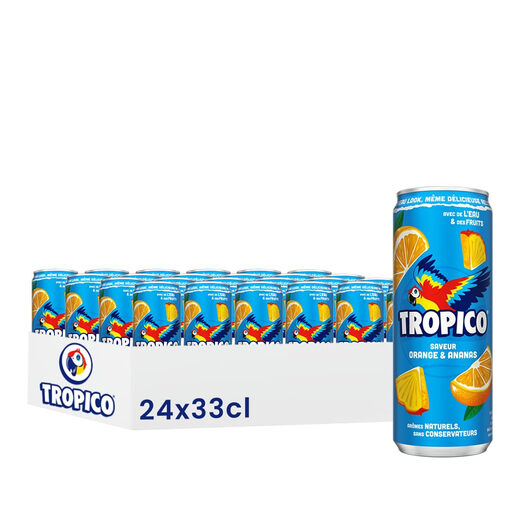 Image unavailable
Tropico Original fruit drink, 24 × 33 cl
This pack could suit you if you’d like to divide individual cans between different occasions. To check the amount you’ll be drinking, look at the sugars per 100 ml and the ingredients list on the packaging.
View on Joybuy
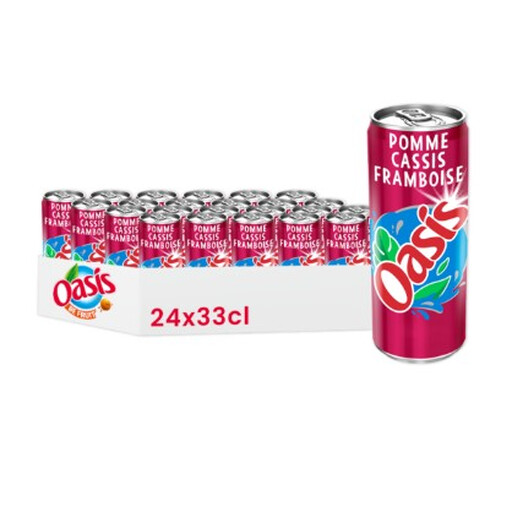 Image unavailable
Oasis apple, blackcurrant and raspberry, 24 × 330 ml
The cans make it easy to prepare portions to take with you. If you want to tell this drink apart from pure juice, check the product description and ingredients, as well as the sugars per 330 ml.
View on Joybuy
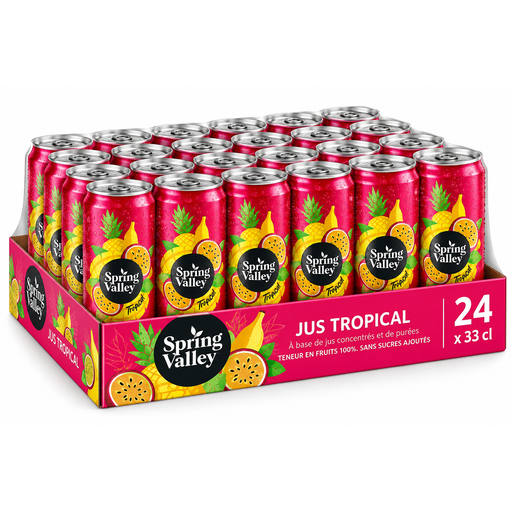 Image unavailable
Spring Valley Tropical Juice, 24 × 330 ml
This pack contains individual 330 ml cans. The product title says ‘100%’, while the description mentions water. Check the product description and ingredients on the packaging before treating it as pure juice.
View on Joybuy
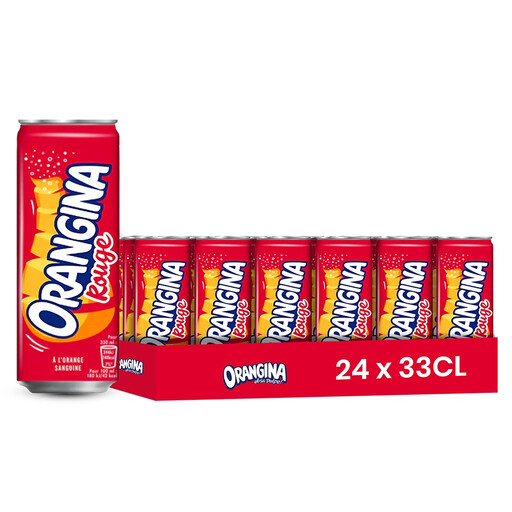 Image unavailable
Orangina orange and red berries sparkling drink, 24 × 330 ml
This product meets the need for cans in a multipack, but it’s a sparkling drink rather than fruit juice. If the proportion of juice matters to you, check the recipe on the packaging, along with the sugar per can.
View on Joybuy
Frequently asked questions
Is juice with ‘no added sugar’ sugar-free?
No. It can contain sugars that occur naturally in fruit, as Joker says of its ‘Le Fruit’ mixed fruit juice. To find out how much sugar is in your portion, check ‘of which sugars’ per 100 ml and work out the figure for the amount you drink.
How do I calculate the sugar in a 33 cl can?
Multiply the ‘of which sugars’ figure per 100 ml by 3.3 to find the amount in 33 cl. Assurance Maladie recommends checking nutritional information against the amount actually consumed, so make sure you also check the can’s exact volume.
Is a 33 cl can suitable as an everyday drink if you’re living with diabetes?
A can of juice shouldn’t automatically be considered a suitable everyday drink. Manger Bouger recommends choosing water and limiting juice and sugary drinks. Assurance Maladie stresses that eating plans for people with diabetes depend on individual needs. The 33 cl volume should be taken into account as part of that plan.
Is the Nutri-Score enough to compare two cans?
No. It doesn’t replace checking the recipe and the amount you’ll drink. Assurance Maladie also advises checking the ingredients and nutritional information, then comparing the figures with the amount actually consumed.


